Rakı: What It Is, How to Drink It and What to Eat With It
Rakı is Turkey's anise-flavoured grape and raisin spirit, drunk diluted with cold water until it turns milky white and served with meze, cheese and melon.
On this page
Rakı is Turkey's anise-flavoured spirit, twice distilled from grapes or raisins, and it is meant to be diluted with cold water rather than sipped neat. Order it at a meyhane and the table fills with small plates, a jug of iced water and a bowl of ice, because rakı is a slow, shared drink.
This guide covers what rakı is made from, why it turns cloudy, how strong it is, how the two-glass kadeh arrangement works and which brands you will see on menus and shelves. It also separates Turkish rakı from the drinks that share its name in Greece and the Balkans, and explains what to eat as you go.
What rakı actually is
Rakı belongs to the anise-flavoured aperitif family, produced by distilling suma, the residue left after grapes are pressed for wine, and flavouring it with aniseed. Distillation happens twice in traditional copper alembics. The result is clear in the bottle, not cloudy, so do not expect milky liquid on the shelf.
The closest cousins in the wider Mediterranean are pastis, ouzo, sambuca and arak, all anise-led drinks served in roughly the same way. In the Balkans, though, the word rakı usually means a pomace spirit closer to grappa, with no anise at all, so check what is in the glass before you plan an evening around it.
Why rakı turns milky white
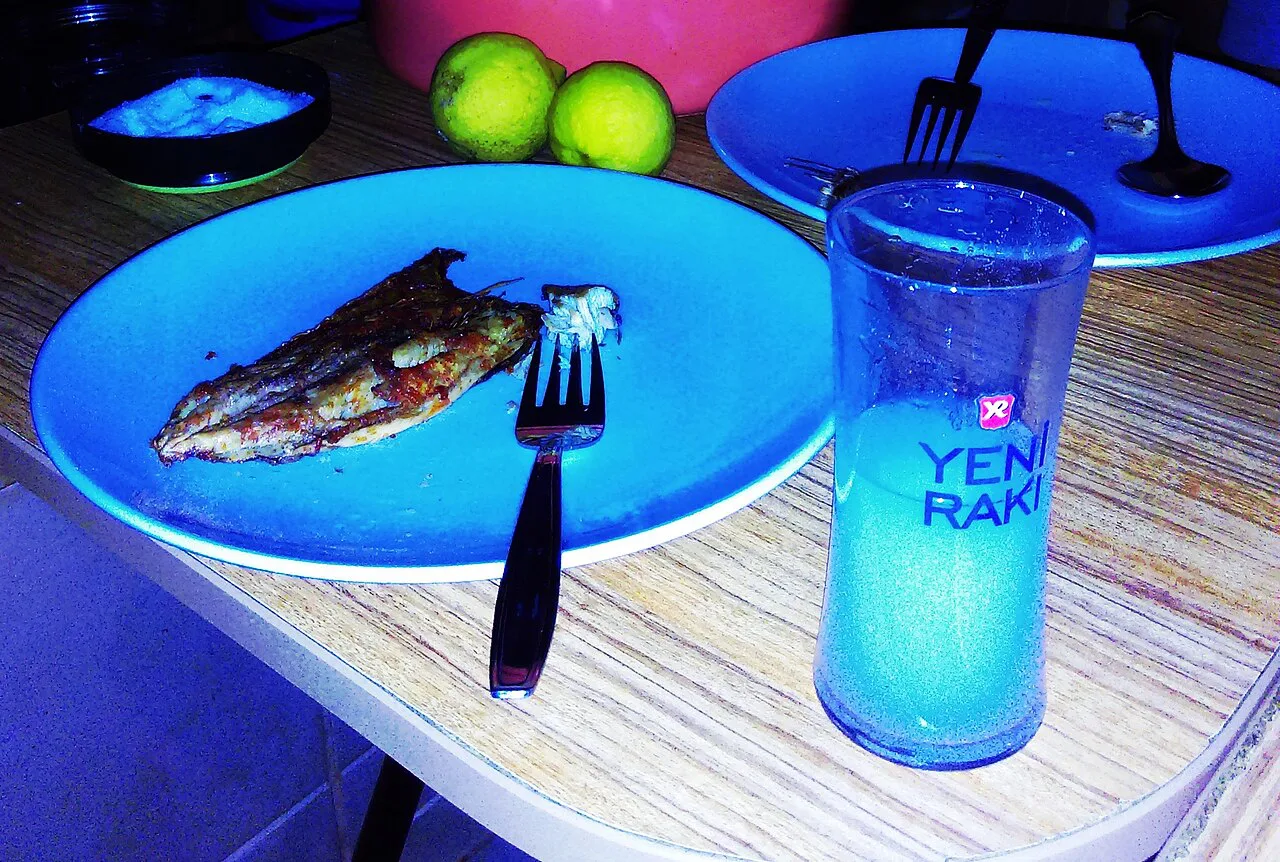
Adding water to rakı makes it cloud, and that is the visual signature of the drink. Anise contains a compound called anethole, which dissolves in alcohol but not in water, so dilution forces it out of solution and the liquid turns opaque. Nothing has gone off; the change is exactly what should happen.
Which country is rakı from? Rakı in the anise-flavoured sense is Turkish, made by twice distilling suma from grapes or raisins with aniseed. The same word is used in Greece and the Balkans for a pomace spirit without anise, so the name alone does not tell you what is in the glass.
Is rakı sweet? No. Rakı is a non-sweet aperitif, and its dominant flavour is anise, which reads as liquorice rather than sugar.
How do you pronounce rakı? The Turkish spelling ends in a dotless ı, a sound close to the 'uh' in 'sofa'. English speakers usually render it as ra-KUH, with the stress on the second syllable, and the same word is written rakı on English menus.
Turks call the cloudy mixture aslan sütü, lion's milk, a name tied to both its colour and the idea of milk for the strong. The phrase is what you will hear across the table when the first water goes in.
How strong rakı is and why you dilute it
Rakı is a strong drink, sitting somewhere between 40% and 50% alcohol by volume according to brand and style. That is why almost nobody takes it as a shot: the high strength is the reason the chilled water and ice are on the table in the first place. Treat a full glass of neat rakı as you would a neat spirit at home, and dilute before you sip.
There is no single sanctioned ratio, and drinkers disagree about the order. One sequence a bar demonstrates is a pour of rakı first, then water to create the milky texture, then a drop of ice for chill; follow it and you stay in control of the strength in the glass.
Start with roughly a third to half of the small glass filled with rakı, then top up from the water glass, adding a little ice if you want it colder. Sip slowly and keep eating; rakı is not a drink to follow with other spirits across the same evening.
How rakı is served: two kadeh, water and ice
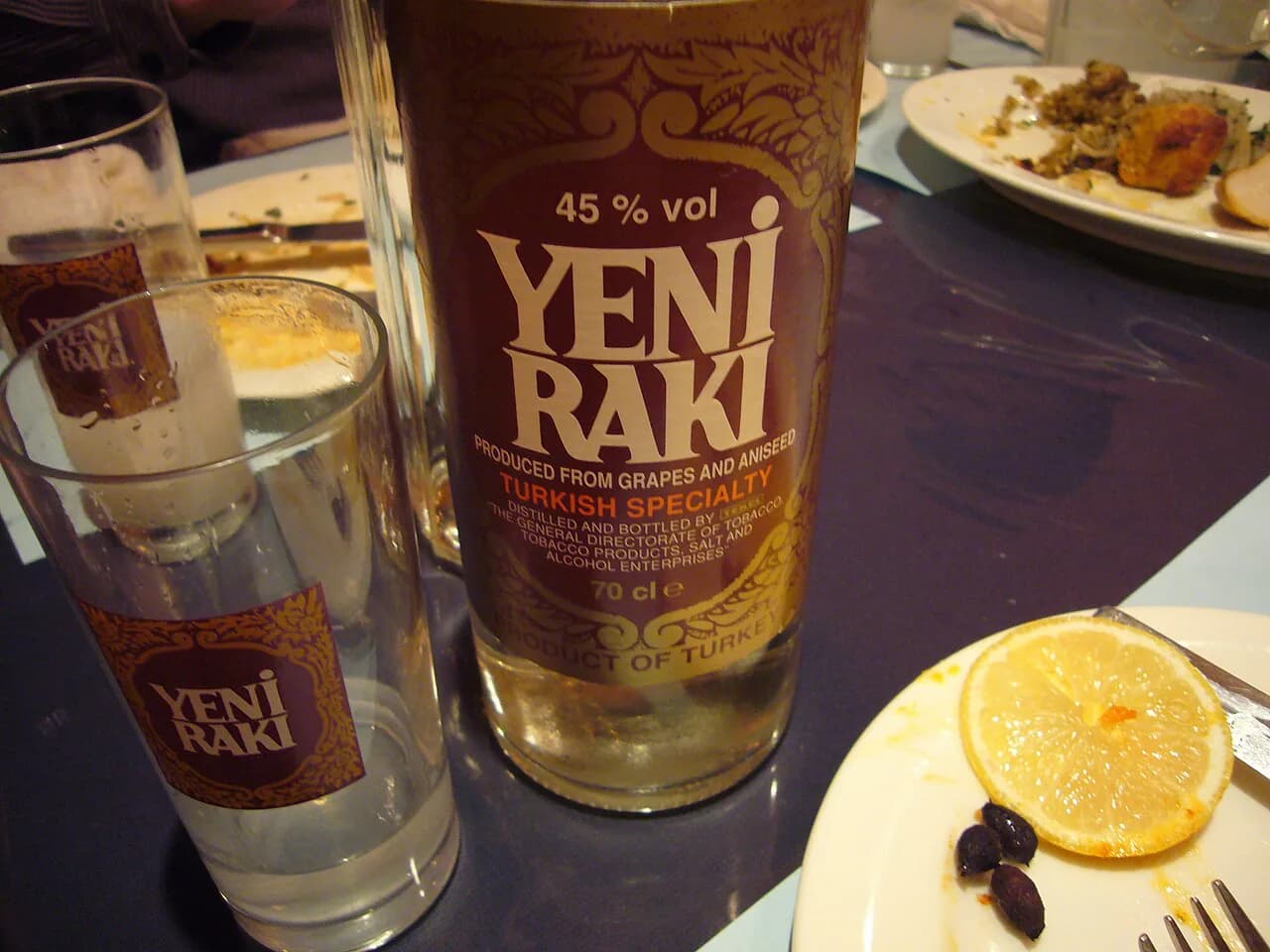
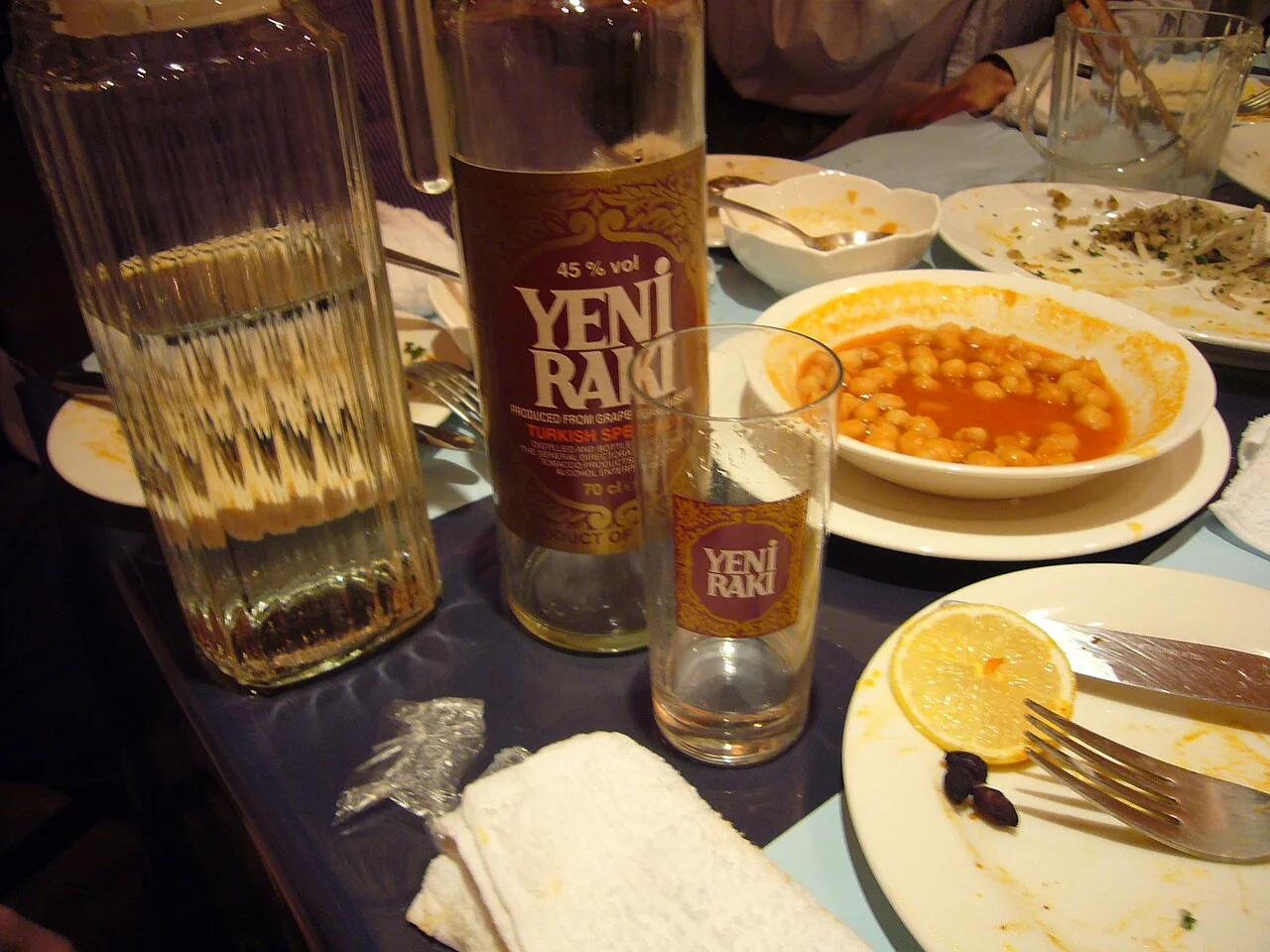
A rakı table usually comes with two clear, straight, narrow glasses called kadeh, one for the rakı and one for chilled water, plus a bowl of ice in the middle. The bottle sits open on the table for everyone to share. Knowing this in advance means you will not pour water into the rakı glass by mistake.
Rakı is normally bought by the glass, by the half-bottle or as a full bottle for the table, and the meyhane will bring meze when a bottle is ordered. Ask what the house pour is before committing to a full bottle if your group is small, since the strength adds up over a long meal. Check the menu for prices rather than relying on any figure quoted online.
The rakı sofrası: reading a meyhane table
A rakı sofrası, literally a rakı table, is a spread of cold and hot meze with rakı at the centre, often in a meyhane with live Turkish music in the background. The point is to eat as much as you drink, working through small plates over a couple of hours rather than ordering one main course. Our guide to Turkish food covers the cold starters and hot plates you are most likely to meet, from Sigara böreği to İmam bayıldı.
Keep the pace even: alternate a sip with a mouthful, and let the water glass do some of the work. Rakı is potent enough that a table can empty a bottle faster than expected, so decide early whether you are ordering a second round.
What to eat with rakı
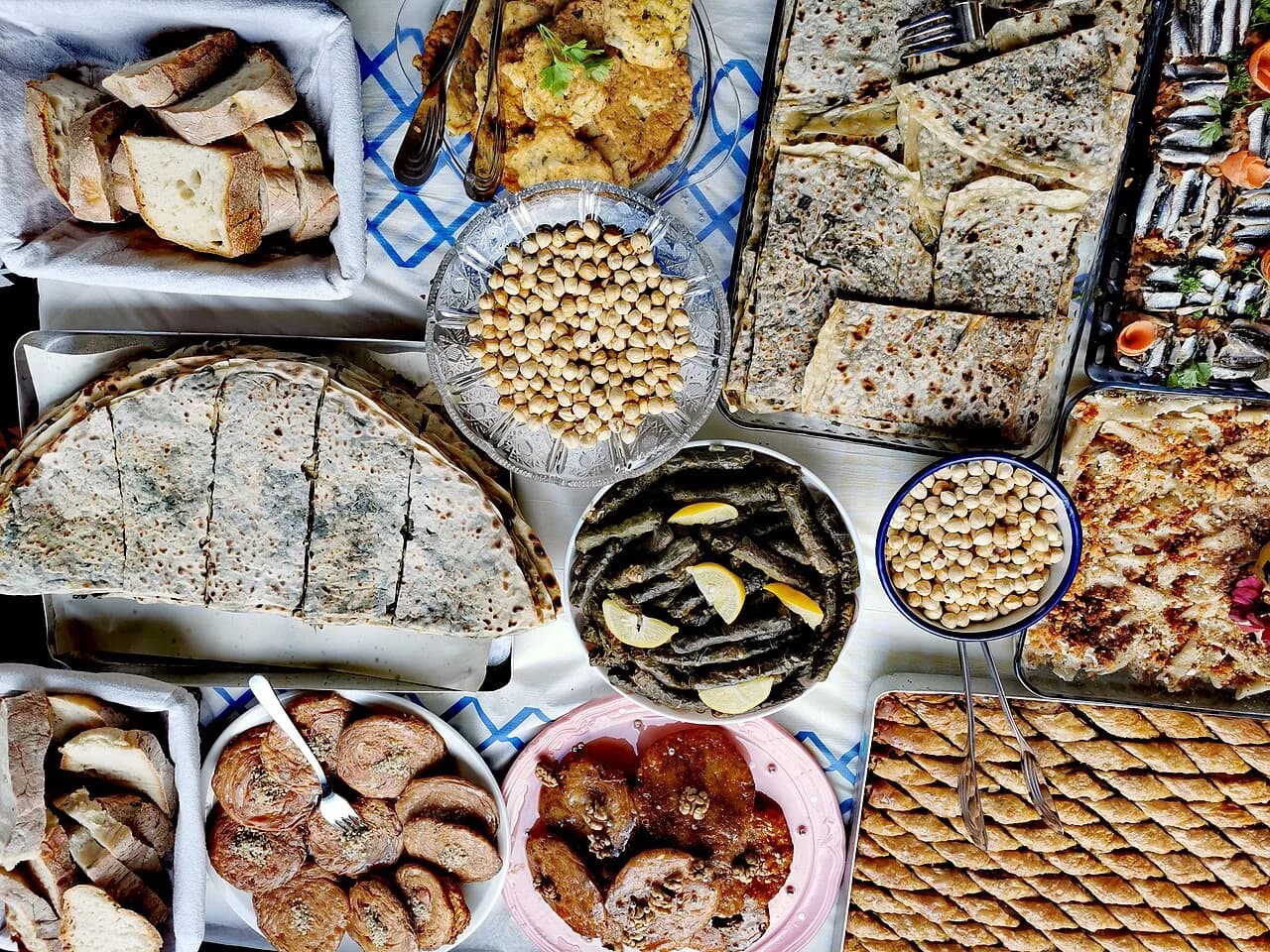
The classic starting pair is melon and white cheese, usually a feta-style cheese, cut and set on the table before anything else arrives. From there the spread widens to yoghurt-based meze, stuffed vine leaves, bean salads, cucumber and carrot sticks, olives, dried chickpeas and nuts. Order two or three cold plates per person and add hot meze as the evening goes on.
For the main event, the Turkish saying runs rakı, roka, çupra: rakı with peppery rocket and sea bream. The anise flavour works particularly well with seafood, so grilled fish is the natural order at a meyhane. If you are eating earlier in the day, a serpme kahvaltı spread is a different kind of long table and our Turkish breakfast guide explains how that one works.
Brands you will see on menus and shelves
Yeni Rakı is the most widely available brand and the one most visitors recognise, with a strong, distinct liquorice taste; it was originally state-owned. Tekirdağ Rakısı and Efe Rakı also produce ranges that differ a little in character and are sold in supermarkets and shops across the country. Kulüp Rakı, said to have been Atatürk's preferred brand, is generally the pricier option when you find it.
Since 2004, when rules on spirit production were eased, private companies have been able to make rakı again after decades of state monopoly control that began in 1923. That is why the shelf now holds more than one producer's bottle. Try a smaller bottle before committing to a brand you have not had.
Rakı, ouzo and tsipouro: which drink is which
Ouzo is the Greek anise spirit, and it behaves much like rakı when water is added. Tsipouro is a Greek pomace distillate from grapes, closer to grappa, usually around 45% alcohol and served cold in shot glasses with meze, nuts, olives or cheese. Tsikoudia from Crete is the same family of pomace spirit, sometimes called rakı locally, which is where much of the confusion starts. Order rakı in Crete and you will most likely get a clear pomace spirit with no anise, served as a digestif.
Anise-flavoured tsipouro does exist, made in parts of Macedonia, Chalkidiki and Thessaly, and it is the Balkan drink nearest in taste to Turkish rakı. Ask whether the rakı is anise-flavoured before you plan an evening around it.
Rakı and ayran: Turkey's two national drinks
Ayran, the salty yoghurt drink, was declared Turkey's national drink in 2013, yet rakı remains the country's signature drink for many people. The two occupy different roles: ayran is the everyday, alcohol-free accompaniment to köfte and kebabs, while rakı is what gets ordered for a celebration or a long meal with friends.
Rakı's place in a largely Muslim country comes from the Ottoman era, when mixed communities and a long tradition of alcohol production sat alongside religious practice. Sultan Mahmud II is said to have drunk rakı openly and preferred it to wine, and restrictions on production were lifted after the Crimean War, which brought a wave of distillers. Ayran is the safe order if you are not drinking.
Ordering rakı without overdoing it
Decide the format before the first round: a glass each, a half-bottle to share, or a full bottle for a group of four or more. A half-bottle plus plenty of meze is a reasonable way into a first rakı evening, because the strength of the spirit rewards a slow table.
Keep water on the table, eat before and during rather than after, and leave neat measures to those who already know the drink. Rakı is best sipped slowly and not mixed with other spirits across the same evening. If you want a non-alcoholic close to the meal, Turkish coffee or a plate of Turkish desserts works better than another round.
Should you order rakı on your first Turkish evening?
Yes, if you order it as the Turks do: diluted with chilled water, sipped slowly and eaten with a table of meze, melon and cheese or grilled fish. No, if you want a quick drink before moving on, because rakı rewards time and punishes speed. A half-bottle shared between two or three people, with food arriving throughout, is the sensible way in.
Check the menu at the venue you choose for the price of a glass or bottle, and ask whether the rakı is the anise-flavoured Turkish style if you are travelling beyond Turkey. Order water alongside from the start, and let the food set the pace of the evening.
Explore more Turkey guides
Frequently Asked Questions
Which country is rakı from?
Rakı in the anise-flavoured sense is Turkish, made by twice distilling suma from grapes or raisins with aniseed. The same word is used in Greece and the Balkans for a pomace spirit without anise, so the name alone does not tell you what is in the glass.
Is rakı sweet?
No. Rakı is a non-sweet aperitif, and its dominant flavour is anise, which reads as liquorice rather than sugar. The sweetness at a rakı table comes from the melon, the meze and the fruit, not from the spirit.
How do you pronounce rakı?
The Turkish spelling ends in a dotless ı, a sound close to the 'uh' in 'sofa'. English speakers usually render it as ra-KUH, with the stress on the second syllable, and the same word is written rakı on English menus.
Can you drink rakı neat?
You can, and some drinkers do, but it is strong at roughly 40% to 50% alcohol by volume. The usual approach is to dilute with chilled water from the second kadeh glass, adding a little ice, which also turns the drink milky white.
Sources
Notes for your next Turkey trip
Optional updates when we add or correct a town guide.
You might also like
Continue reading
More guides you'll find useful