Antalya Clock Tower: Where It Is and What's Around It
The Antalya Clock Tower stands at the entrance to Kaleiçi on Cumhuriyet Square. Here's what to see, how to find it and what's within a short walk.
On this page
The Antalya Clock Tower is a free, open-air landmark at the entrance to Kaleiçi on Cumhuriyet Square, and it takes about five minutes to look at properly. Treat it as the meeting point and orientation marker for the old town rather than a sight that fills an afternoon. This guide covers what the Saat Kulesi is, where it stands, how it was built and changed, and what sits within a short walk of its stone base.
You do not need a ticket, a booking or a guided tour to see it. The tower is a fragment of the old city walls that now frames the busiest entrance to the historic quarter, which makes it the natural place to start a walk through Antalya Old Town (Kaleiçi).
What the Antalya Clock Tower is
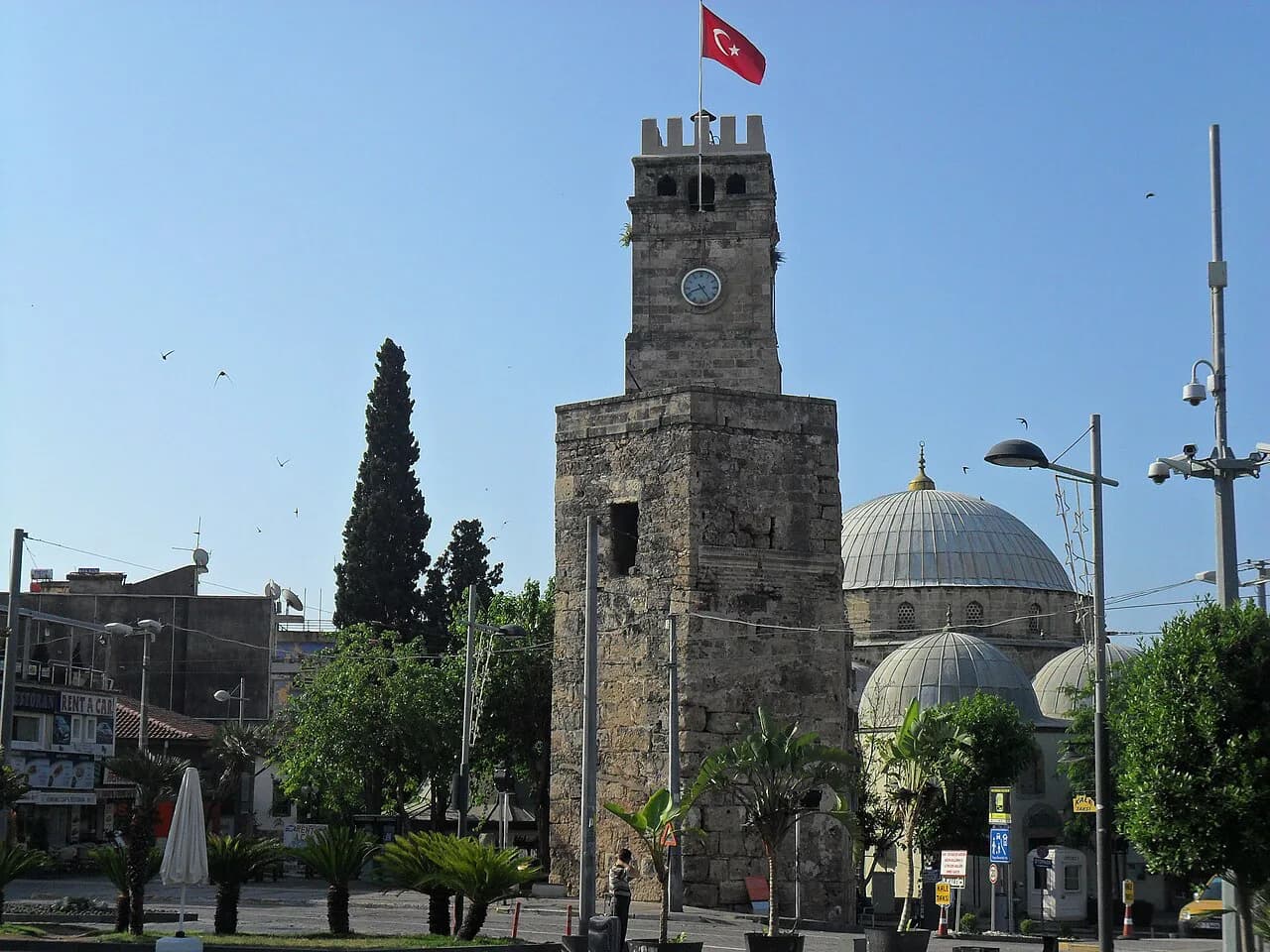
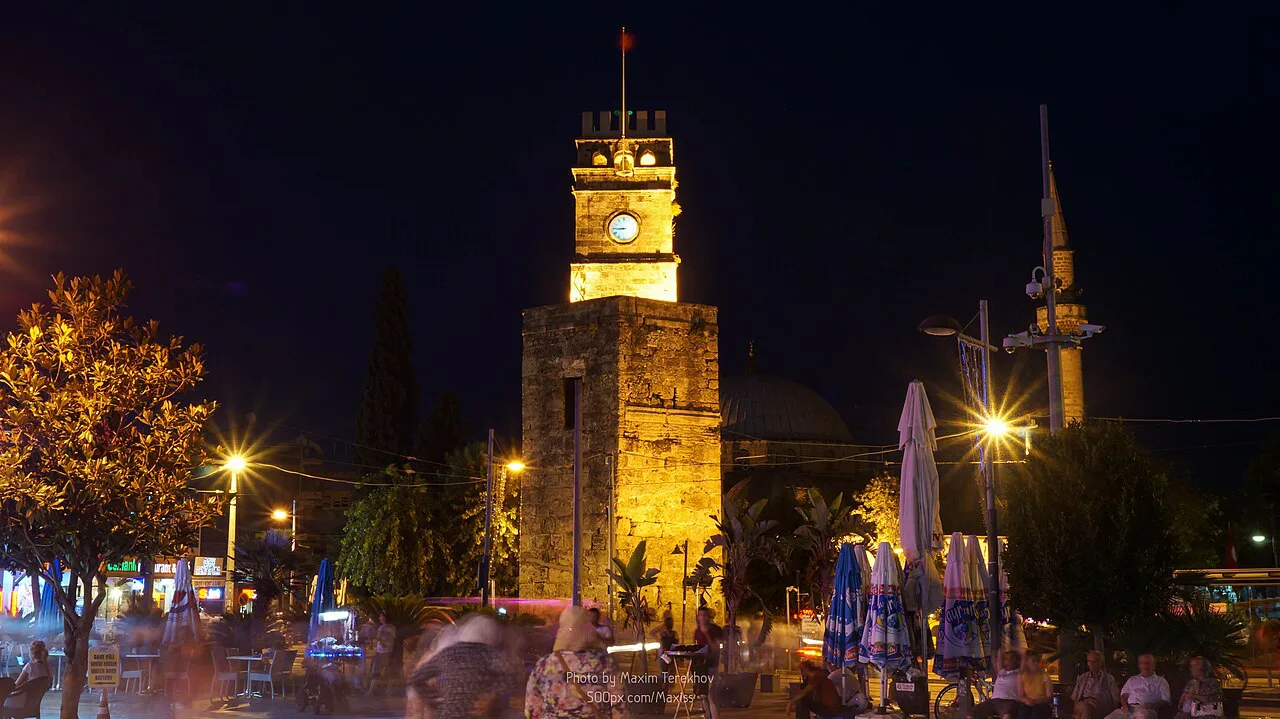
The Saat Kulesi is a square-plan stone tower with a clock on each of its four faces and a bell at the top. It rises above the old city walls on a pentagonal bastion, so the structure you see is part wall, part tower. A clock face on every side means it reads as a clock from whichever street you approach along.
Its position is what makes it useful. The tower sits right at the point where the modern city meets the old one, so it doubles as a landmark for meeting people and for finding your way back out of the tangle of lanes inside Kaleiçi.
Where the clock tower stands in Antalya
The tower is in the Muratpaşa district, on Cumhuriyet Square, at the top edge of Kaleiçi. The published address is Tuzcular Street, İmaret Alley, Muratpaşa, which puts it within the dense grid of the old quarter rather than on a separate monument square.
Getting there is straightforward because the tower sits on the edge of Kaleiçi, where the modern city meets the old town. It is an easy landmark to aim for by tram, bus, taxi or dolmuş minibus, with Antalya's public transport network serving the Kaleiçi area directly.
The tower's history: Byzantine base, 1901 clock, the dome lost and restored
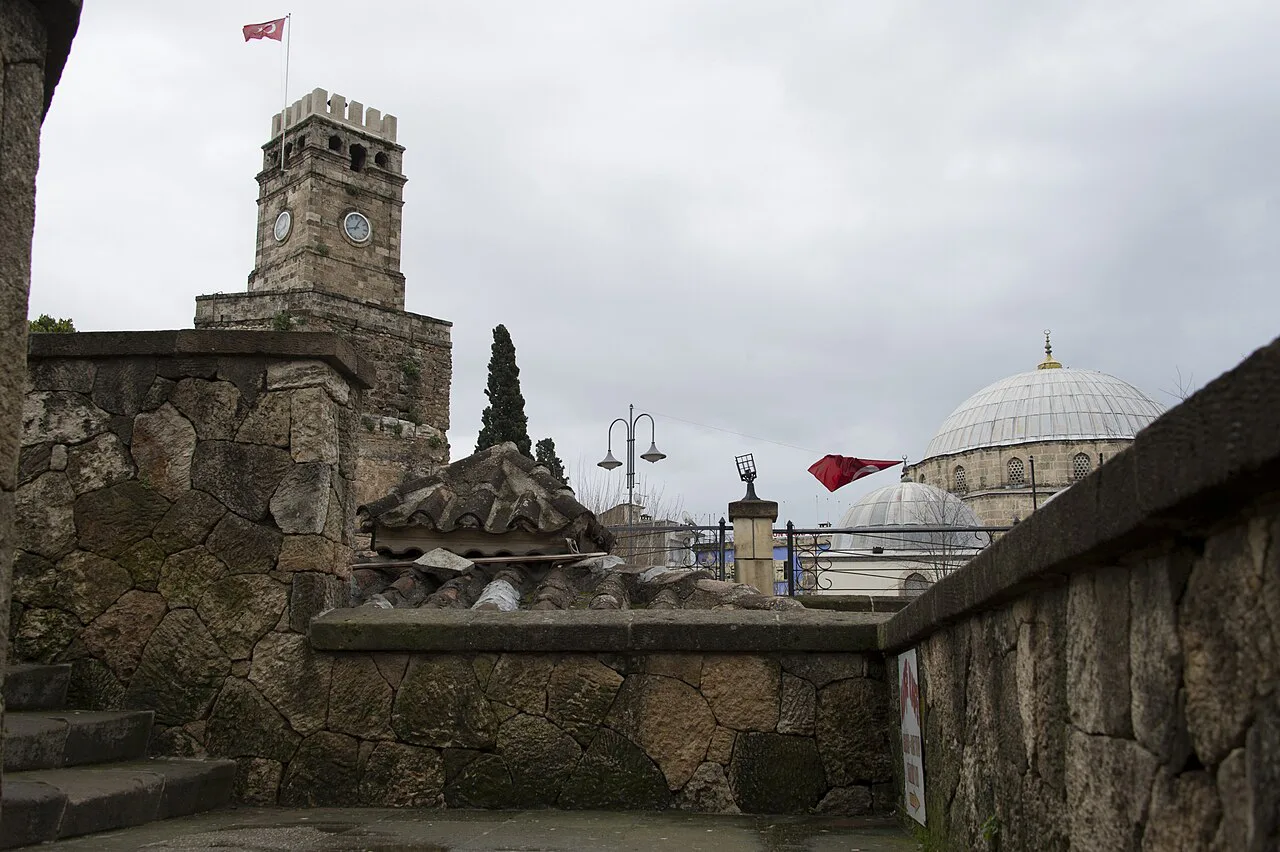
The base is much older than the clock. The structure began in the 9th century as a Byzantine fortification on a pentagonal bastion with a square plan, and it formed part of Antalya's outer defences.
The clock itself is an Ottoman addition. In 1901 the tower was restored and converted into a clock tower by Grand Vizier Küçük Sait Pasha in honour of Sultan Abdulhamid II, which is why the present silhouette and the clock faces date from that moment rather than from the Byzantine period.
The top has been rebuilt more than once. A dome that originally crowned the tower was lost in the 1940s, and a replica dome was added during renovation works in 2022, so the cap you see now is a modern reconstruction of an older form.
What the tower looks like: four clock faces, bell, height
The tower stands 14 metres high from the ground and 8 metres above the walls, with a square plan and a clock face on each of the four facades. The clock faces carry Arabic numerals, and a bell is set at the top.
Because it sits at the junction of the old and new towns, the tower is a popular spot for photographs, and visitors stop for pictures on the cobbles around its base throughout the day.
Visiting the tower: entrance, hours and the cobbled streets
There is no entrance fee and no gate: the tower stands in the open on the square and visitors come and go at any hour. Evening visitors see the tower lit up, which is worth timing a stroll past if you are staying nearby.
Wear shoes you can walk in, because the lanes around the tower are cobbled and uneven. In summer, come early or late in the day to dodge the heat and the peak crowds, both of which make the square uncomfortable in the middle of the afternoon.
Hadrian's Gate and the old city walls near the tower
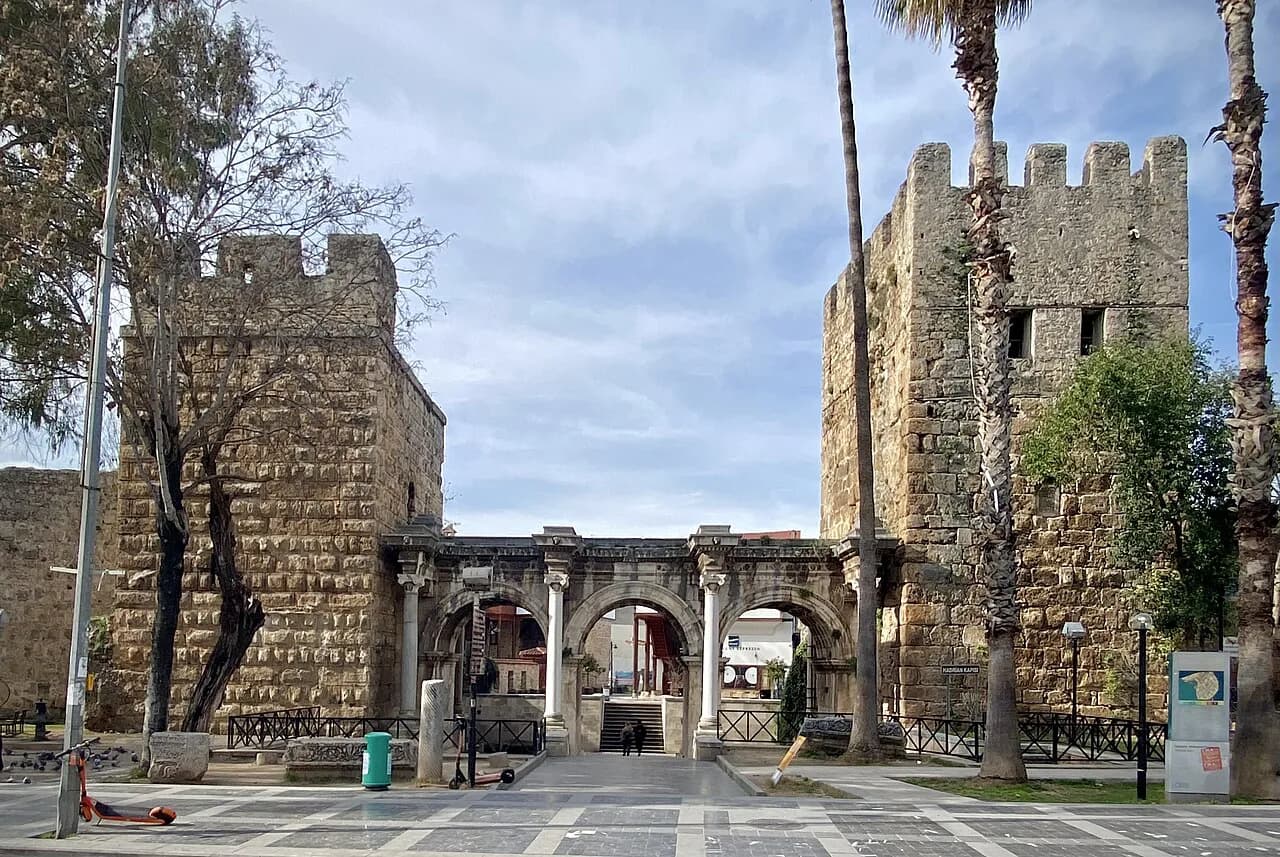
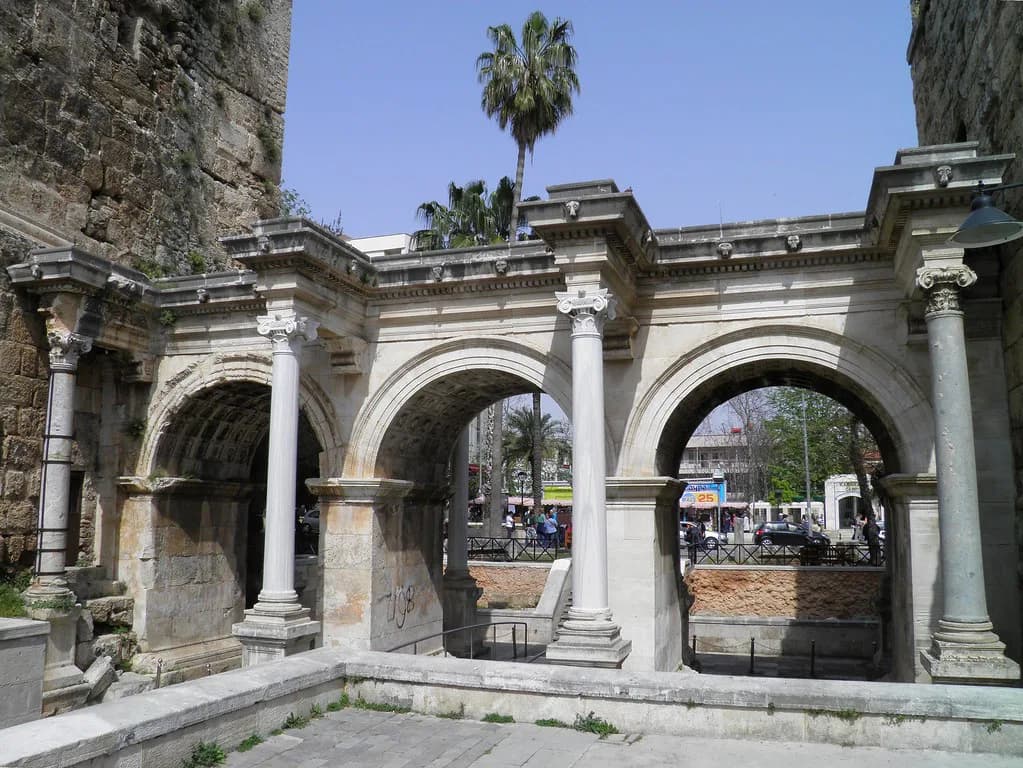
The tower is a surviving fragment of the old city walls, and the same defensive line includes Hadrian's Gate, one of the Roman sights in the city centre. The gate is reached by walking into Kaleiçi rather than by following the walls around the outside, so use the tower as your marker and head into the old town to find it.
If Roman masonry is what you came for, the gate and the wall fragments around the tower make a compact pair of stops that need no more than half an hour between them. The wider set of Antalya ruins around the centre is spread out enough to plan separately.
Nearby: Yivli Minare, the old harbour and the cliff-top parks
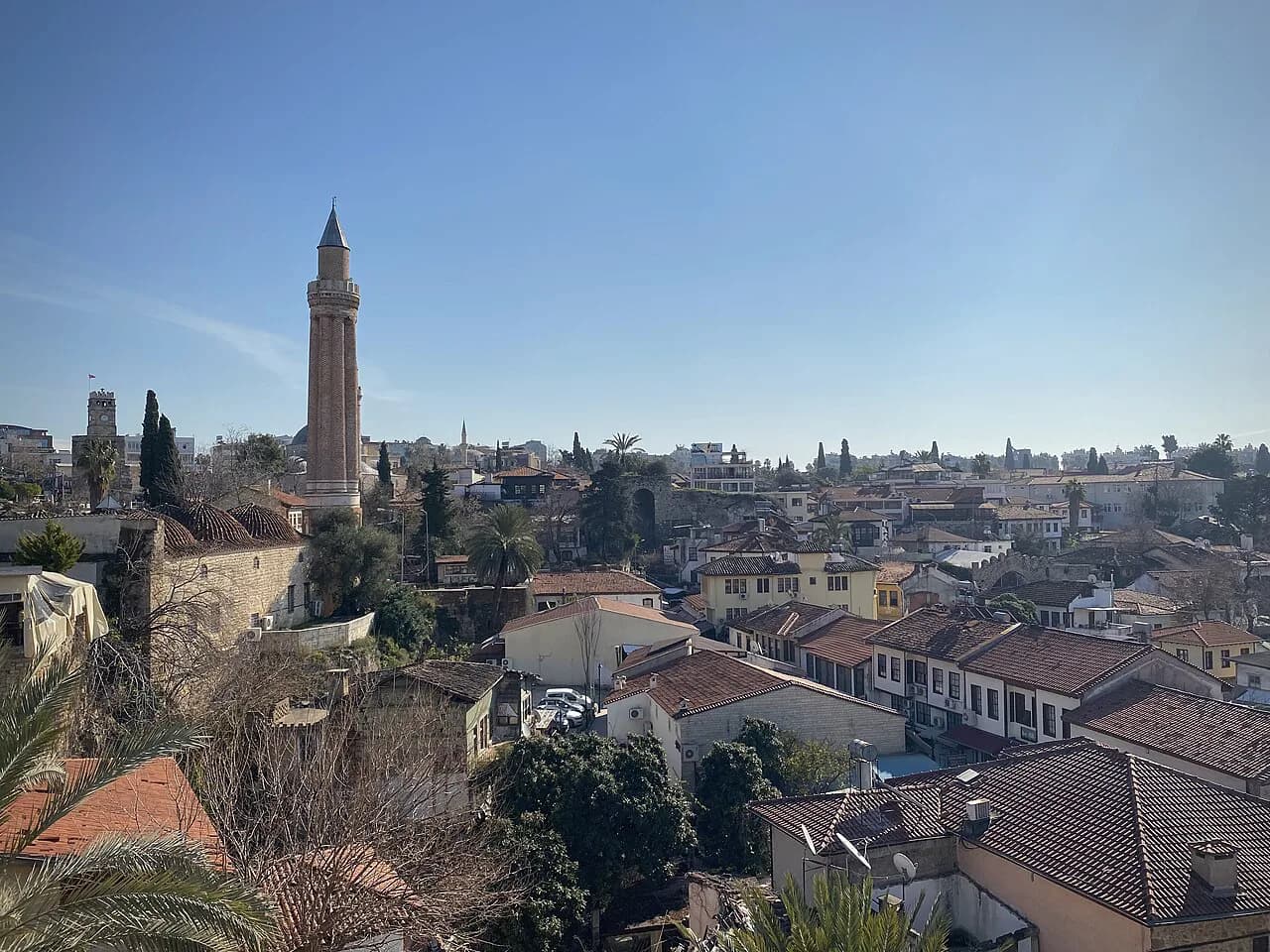
The Yivli Minare, the fluted minaret that symbolises the city, is a few minutes' walk from the tower, with benches and street carts selling simit and börek around it. The tower and the minaret together give you two of the central landmarks visitors look for.
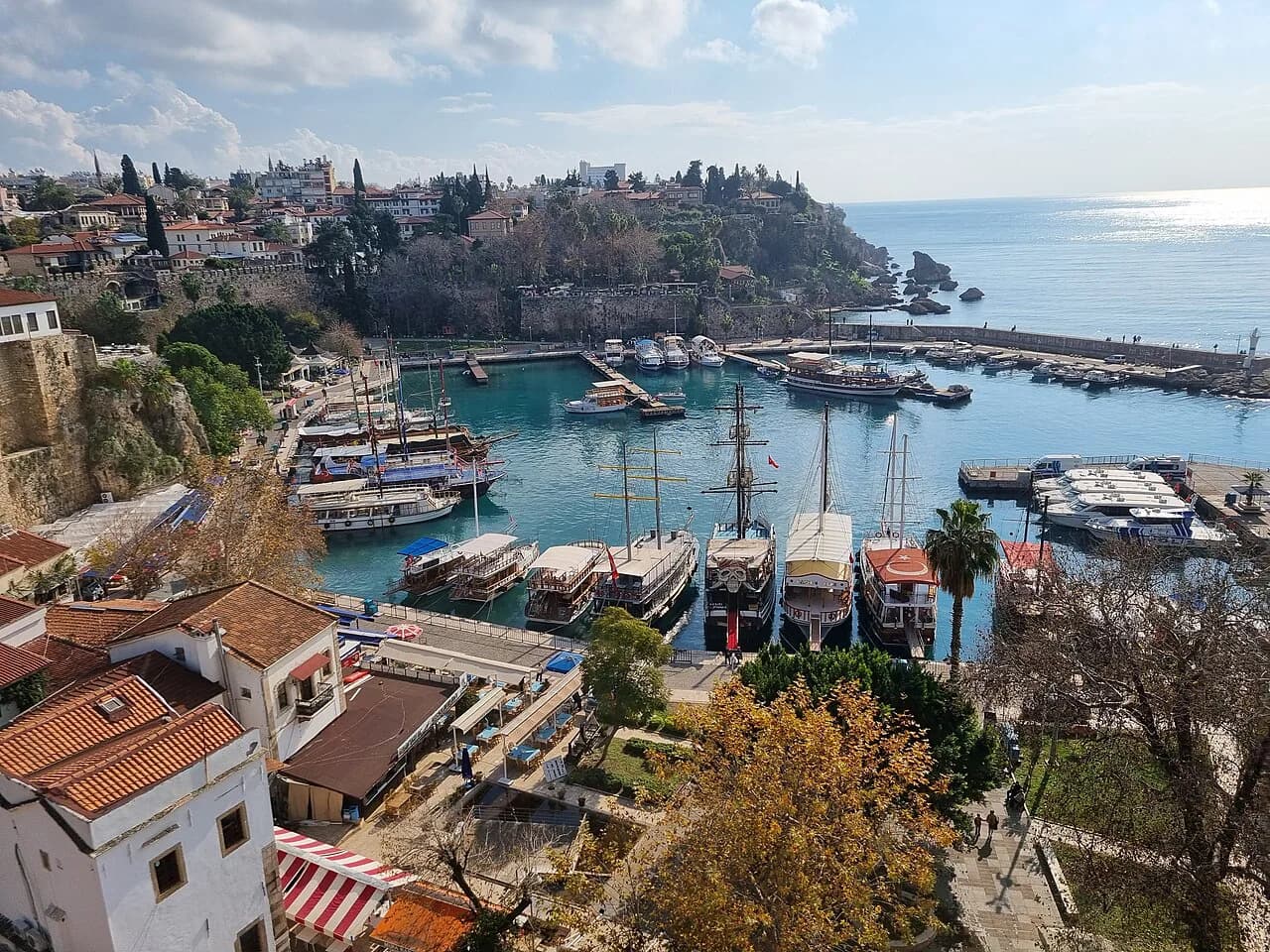
Below the walls, the old harbour holds the day-trip boats and a stretch of restaurants, and it is reached from the clifftop by a lift with views over the water. From the clifftop by the tower you can look down on the boats returning to the harbour, which gives you a sense of how the city fits together.
For a wider look at the waterfront, the Antalya marina area is where the boat operators and harbour cafés cluster. If religious buildings interest you, the mosques in Antalya are within the same central district, and the Antalya Ethnography Museum and other museums sit close enough to fold into the same morning.
Walking from the clock tower towards Konyaaltı
The tower makes a good starting point for the seafront walk towards Konyaaltı, because the route is flat and follows the coast rather than cutting inland. How long it takes depends on how often you stop, whether you detour down to the old harbour, and how many of the tea gardens and small parks you break the walk in.
A few hundred metres along, a clifftop viewpoint has a tea garden on one side and a small park on the other, both on the edge of a sheer drop to the sea. A wooden stairway leads down to a viewing platform, and from there you can pick out the day-trip boats heading back into the harbour.
Atatürk Park is the largest green space on the route, with places to eat, and it marks the approach to Konyaaltı. The walk is a good use of a couple of hours if you want the sea views without committing to a beach day.
Practical points: comfortable shoes, summer heat, peak hours
Plan the visit around your feet and the weather rather than around an opening time. The lanes are cobbled, the square has little shade in the middle of the day, and the summer heat is real, so a visit early or late is easier than one at noon.
Because the tower has no gate, there are no last-entry times to plan around. If you are arranging to meet someone there in the evening, check current details with the city or your accommodation beforehand.
Build the tower into a route rather than a destination: start there, walk through Kaleiçi, come out at the harbour, and finish along the seafront if the weather holds.
Is the clock tower worth a stop?
Yes, as a starting point rather than a sight in its own right. The tower gives you a free, unmistakable landmark at the mouth of Kaleiçi, and it puts Hadrian's Gate, the old harbour, the Yivli Minare and the cliff-top walk to Konyaaltı within easy reach on foot.
Give it ten minutes, then use it: wear proper shoes for the cobbles, aim for a cooler hour in summer, and let the tower be the point where you step into the old town.
Frequently Asked Questions
Is the Antalya Clock Tower free to visit?
Yes. The tower stands in the open on Cumhuriyet Square, with no entrance fee and no ticket gate, and visitors can pass it at any hour of the day or night. There is nothing to book.
How long do you need at the Antalya Clock Tower?
About ten minutes to look at the tower itself. Most visitors use it as the start of a longer walk through Kaleiçi, to Hadrian's Gate or along the seafront towards Konyaaltı, which takes an hour or more depending on stops.
What is the clock tower in Antalya called in Turkish?
It is the Saat Kulesi, which simply means clock tower. Locals also use it as a meeting point because it sits at the entrance to the old town on Cumhuriyet Square in the Muratpaşa district.
How close is the clock tower to Hadrian's Gate?
Both survive from the old city walls, and the walk between them through the edge of Kaleiçi is short, making a natural pairing of two central sights. Allow around half an hour to see both.
Sources
Notes for your next Turkey trip
Optional updates when we add or correct a town guide.
You might also like
Continue reading
More guides you'll find useful