Kaleiçi Antalya Guide: What to See and How Long to Stay
Plan a visit to Kaleiçi, Antalya's old town: Hadrian's Gate, Hıdırlık Tower, the marina and Kaleiçi Museum, with layout, walking routes and how long to allow.
On this page
Kaleiçi is the old quarter of Antalya, a knot of narrow cobblestone lanes on the clifftop directly above the city marina. A half day covers the headline sights on foot; add the museums and a slow lunch and you have a full day. This guide sets out the layout, the entry points, what each sight actually involves and how to fit the old town around the rest of your Antalya trip.
Almost everything that draws visitors sits inside a walkable circuit: Hadrian's Gate at the landward edge, the fluted Yivli Minare and the clock tower to the west, Hıdırlık Tower at the tip of the headland, and the harbour below the walls. Two details shape a visit. Hıdırlık Tower is not open to the public, so it is a viewpoint rather than an interior visit, and the museums are the only stops that need a ticket or a time slot.
What Kaleiçi is and where it sits above the Antalya marina
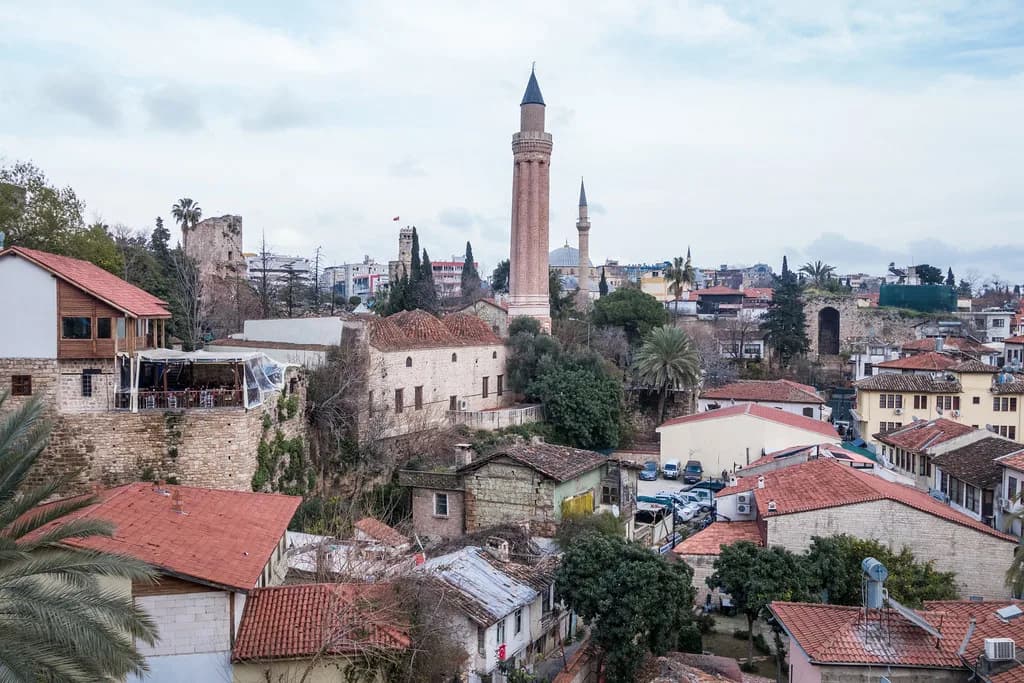
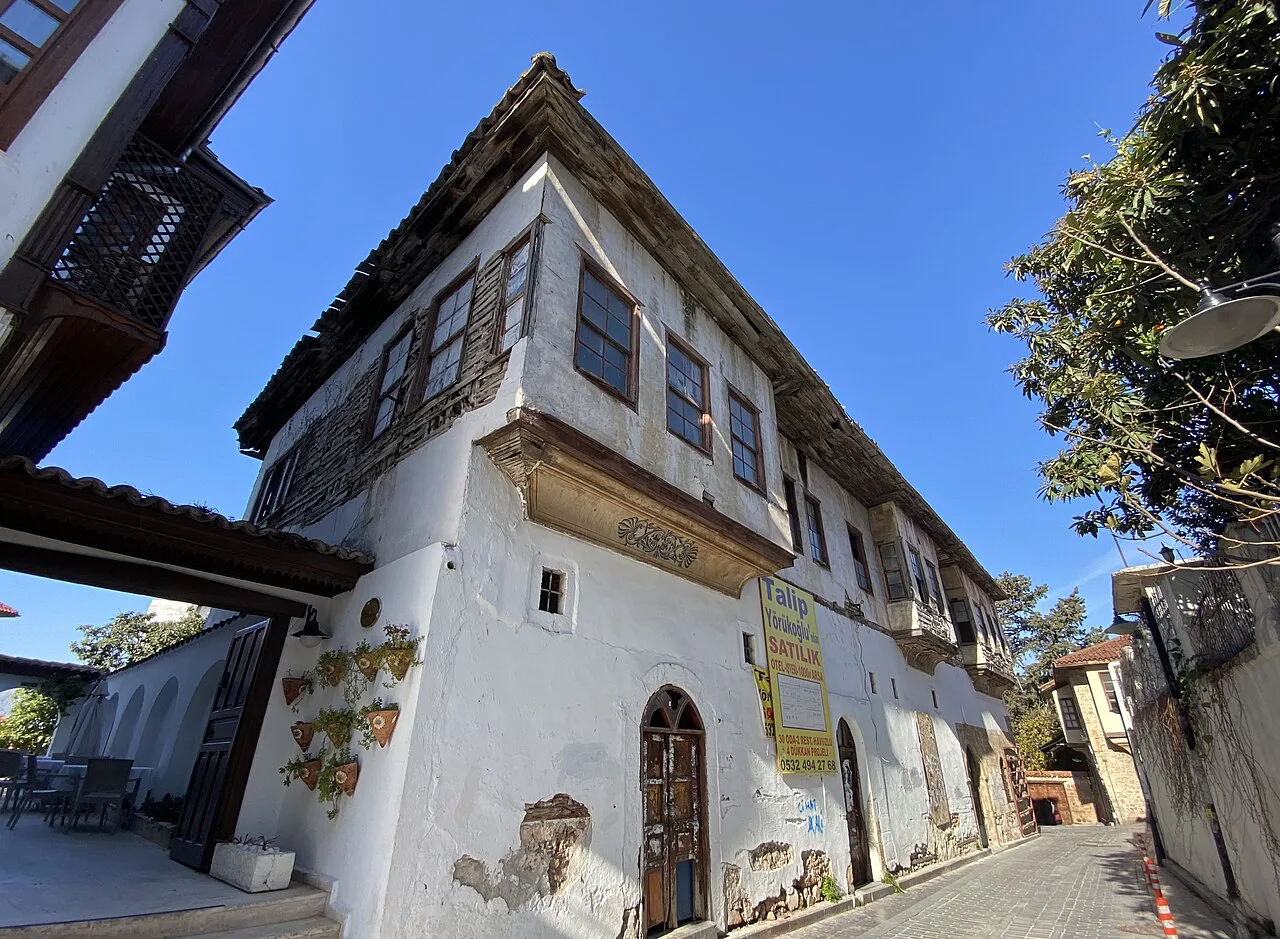
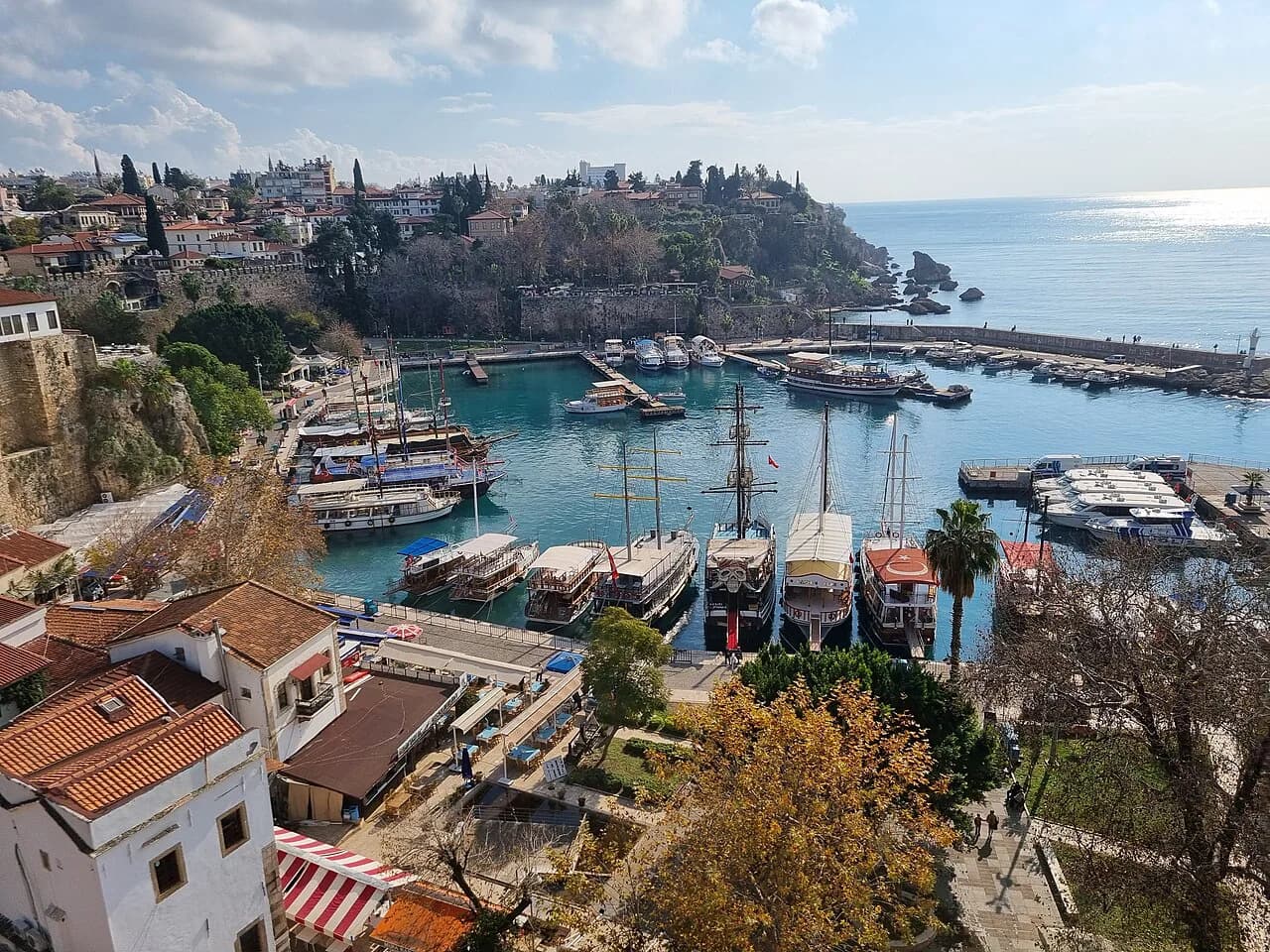
Kaleiçi occupies the headland that closes the eastern side of Antalya Bay, with the modern city wrapped around it and the marina tucked into its northern foot. The old town is a dense grid of lanes lined with houses that mostly date from the 18th and 19th centuries, though Roman, Byzantine and Ottoman fabric survives in the mix, and many of those houses now hold restaurants, shops and small boutique hotels.
Distances are short but vertical. The harbour sits below the walls, the lanes climb steeply behind it, and the sights spread across the headland from the gate in the north to the tower at the southern tip. Plan the walk as a loop rather than an out-and-back so you are not retracing the same steep alley in the afternoon heat.
How to get into the old town: through Hadrian's Gate and down to the harbour
There are two natural ways in. Most visitors arrive on foot from the modern centre along Atatürk Caddesi and pass through Hadrian's Gate, which has served as the entrance to the old town for around 1,900 years. The alternative is to start at the marina and climb the old stone staircase of 44 steps at the end of the harbour square, built in the 15th century by the Venetians, which brings you up into the lanes behind the waterfront.
Walking in from the centre is the simpler option if you are staying in the modern city, and it puts the gate first on your route. Coming up from the harbour suits anyone arriving by boat or starting a stroll along the waterfront, and it saves the climb for the end of the day rather than the middle of it. Local buses and the tram serve the modern centre around the old town; check the current Antalya public transport arrangements before you set out.
Once inside, navigation is by landmark rather than street name. The clock tower and the fluted minaret give you a western anchor, the marina a northern one, and Hıdırlık Tower the southern point of the headland, so a glance at those three tells you where you are in the lanes.
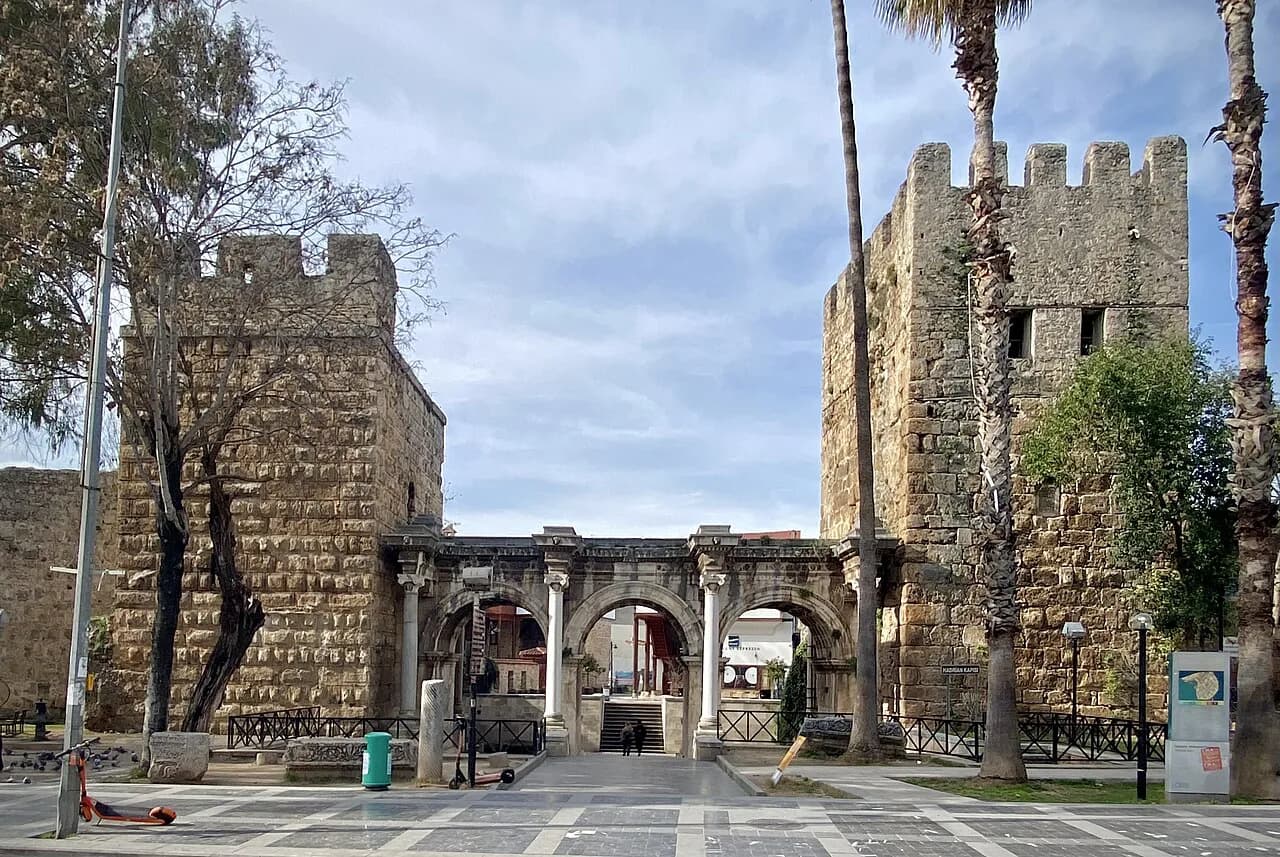
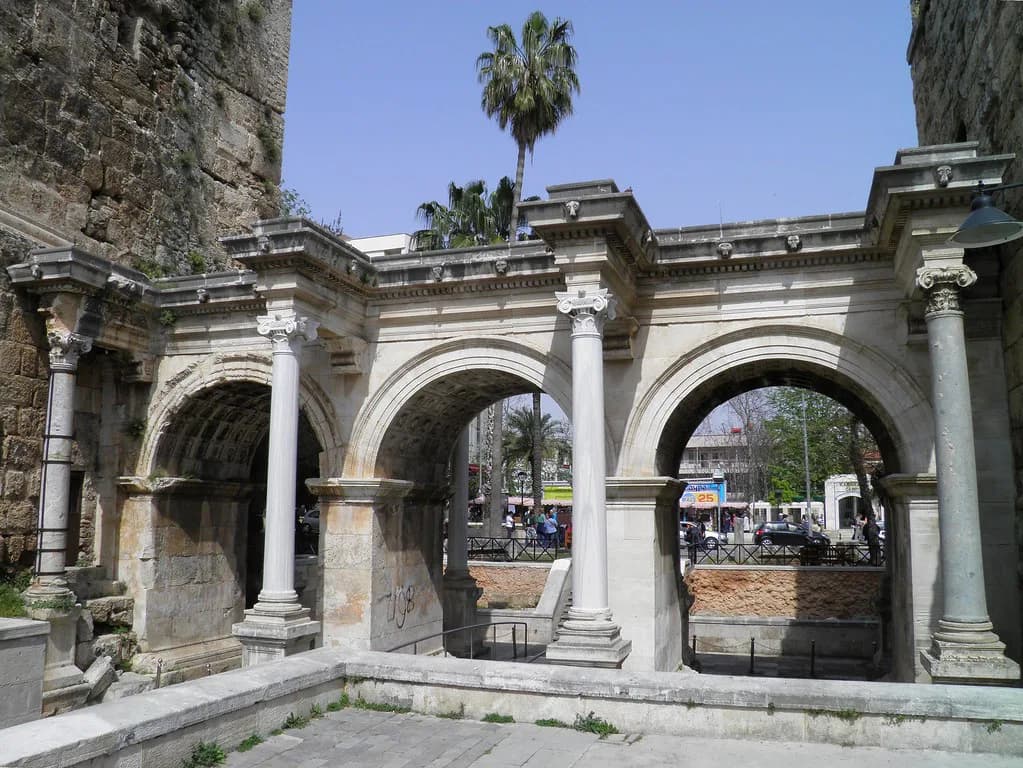
Hadrian's Gate: three arches, a marble frame and towers either side
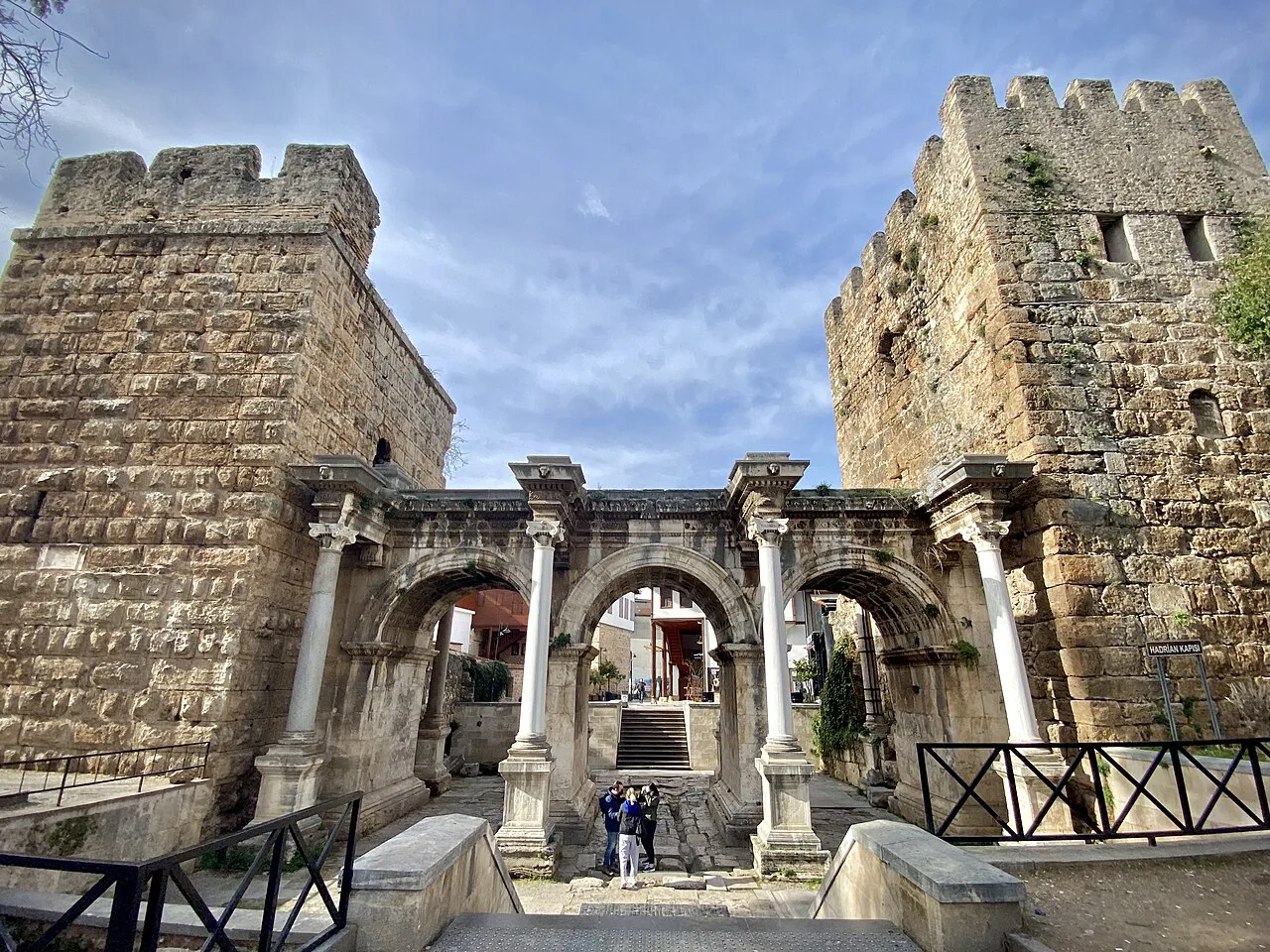
Hadrian's Gate is the only surviving gate from Antalya's former city walls, known in Turkish as Üçkapılar, the three gates. Each of the three arches is over four metres wide and set in a white marble frame, with a tower flanking the structure on each side. It is free to walk through and takes minutes to look at, so treat it as the practical start of your old town walk rather than a destination in itself.
Walk through the gate and the character changes immediately: cobbles underfoot, stone houses on both sides and the noise of the modern city falling away. Photographers should look back at the gate from inside the old town, where the marble frame and the flanking towers read clearly against the sky.
Hıdırlık Tower and the bay viewpoint at the end of the headland
Hıdırlık Tower is a cylindrical structure 14 metres tall on a square base, standing at the southern end of the old town above the water. Its history is debated, with suggestions ranging from a lighthouse to a mausoleum, and it later formed part of the city's defences. Today it is not open to the public as an interior visit, though it is sometimes used for cultural and artistic events, so do not build a day around going inside.
The reason to walk down here is the view. From the tower you look out over Antalya Bay, the long sandy sweep of Konyaaltı beach and the mountains rising behind the city. Come late in the afternoon when the light is softer and the headland is quieter than the gate end of the old town.
Yivli Minare and the Saat Kulesi: the fluted minaret as the city landmark
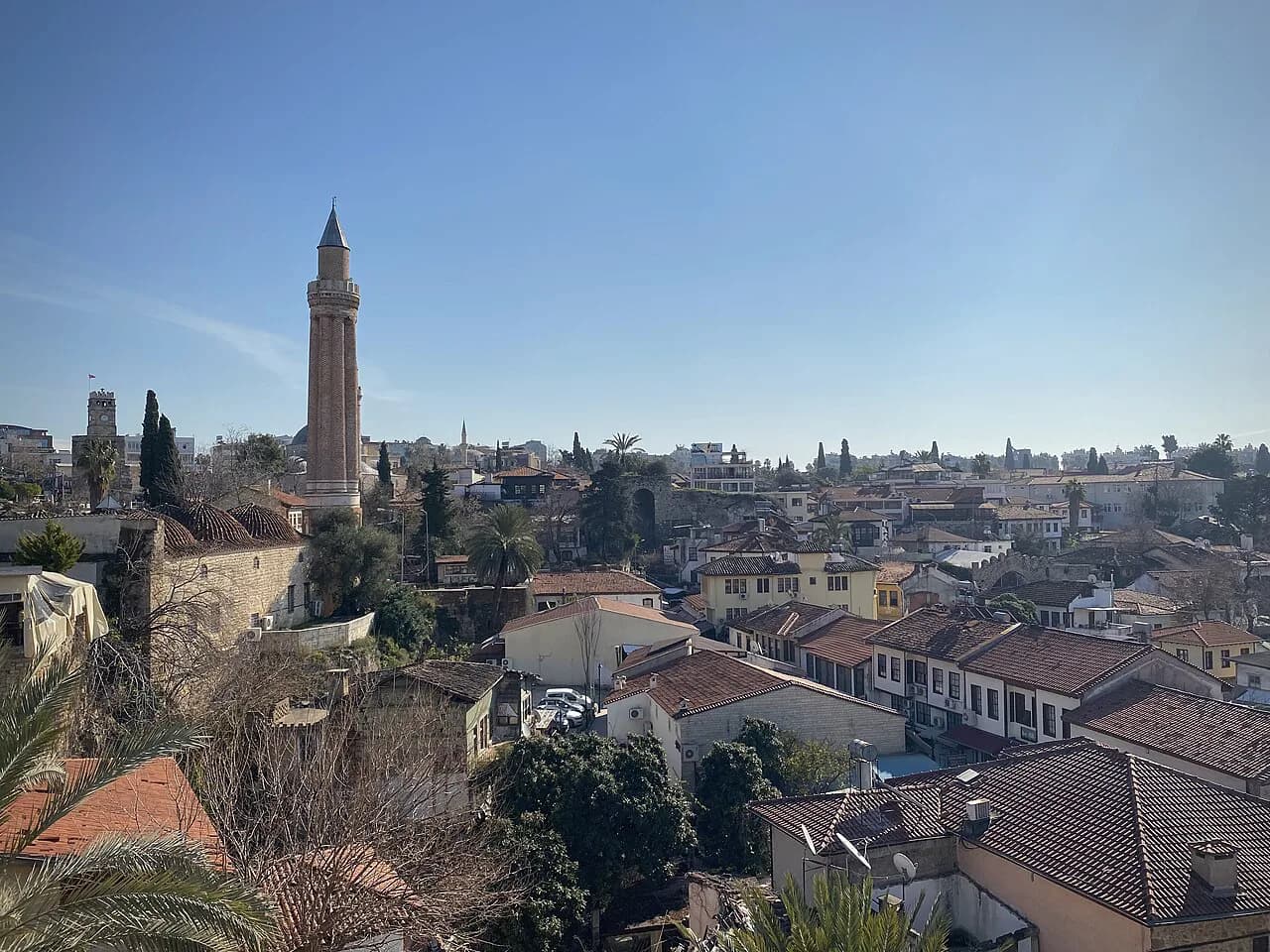
The Yivli Minare, the fluted minaret, is Antalya's landmark and visible from much of the old town. The brick tower stands 38 metres high on a stone base, partly decorated with blue tiles, and its eight channels give it the fluting that names it. It is generally dated to around 1226–27, during the reign of the Seljuk sultan Kai Kobad I, and counts among the first Islamic buildings in the city.
The mosque itself is a working place of worship, so time your look inside around prayer and dress modestly, with shoulders and knees covered and hair covered for women. Beside it stands the Saat Kulesi, the clock tower, which makes a convenient meeting point before you head east through the lanes. The two sit close together, so pair them in a single stop.
Kaleiçi Museum and the Ethnographic Museum in the old houses
The Kaleiçi Museum has documented traditional Turkish folk culture since 1996, housed in two historic buildings. Its displays include recreated scenes of daily life in Turkey and a collection of ceramics from Çanakkale, and the Ethnographic Museum forms part of the complex. This is the stop that turns a half day into a fuller one; set aside time for it rather than squeezing it between sights.
Entrance fees and opening hours change, so confirm them at the museum entrance or through the Antalya governorate's site before you go. Build the museum into the middle of your walk rather than the end, when tired legs and heat make an indoor stop less appealing than it should be.
Walking the narrow cobblestone streets: Ottoman-era houses, courtyards and pebble-mosaic floors
The pleasure of Kaleiçi is the wandering itself. Narrow cobblestone streets run between traditional houses, many with landscaped courtyards, and old floors are laid with black-and-white pebble mosaics in geometric or figurative patterns. Look down as well as up: the mosaics are easy to walk over without noticing.
Much of the old housing now holds cafés, shops and small hotels, which means the lanes are busiest where the restaurants cluster and quieter towards the residential edges and the southern headland. Walk the quieter streets in the morning and save the commercial lanes for the evening, when the heat eases and the courtyards fill up. Wear shoes with grip: the cobbles are polished and uneven in places.
The marina and the 44-step stone staircase up into the old town
Antalya's harbour was once one of the most important ports on the Anatolian south coast, and it now works as a modern marina popular with locals and visitors alike. The best photographs of the harbour with the old city walls behind it are taken from the quay. At the end of the harbour square, the 44-step stone staircase built by the Venetians in the 15th century connects the waterfront to the higher old town.
The climb is short but steep, so take it in the cooler part of the day if you can. Boats leave from the harbour for trips along the coast, which makes the marina a sensible place to end a morning walk before heading back up into the lanes for lunch, and it is worth weighing those coastal departures against a longer Antalya boat trip if you want more than an hour on the water.
The bazaar streets and where the souvenir and ceramics shops cluster
Shopping concentrates in the bazaar streets inside the old town, where souvenir stalls and ceramics shops sit alongside everyday traders. Çanakkale ceramics appear in the museum collections and in the shops, so the lanes are a reasonable place to look at the wares before deciding. Haggling is normal in the bazaar and market setting; agree a price before anything is wrapped. Our guide to Turkish ceramics explains what to look for before you buy.
Shop in the morning if you want space to look, and avoid the middle of the afternoon when the lanes are at their hottest and most crowded. Carry small notes for convenience, and remember that the best ceramics shops sit slightly off the main drag rather than on it.
Keçili Park viewing platform and Mermerli beach below the walls
The viewing platform in Keçili Park looks out over the water and down towards Mermerli beach, which sits below the old town walls. It is a short detour from the main lanes and a good place to pause with a drink rather than a full stop. Come for the view over the harbour and the cliffs, not for a beach day.
The beaches along the Antalya coast, including Konyaaltı, are a separate outing, best left for a different day rather than tacked onto a Kaleiçi walk. If you want a swim and an old town walk together, plan the swim for the late afternoon when the platforms and the water are cooler.
How long Kaleiçi needs: a half day against a full day
A half day is enough for the free sights and the streets. Walk in through Hadrian's Gate, see the Yivli Minare and the clock tower, wander the lanes, drop to the marina by the staircase and finish at Hıdırlık Tower for the view. That route takes in the gate, the tower exterior, the minaret and the harbour without spending anything beyond food and drink.
Add the Kaleiçi Museum and the Ethnographic Museum, a proper lunch in a courtyard and a slow walk along the quay, and a full day fills comfortably without rushing. The trade-off is between breadth and depth: a half day gives you the landmarks at a glance, while a full day lets you take the quieter lanes and linger in the museums.
Getting there: walking in from the modern centre and arriving by public transport
Walking in from the modern centre is the default. Follow Atatürk Caddesi to Hadrian's Gate and you are inside the old town within minutes of leaving the shopping streets. Antalya's tram and local buses serve the centre around the old town, so a hotel anywhere in the modern city puts Kaleiçi within easy reach on foot or by a short ride; check the current routes and ticketing before you travel.
Taxis can drop you near the gate but rarely penetrate the lanes themselves, so expect a short walk at either end. Cycling inside Kaleiçi is impractical on the cobbles and steps; leave the bike or scooter at the edge of the old town and continue on foot.
Practical points: mosque etiquette at Yivli Minare and the heat in the lanes
Dress modestly for the Yivli Minare mosque, covering shoulders and knees and removing shoes at the door, and avoid visiting during prayer times. The mosque is a working place of worship, so keep voices low and keep photography respectful of anyone praying. A light scarf in your bag covers most situations.
Antalya's heat is the practical constraint on any walking plan: the lanes are narrow, the cobbles radiate warmth and shade is patchy. Walk early or late, carry water and plan an indoor stop in the middle of the day for the museums or a courtyard café. In summer, a half day is often a better fit than a full one for that reason alone.
What pairs with Kaleiçi nearby, including Düden Waterfall by tour
Düden Waterfall is the obvious add-on, and organised city tours combine the old town with the waterfall and a boat trip in a single day. If the boat part is what appeals, it is worth comparing it against a dedicated Antalya boat trip before you book. Book through an operator and check what the tour includes before paying, since the mix of cable car, waterfalls and boat varies between listings.
If you want a quieter green stop, Kurşunlu Waterfall lies outside the city and pairs well with a slow day rather than a full sightseeing one. Karaalioğlu Park gives you a coastal walk within reach of the old town without leaving the centre, and works well as an evening stroll after a day in the lanes.
Where Kaleiçi fits against Antalya's resort strips and beaches
Kaleiçi gives you the historic, walkable version of Antalya, with lanes, courtyards and a harbour, in contrast to the resort strips and beach hotels further out along the coast. Staying in or near the old town means you can walk to dinner and to the sights; staying out on the coast means a taxi or bus ride in. The trade-off is atmosphere against space and pool time. The same atmosphere-versus-convenience decision goes for a boat trip in Antalya.
If your holiday is built around beaches and resort facilities, treat Kaleiçi as a day out rather than a base and come in early to beat the heat. If you want to spend your evenings wandering cobbled streets and eating in courtyards, staying inside the old town or on its edge makes far more sense.
Is Kaleiçi worth a half day or a full one?
Take the half day if you want the gate, the minaret, the marina and the viewpoint without committing a whole day. Take the full day if the Kaleiçi Museum and the quieter lanes at the southern end appeal, and plan the walking around the heat with an indoor stop in the middle.
Whichever you choose, start at Hadrian's Gate, finish at Hıdırlık Tower for the bay view and confirm museum hours and tour inclusions on the day. That way the old town fits neatly around the rest of your Antalya trip rather than competing with it.
Explore more Antalya guides
Frequently Asked Questions
Is Antalya a city or a town?
Antalya is a city, and Kaleiçi is its historic old quarter rather than a separate settlement. The old town sits inside the modern city, which is why you can walk from the shopping streets through Hadrian's Gate straight into the lanes.
What is Antalya famous for?
Antalya is known for its old town and harbour, its Roman and Seljuk monuments such as Hadrian's Gate and the Yivli Minare, and its coastline. Within Kaleiçi the draws are the cobbled lanes, the Ottoman-era houses, the museums and the views over Antalya Bay.
What ancient ruins can I visit near Kaleiçi?
Inside the old town the Roman survivals are Hadrian's Gate and Hıdırlık Tower, with the Seljuk Yivli Minare alongside them. For a full day of ancient sites, plan a separate trip outside the city rather than trying to fold ruins into a Kaleiçi walk.
Do I need a ticket for the main sights in Kaleiçi?
The gate, the tower exterior, the minaret, the harbour and the lanes are free to walk. The Kaleiçi Museum and the Ethnographic Museum are the ticketed stops; entry fees change, so confirm them at the entrance or through the Antalya governorate's site.
Can I visit Kaleiçi without a car?
Yes. Walking in from the modern centre through Hadrian's Gate is the simplest approach, and the tram and local buses serve the surrounding centre. Inside the old town everything is on foot, and the harbour staircase is the steep connection between the marina and the lanes.
Sources
Notes for your next Turkey trip
Optional updates when we add or correct a town guide.
You might also like
Continue reading
More guides you'll find useful