Antalya History: Attaleia to Kaleiçi Visitor Guide
Antalya's history in plain dates, from Attaleia's founding in 159 BC to the Seljuk and Ottoman city, tied to Kaleiçi sights you can still visit today.
On this page
Antalya's story starts with a harbour. The city was founded in the 2nd century BC, around 159 BC, by King Attalus II of Pergamon and named Attaleia in his honour, and it grew because a rocky plateau gave it a protected natural port on Anatolia's southern coast. That single decision explains almost everything you see in the old centre today: walls, a harbour and a compact town packed inside them.
This guide keeps the timeline short and attaches each date to a place you can actually find on foot, from Hadrian's Gate to the Seljuk minaret and the Ottoman houses of the old town. It also points to the ancient sites outside the city that belong to the same story, and explains how the restored quarter and the modern boulevards fit together.
Where Antalya's name and origins come from
Attalus II of Pergamon founded the settlement in roughly 159 BC as Attaleia. Its site was chosen for geography as much as prestige: a rocky plateau with a convenient natural harbour that could shelter ships and receive trade. Goods from the interior, including timber and olive oil, passed through the port, and the city was ringed by fortress walls with temples and public buildings inside.
The name changed hands with the city. In 133 BC Attaleia passed to the Roman Republic under the will of the last Pergamene king, Attalus III, and the Romans used the port as a naval and trading base. In 67 BC Pompey used it as a base for a campaign against pirates at sea.
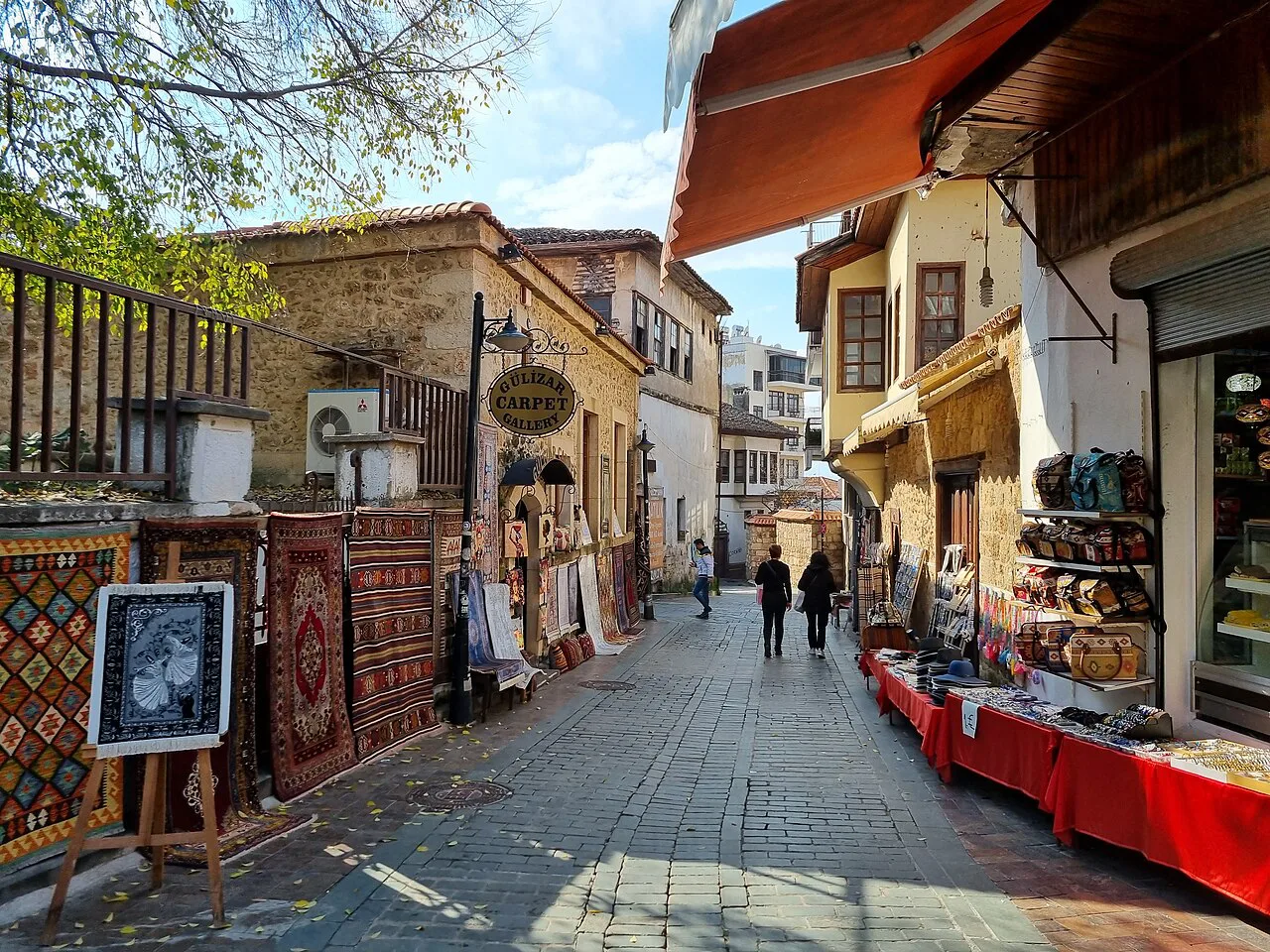
The Roman and Byzantine city: Hadrian's Gate, the harbour and the walls
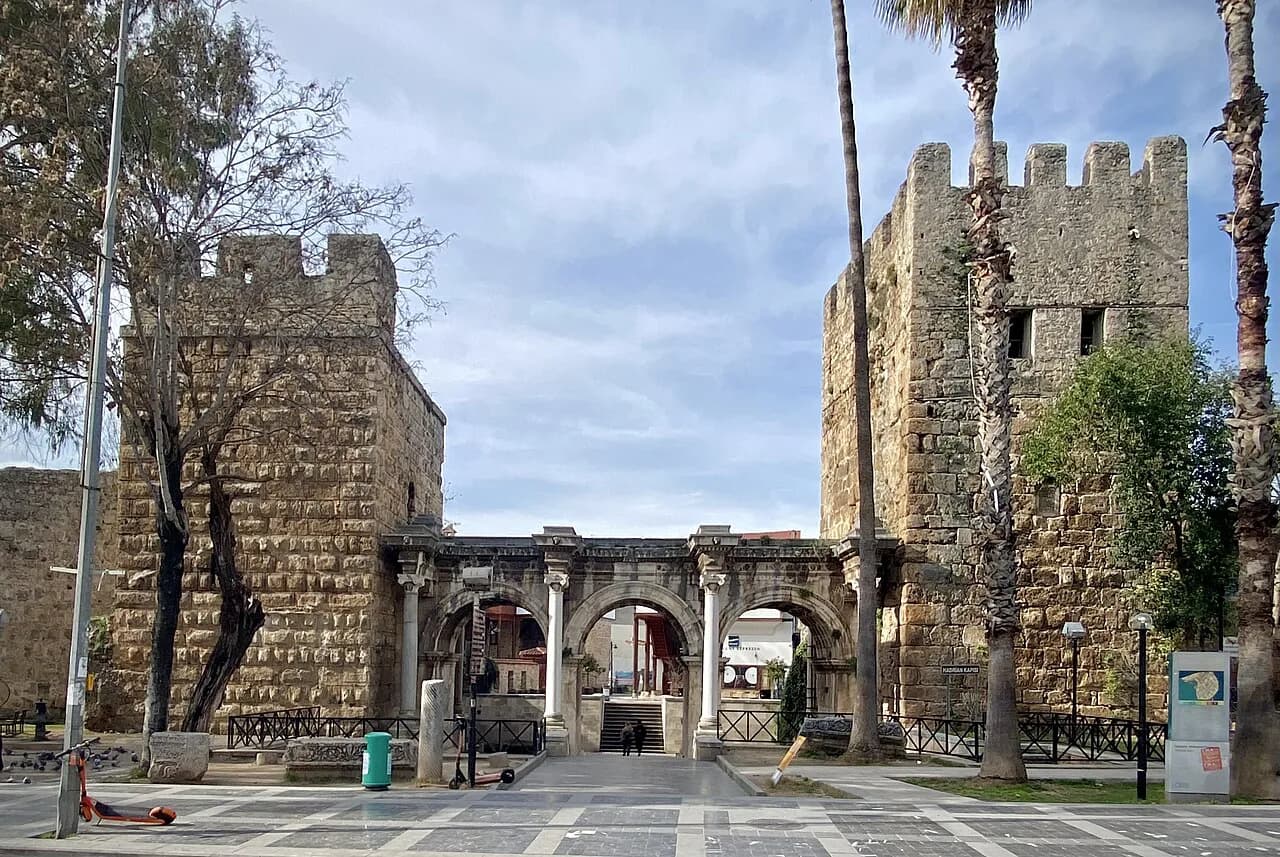
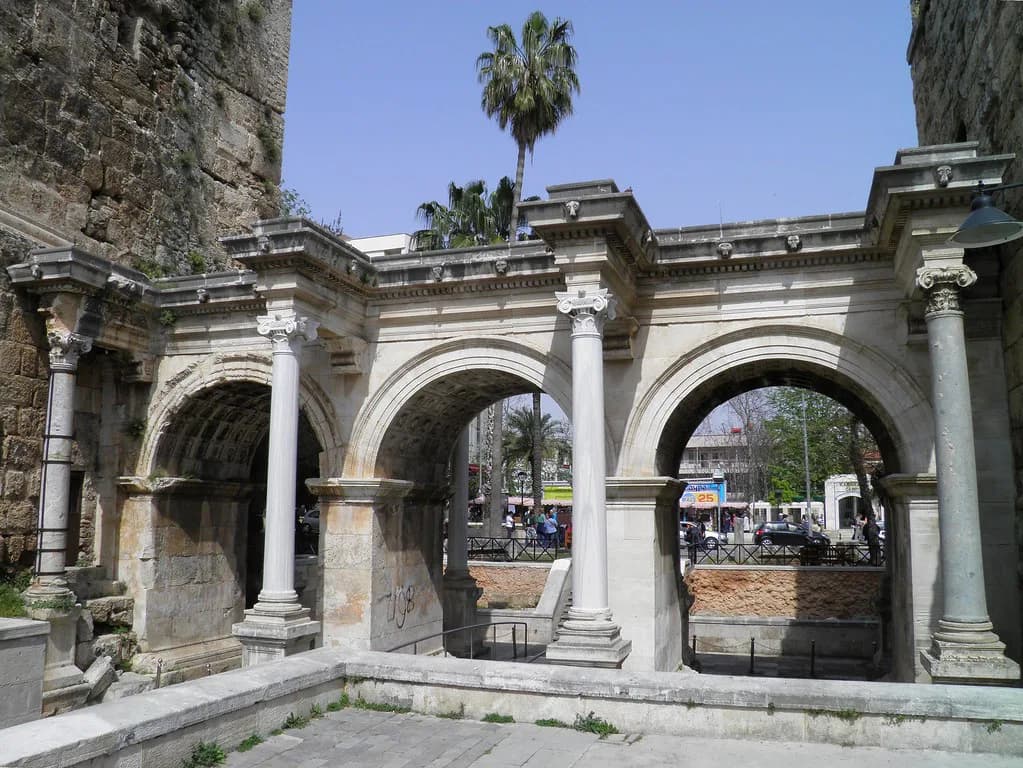
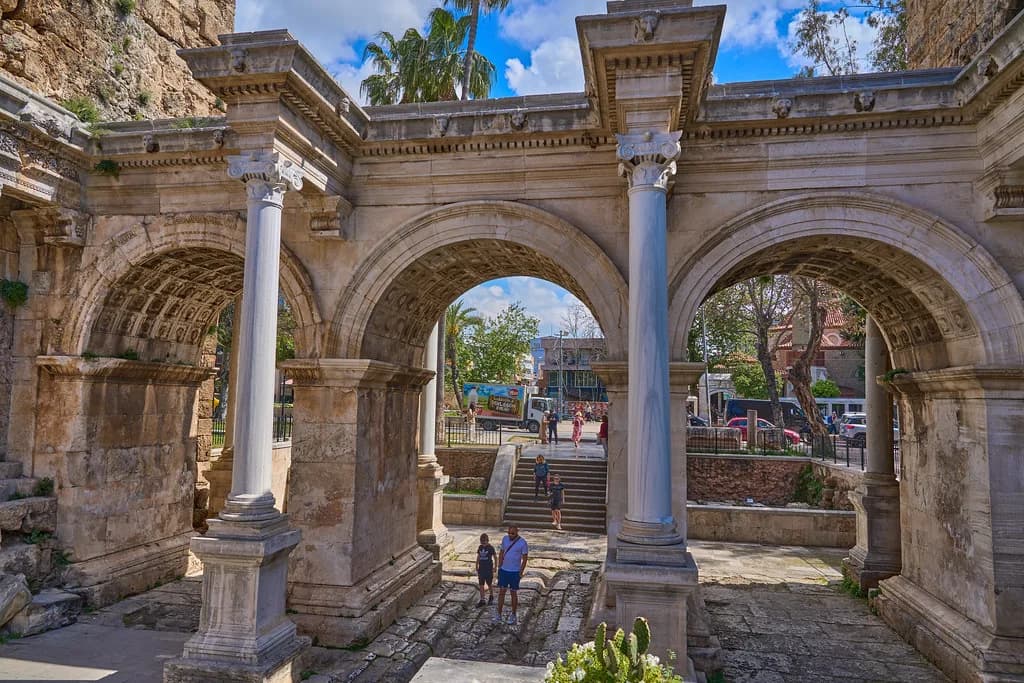
The Roman era left Antalya its best-known monument. Emperor Hadrian visited in 130 AD, and a monumental triumphal gate was built in his honour; it survives as Hadrian's Gate, the triple-arched entrance most visitors walk through to enter Kaleiçi. When the empire split in 395 AD, Attaleia continued under Byzantium as a trade and naval centre.
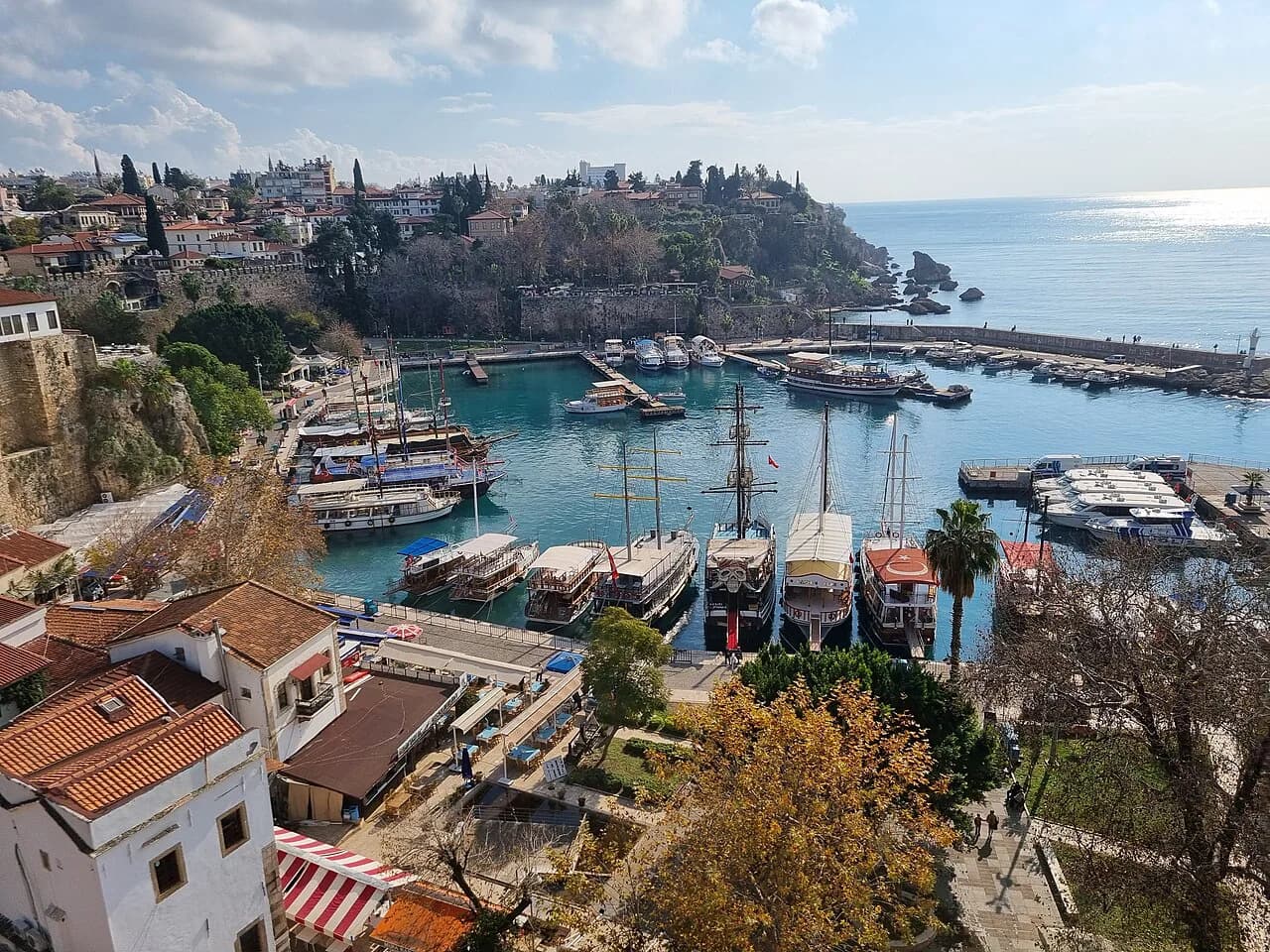
The walls that once enclosed the city are the reason the old quarter feels so contained. Central Kaleiçi sits within the Roman walls, and the harbour below it is still the anchor of the district. Walking in through Hadrian's Gate puts you inside that ring, which is the simplest way to understand the layout of the Antalya old town before you start exploring.
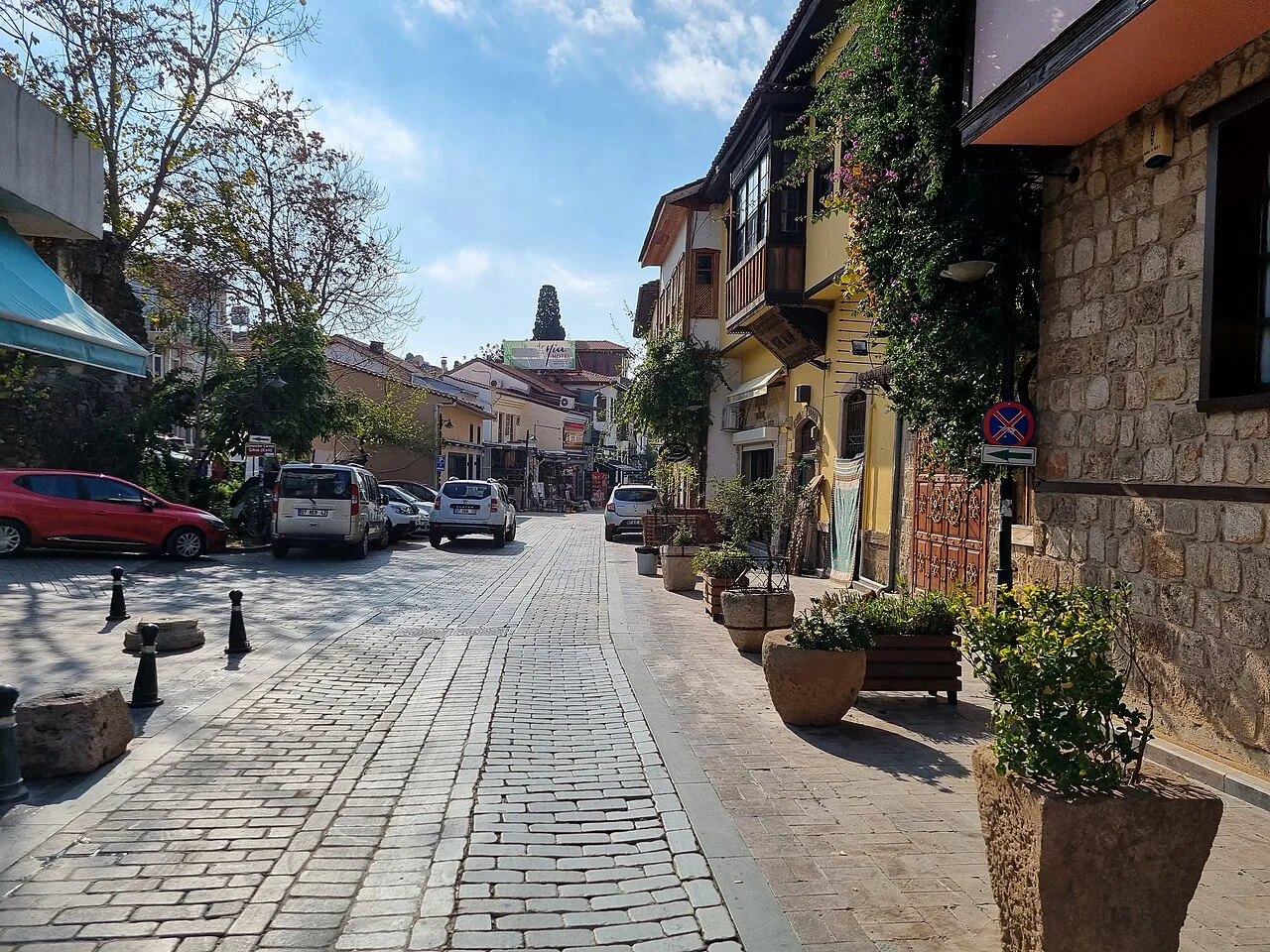
What the Seljuks and Ottomans left in the old town
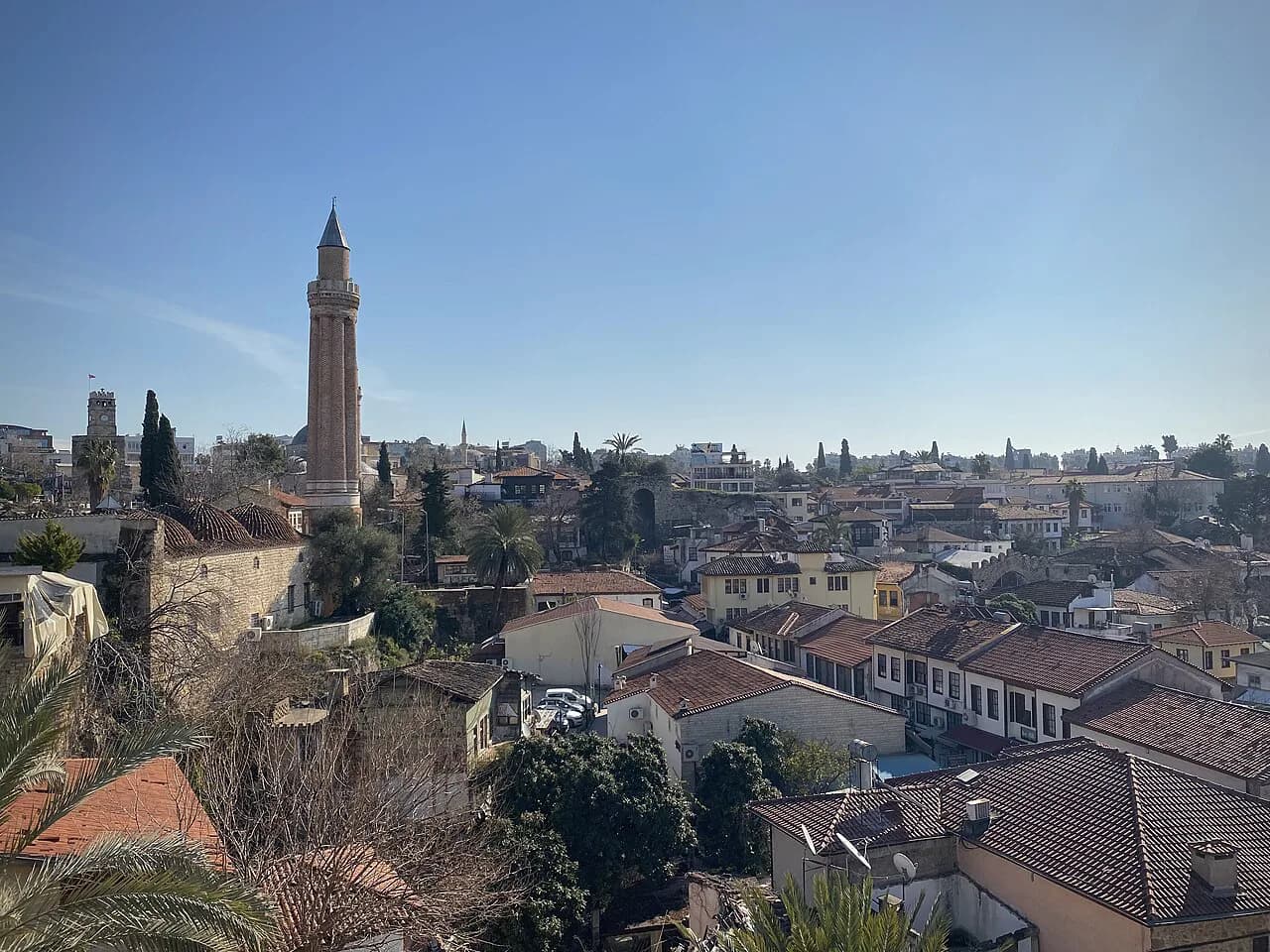
The Seljuks took the city in 1207 under Sultan Kaykhusraw I, giving their state access to the Mediterranean. They built a shipyard and religious structures, including the Yivli Minare, the fluted minaret that remains one of the old town's landmarks. That minaret is the clearest single marker of the Seljuk chapter in a walk through the centre.
Ottoman rule, first from 1391 and firmly from 1426 under Murad II, produced the fabric of Kaleiçi itself: dense houses inside the walls, cobbled streets and internal gardens. The result is a historic centre whose character comes from domestic architecture as much as monuments, which is why the lanes reward slow walking rather than a checklist. The Tekeli Mehmet Pasha Mosque is among the buildings named within the quarter, and the wider set of Antalya mosque sites gives you a reason to look up as you go.
Why the old harbour and Kaleiçi were restored
In the 1970s a large restoration project began on the old port and the Kaleiçi district, shifting the city's planning emphasis from modernisation towards heritage preservation. That project laid the ground for the visitor-facing old town you see now, with the harbour at its base. It is a working, inhabited quarter rather than a museum piece, so expect the lanes to be busy in high season.
The wider tourism push came in the 1980s, when a state programme transformed the region into a resort economy and hotel building spread beyond the walls. The trade-off is visible: inside the ring you get Ottoman streetscape and Roman gates, while outside it you get palm-lined boulevards and a modern city. Staying inside the walls keeps the history close but puts you in the thick of the crowds; staying outside is calmer but adds a walk or a ride to every sight.
A short timeline of Antalya's key dates
c. 159 BC: Attalus II of Pergamon founds Attaleia. 133 BC: the city passes to Rome. 67 BC: Pompey uses the port against pirates. 130 AD: Hadrian visits and the gate is built. 395 AD: the city passes to Byzantium. 1207: the Seljuks take the city under Kaykhusraw I. 1391 and 1426: Ottoman control, first briefly and then permanently.
1919 to 1921: Italian forces occupy the city before control returns to the national government. 1923: with the proclamation of the Republic, Antalya becomes the administrative centre of its province. 1980s: the tourism development programme reshapes the coast. Later decades brought expansion of the international airport and, in 2016, the city hosted EXPO, with landscape projects and a light rail system following.
How the old town sits inside the modern city
Kaleiçi is a compact pocket of low houses and narrow lanes wrapped by the modern city, entered most memorably through Hadrian's Gate. Inside, the named highlights cluster: the Hıdırlık Tower, the Yivli Minare, the Kesik Minare, the Tekeli Mehmet Pasha Mosque, the bazaar and the marina.
The marina is the natural end point of a walk downhill through the lanes, and the old harbour below the walls is what the whole district was built around. Read the Kaleiçi Marina page before you set out if you want to understand how the port relates to the streets above it, and keep the clock tower in mind as a landmark on the modern side of the walls.
The Antalya Museum and the wider sites beyond the city
The Antalya Archeological Museum is one of the largest in Turkey and holds finds from the region's long sequence of civilisations, which makes it the place to see objects that the ruins themselves no longer hold. Sculpture and silverwork unearthed at tombs in the Elmalı area are displayed there, so a museum stop can complete what a site visit leaves out. Pair it with the city's other collections by checking our guide to museums in Antalya before you decide how much time to give each one.
Beyond the city, the Roman theatre at Aspendos is a famous and well-preserved nearby site, about 45 km east of Antalya and reachable by organised tour or by car. Perge, with its stadium, baths and marketplace, is reached by tram towards Aksu followed by a taxi or a walk, and Termessos sits high in the Taurus Mountains with a theatre built into the slope. The Lycian city of Phaselis, near Kemer, has three harbours and coastal views, and the Temple of Apollo at Side is the region's other signature ancient stop.
What this history means for a visit
Order your walk by era and the old town reads clearly. Start at Hadrian's Gate for the Roman layer, follow the lanes to the Yivli Minare for the Seljuk one, then look at the houses and cobbles themselves for the Ottoman city. Finish at the harbour, where the founding decision about the port is still visible in the shape of the bay.
Treat the old town as a half-day of walking rather than a checklist, and use the modern city for the rest of your day. The museum and the out-of-town sites such as Aspendos, Perge and Termessos are best given their own trips, so plan them on different days rather than trying to fold them into a Kaleiçi morning. Opening times and ticket arrangements change, so confirm them with the museum or site before you travel.
Which era should you follow first?
Start with the Roman layer: enter through Hadrian's Gate, walk down to the harbour, then climb back for the Yivli Minare and the Ottoman lanes. That route gives you the city's origins, its Byzantine continuity and its Seljuk and Ottoman rebuild in a single loop, and it keeps the museum and the outlying sites free for another day.
Explore more Antalya guides
Frequently Asked Questions
Why was Antalya founded where it is?
Because of the geography. Attalus II's planners chose a rocky plateau with a natural harbour that could shelter ships and handle trade, and the city became a port linking the coast with the interior of Anatolia.
What did the Romans build in Antalya?
The city's most famous Roman monument is Hadrian's Gate, built in 130 AD to honour the emperor's visit. The Romans also used the port as a naval base, and the city was enclosed by fortress walls, which still shape the old quarter.
When did the Seljuks take Antalya?
In 1207, under Sultan Kaykhusraw I. They built a shipyard and religious structures including the Yivli Minare, the fluted minaret that remains a landmark of the old town.
Sources
Notes for your next Turkey trip
Optional updates when we add or correct a town guide.
You might also like
Continue reading
More guides you'll find useful