Amyntas Rock Tombs, Fethiye: What to See and How to Visit
The Amyntas Rock Tombs are Lycian tombs cut into the cliff above Fethiye centre. What you see, the hundred-step climb, the view and how to walk there.
On this page
The Amyntas Rock Tombs need around one to two hours, not a half-day: they sit on the cliff directly above Fethiye centre, reached on foot from most central accommodation in about ten to fifteen minutes, and the visit is a climb of roughly one hundred steps to a platform in front of the main tomb. The payoff is a temple-front facade cut into the rock and a view over Fethiye bay and its islands. This guide covers what you are looking at, the smaller tombs most people walk past, the climb and footwear, when to go in summer, and what to pair with the visit in town.
What the Amyntas Rock Tombs are
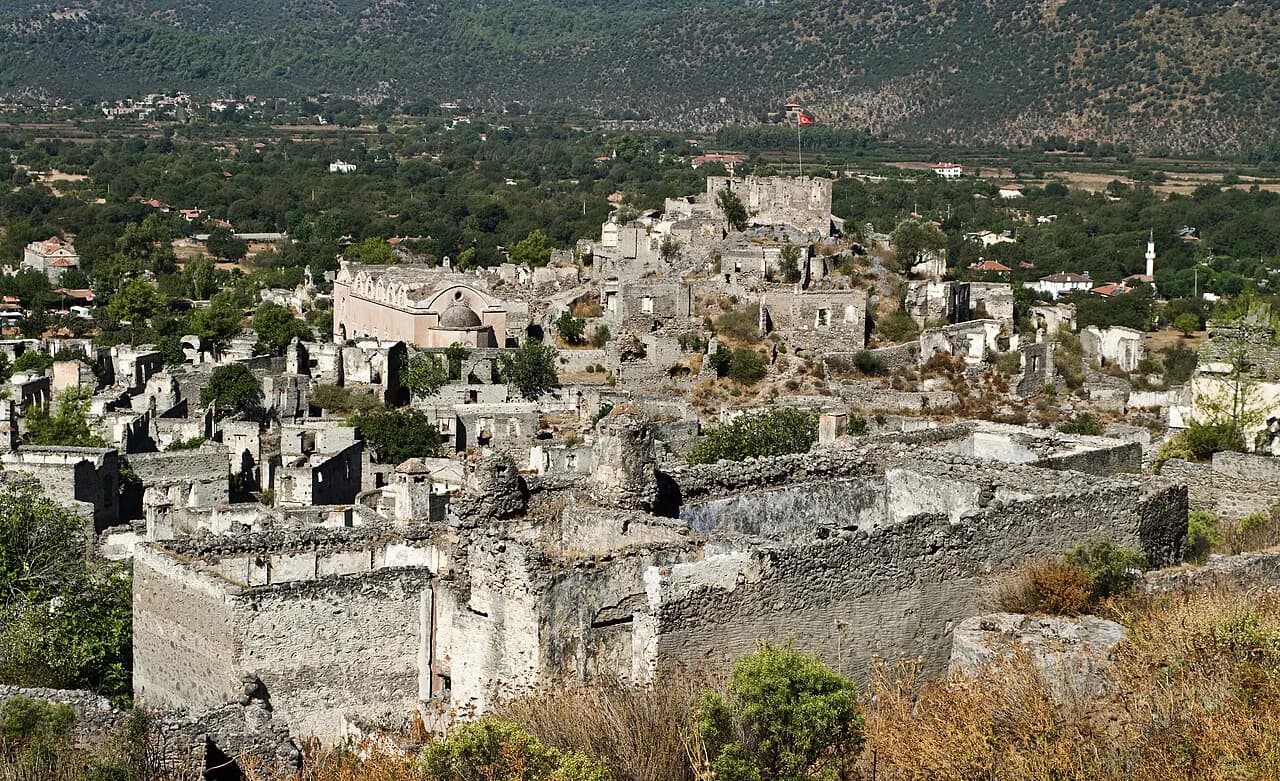
The tombs are the necropolis of ancient Telmessos, the Lycian city built on the ground now occupied by Fethiye. They are cut into a steep rock slope in the town centre rather than standing as a free-standing ruin, which is why the site reads as a cliff face with carved openings rather than a temple you walk around. Telmessos was one of the important cities of Lycia, and the tombs are its most significant surviving remains.
If you are working through the carved tombs of the region, this is the one in the middle of a working town, which makes it the easiest to fit into a harbour day. The wider spread of sites along this stretch of coast is covered in the guide to Lycian Tombs, while the broader run of sites and resorts is set out in The Lycian Coast.
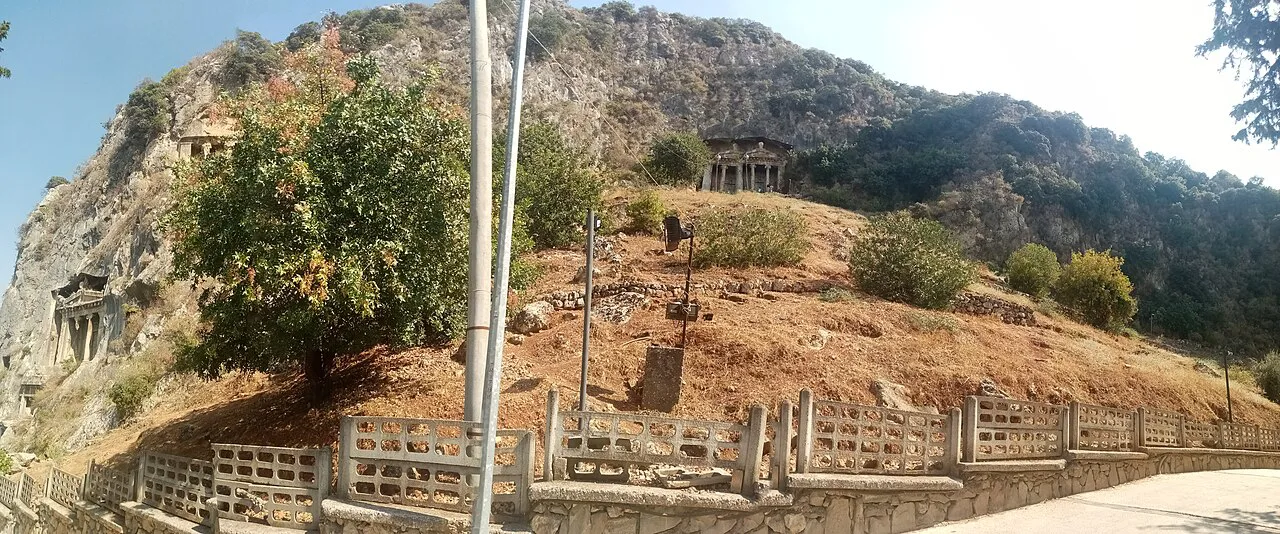
Where they sit above the town
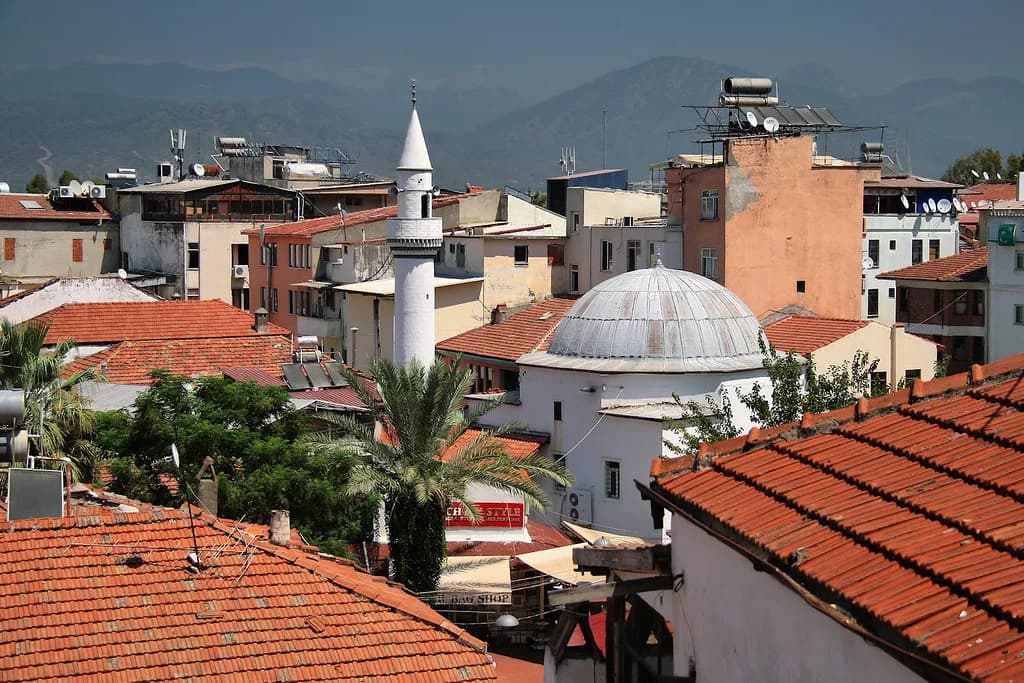
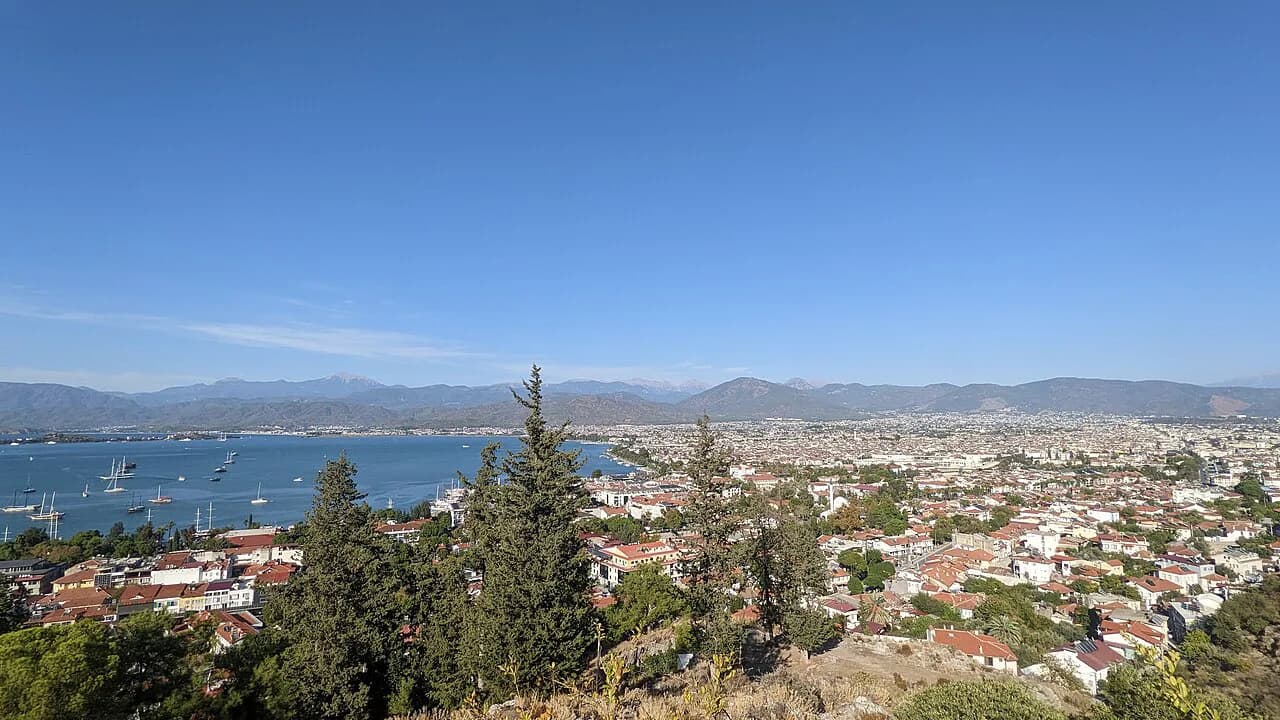
The tombs are on the rocks directly above Fethiye city centre, overlooking the town and the marina. Most accommodation points in the centre are within a ten- to fifteen-minute walk, so the default approach is on foot; the slope rises straight from the streets behind the harbour rather than sitting out on a country road. That central position is the site's great practical advantage and also the reason it never feels like a remote archaeological park.
Coming by car is possible but less practical: look for parking around Kaya Street and walk in, because the streets near the centre are narrow. Leave the car near the centre and treat the last stretch on foot as part of the visit. Boats and the marina are below you for the whole climb, which is a useful orientation if you are staying near the water.
The main tomb and its Greek inscription
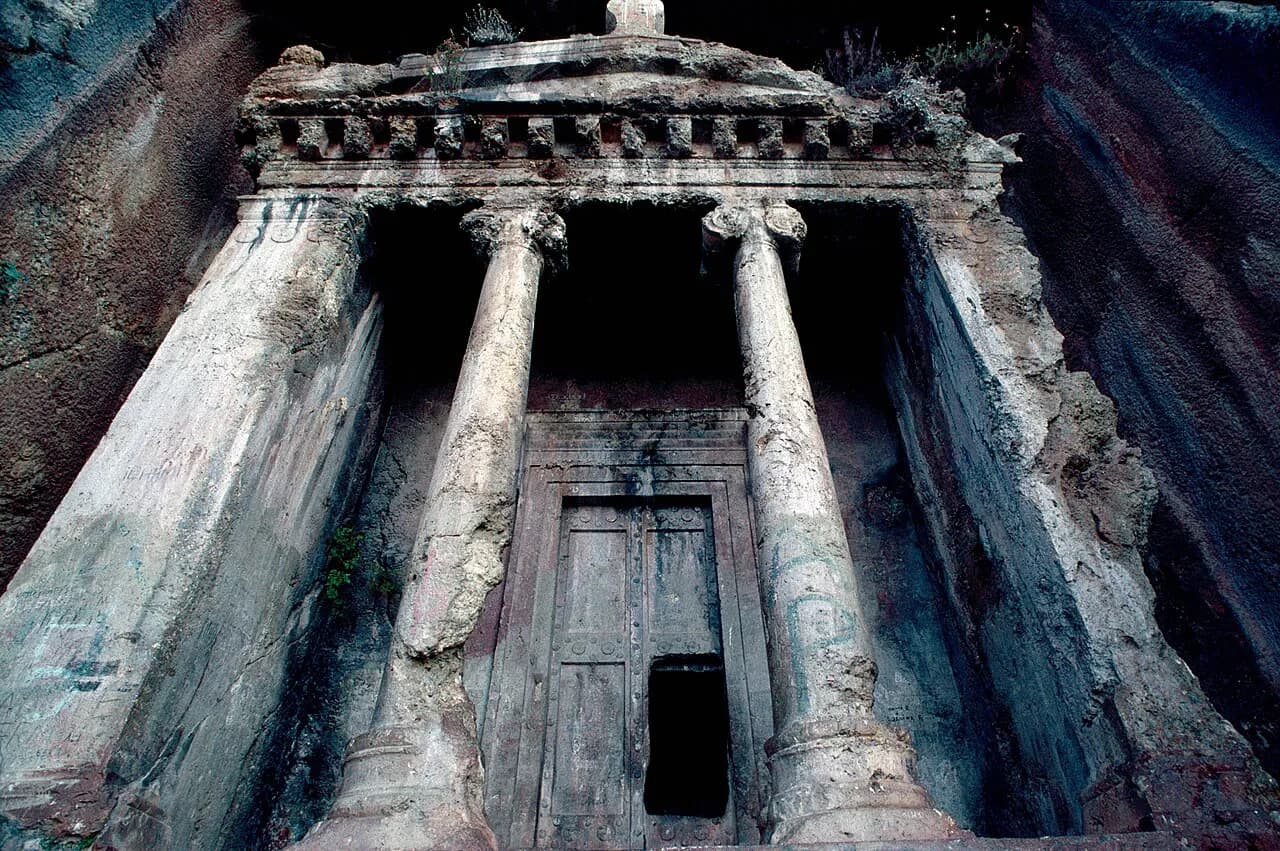
The principal tomb is named by the Greek inscription carved on it, which reads 'Amyntas, son of Hermagios' and dates the structure to the 4th century BC. The facade is designed in the Ionian order as a rock-cut version of a temple front, and the effect is a piece of formal architecture sliced into a cliff. Look at the columns and the pediment shape first, then the doorway; the carving is shallow and reads best in angled light.
The platform directly in front of the main tomb is the spot for the classic photograph: the facade in the foreground and Fethiye bay behind it in the same frame. Midway up the path, a wide shot catches the town's rooftops and the bay together. The light on the facades near sunset is the reason many people time the climb late in the day.
The smaller house-type tombs on the slope
The Amyntas tomb is the monumental piece, but the whole slope works as a vertical necropolis, and the smaller tombs on the climbing path are house-type rock tombs imitating Lycian wooden house architecture cut in stone. They are the ones most visitors pass on the way up without a second look, yet they show the same craftsmanship in miniature. Reading the two types side by side, temple front and timber house, is what makes the site more than a single photograph.
Access to the tombs on the adjacent slope is limited, and visitors often want to explore further than the path allows. Plan on seeing the main tomb and the house-type examples along the route rather than a full circuit of the cliff. If you are following the carved tombs further along the coast, the guide to the Lycian Coast puts Fethiye in the context of the other sites.
The climb and how fit you need to be
The climb is roughly one hundred steps, and visitors report that it can be difficult for those with knee or hip problems. Non-slip shoes matter on the rocky terrain; sandals and flip-flops are risky on the way down as much as the way up. Wheelchair and pushchair access is not possible, so plan around that if you are visiting with young children or a family member with limited mobility.
Carry water and sun cream in summer, because the rock traps heat and there is no shade on the upper steps. If you are travelling with someone who would rather not climb, the view over the bay is largely repeated from lower down the path, so they lose little by waiting in town. Build the climb into a morning rather than squeezing it into the last hour before dinner.
When to go: morning or after 17:00 in high summer
In July and August the rock becomes scorching at midday, so aim for between 09:00 and 10:00 in the morning or after 17:00 in the evening. April, May, September and October are the most balanced periods for temperature and visitor numbers. The light over Fethiye bay and its islands near sunset is a reason in itself to go late, especially if you are carrying a camera.
Tickets and the Museum Pass
Entry is paid. Visitors report that the site can be entered with a Museum Pass (Müzekart), but no official source confirms current opening hours or whether the pass is accepted on the day you visit, so check at the gate before relying on either.
What to pair with the visit
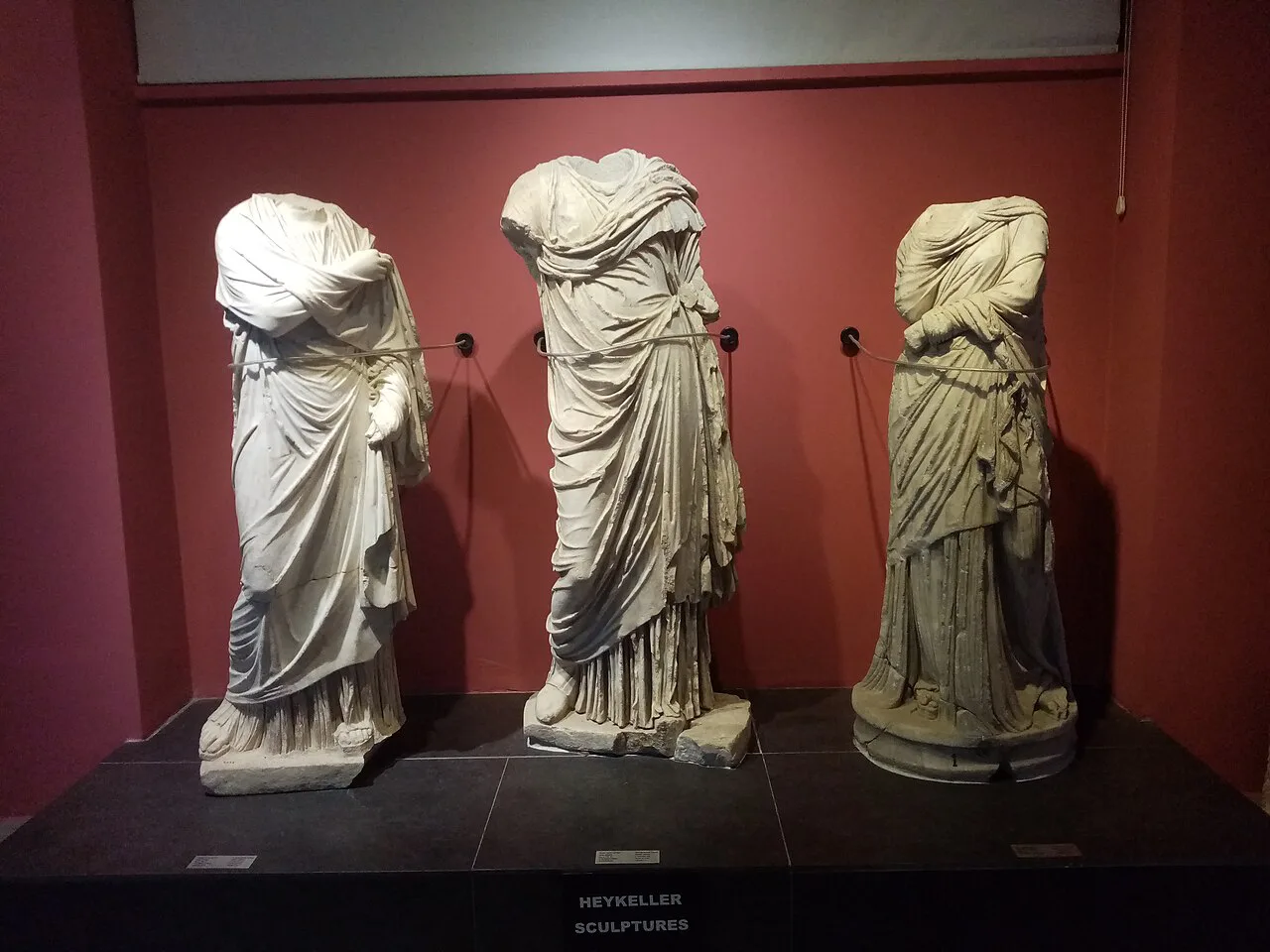
A sensible morning is the tombs first, then the Fethiye Museum in the centre, which holds Lycian-period material from the region; the two together give you the objects and the setting. In the afternoon you can head out to Ölüdeniz or Butterfly Valley. That combination uses the tombs as a history stop rather than a destination in itself.
For the wider region, Tlos Ruins, further inland, and the Saklıkent Gorge are the natural full-day companions to a Fethiye stay, and both belong to the same stretch of Turquoise Coast. If you are touring the coast rather than staying put, the comparison is between the cliff tombs in town and the more spread-out sites inland.
Facilities at the site
There is a café on the opposite side as you come out, and it sells souvenirs, which makes it a convenient short break before you head back down. Fethiye centre itself is rich in fish restaurants and local delicacies, so there is no need to eat at the site if you would rather wait. The market street in the bazaar area is the place for fresh fruit, olives and local cheeses.
Is the climb worth it?
Yes, if you treat the Amyntas Rock Tombs as a short add-on to a harbour day: a steep climb, a temple front cut into the cliff and a view over the bay, all within walking distance of the centre. It is not a half-day out, and it is not for anyone who cannot manage the steps or the rocky path. Pair it with the museum in the morning and the coast in the afternoon to make a full day of it.
Explore more Fethiye guides
Frequently Asked Questions
Can you visit the Amyntas Rock Tombs with a pushchair or wheelchair?
No. Access with wheelchairs and strollers is not possible, and the climb of roughly one hundred steps is difficult for those with knee or hip problems. Non-slip shoes are needed on the rocky path.
How long do the Amyntas Rock Tombs take?
Plan on one to two hours including the climb and time at the platform. Most visitors fit the site into a morning or a late-afternoon slot rather than building a day around it.
Is the site near the harbour in Fethiye?
Yes. The tombs sit on the cliff directly above Fethiye city centre and overlook the town and marina, and most central accommodation is a ten- to fifteen-minute walk away.
Sources
Notes for your next Turkey trip
Optional updates when we add or correct a town guide.
You might also like
Continue reading
More guides you'll find useful