Düden Waterfall Antalya: Upper vs Lower Falls Guide
Düden Waterfall in Antalya is two separate falls: the Upper falls in a green park and the Lower falls dropping 40 metres off the cliffs into the sea.
On this page
Düden Waterfall is not one stop but two, and they sit in different parts of Antalya. The Upper falls lie about 12 km north of the city centre inside a green park, while the Lower falls are where the stream reaches the cliffs and drops about 40 metres straight into the Mediterranean. Decide which of the two you want first, because they give quite different days out and are not within walking distance of each other.
This guide splits the visit the way the site is actually arranged: the park and the walkway behind the water at the Upper falls, and the cliff-top viewpoints at the Lower falls. It also covers how the flow changes through the year, how to reach each one from central Antalya, and how to fold the falls into an afternoon out from the old town.
Where the two Düden falls actually are
Düden is one underground water system that surfaces at two separate points, which is why maps and signs can seem contradictory. Much of Antalya sits on karstic limestone and travertine that lets water sink and travel underground, and the Düden stream is fed by several springs and flows rather than a single source. The same water that appears at the Upper falls re-emerges lower down and finishes at the coast.
The Upper falls sit inland in the Kepez direction, within a park that has paths and picnic areas. The Lower falls are where the stream reaches the cliff edge and drops into the sea, which is the fall the coastal hotels mention as a nearby attraction. Your first decision is therefore geographical: the inland park, or the cliffs and the coast.
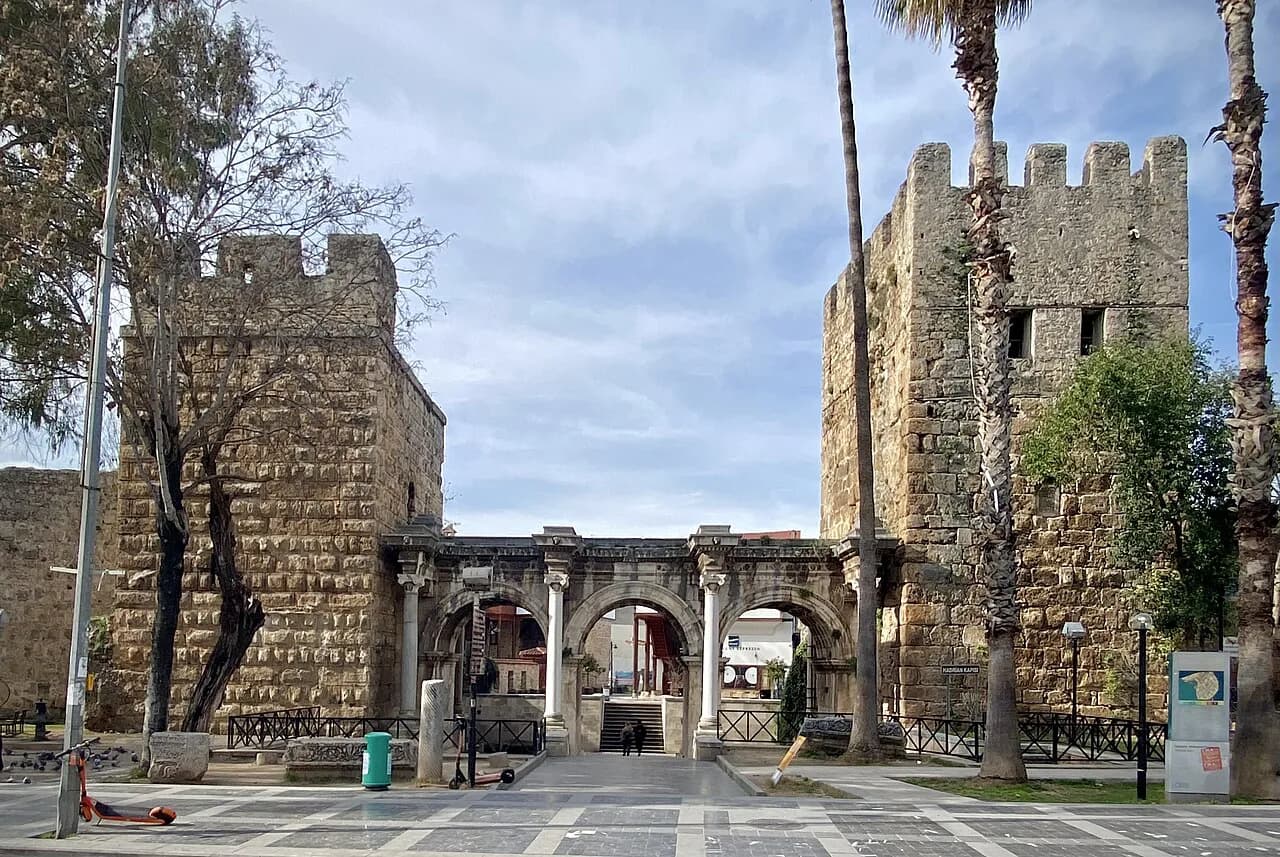
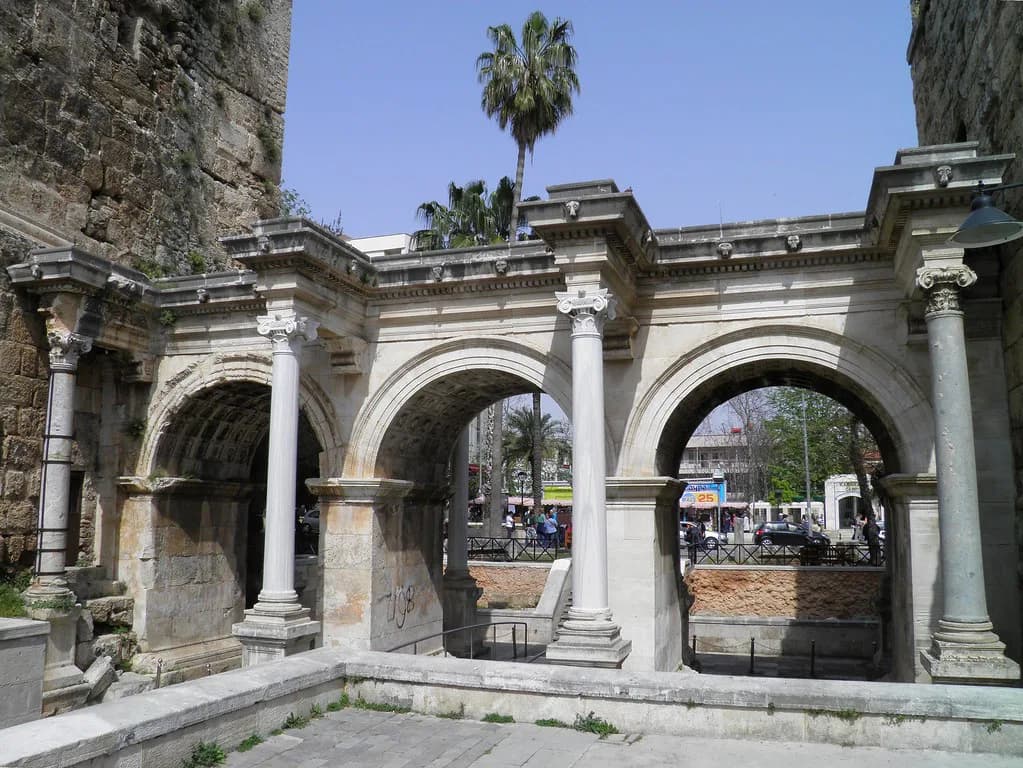
A base in Kaleiçi puts you between the two, with the harbour and Hadrian's Gate as recognisable starting points for taxis, dolmuş rides or a hired car. Neither fall is a stroll from the old town, so plan transport from the outset; a morning walk cannot easily include either waterfall.
Upper or Lower: choosing between them
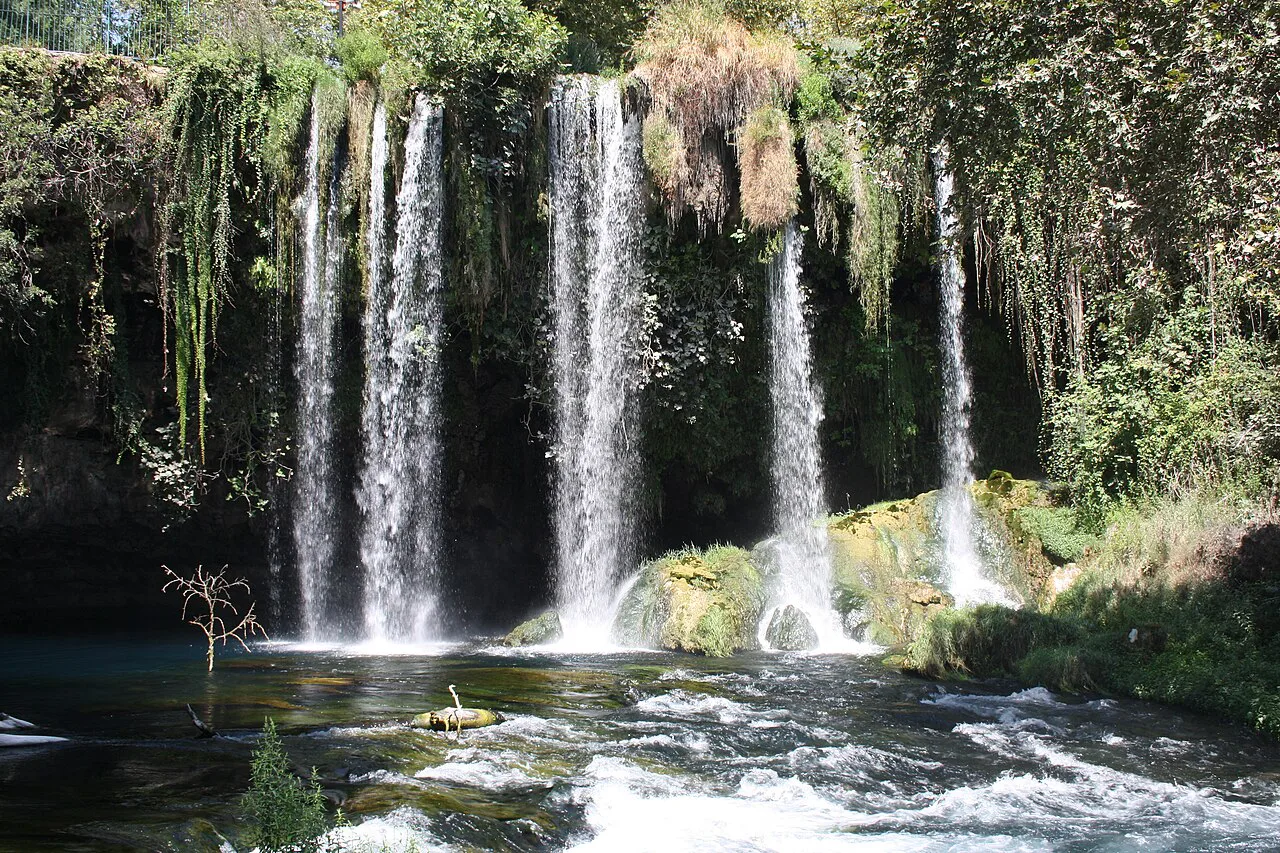
Choose the Upper falls for shade, paths and a slower hour: the cascade drops around 20 metres into a pool, and a pathway leads behind the water so you can stand in the cave and watch it from the inside. That behind-the-falls walk is the reason families and photographers tend to prefer this side, and it is easy ground for children.
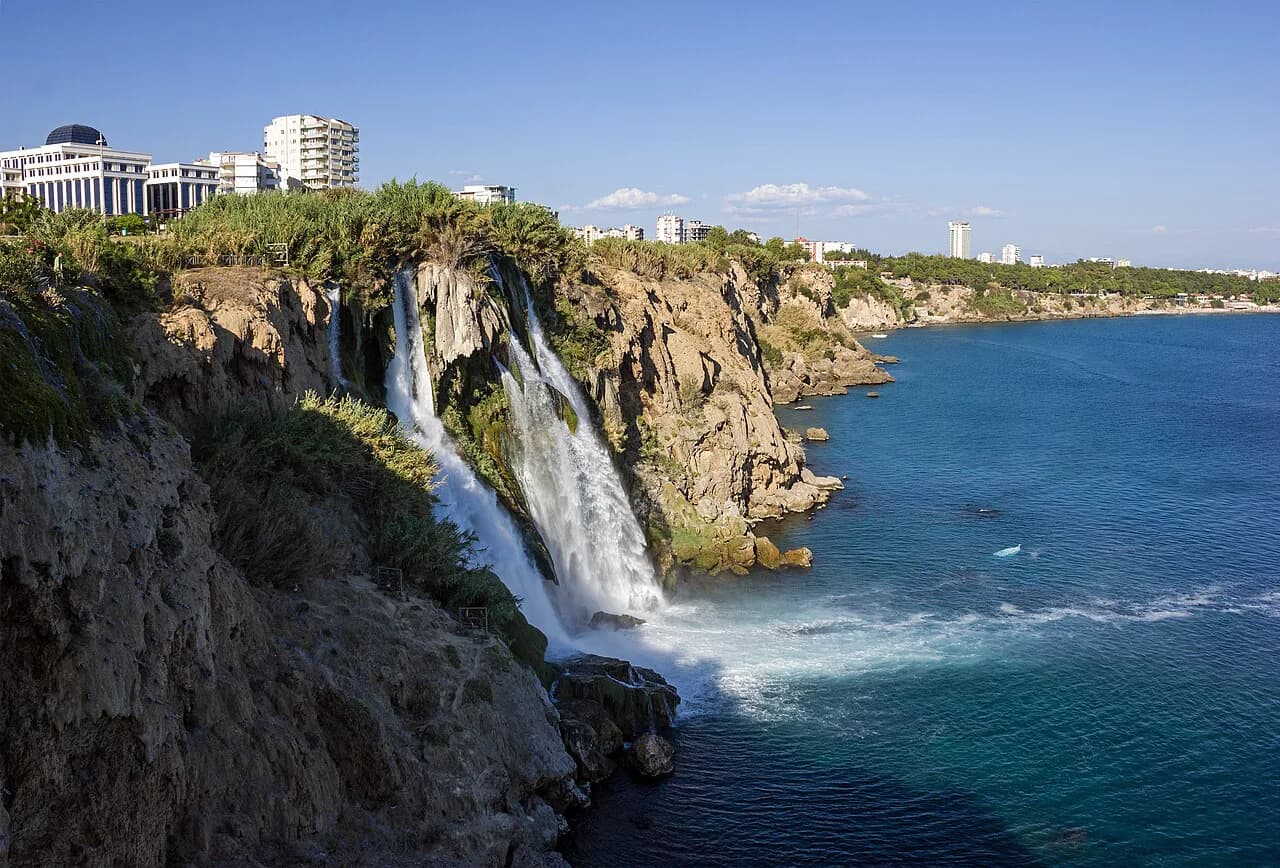
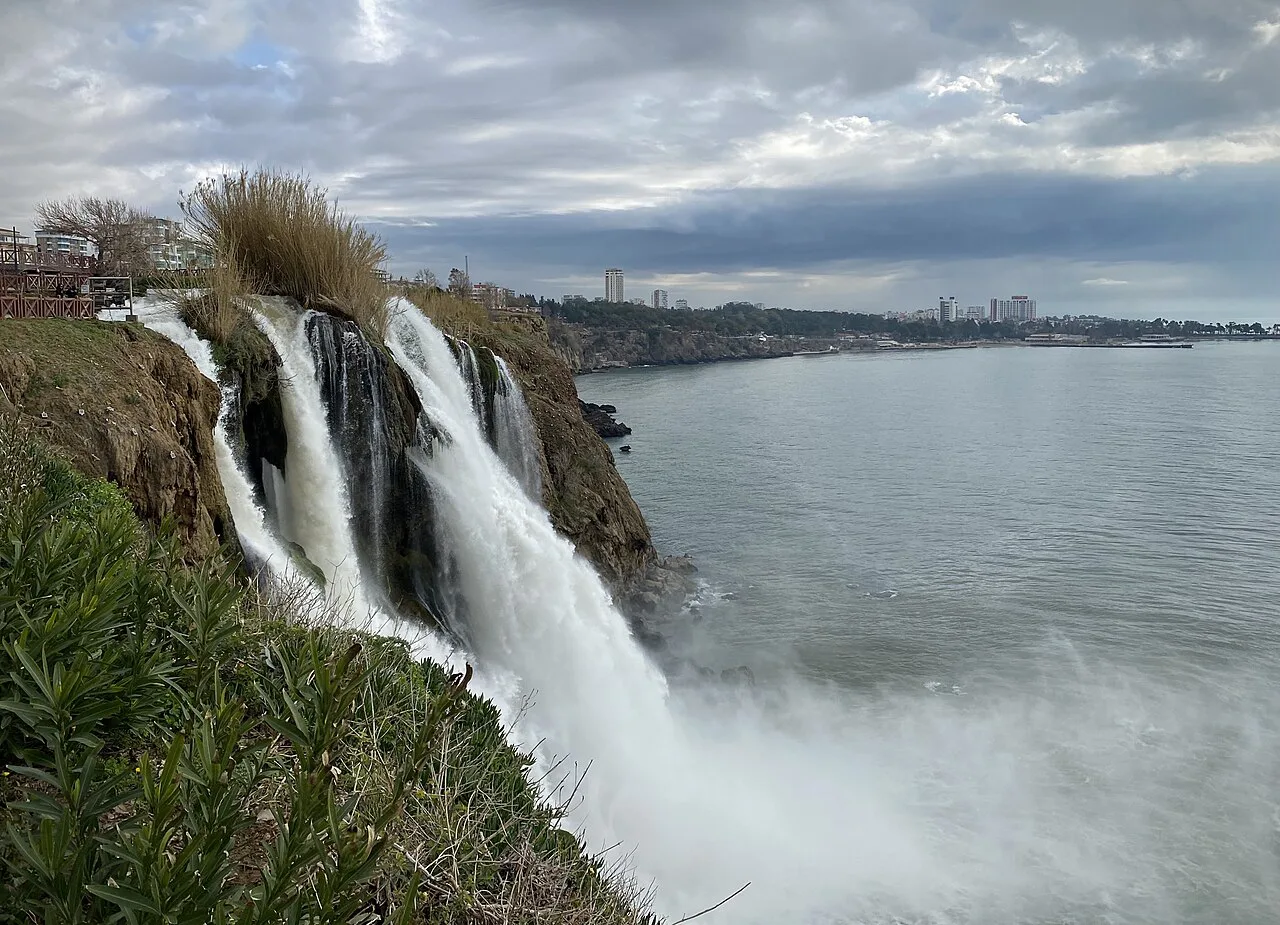
Choose the Lower falls for the drama of the setting: the water leaves the cliff at about 40 metres and falls directly into the Mediterranean. The visit is about the clifftop view and the coastal setting, and the behind-the-water cave path belongs to the Upper falls.
If you only have time for one, the Lower falls are the shorter stop and pair naturally with the Lara coast; the Upper falls reward a longer, cooler visit with a picnic. Doing both in one outing means a drive across the city between them, so treat that as a half day rather than two quick stops.
What you see at the Upper falls
The Upper falls are a series of cascades rather than a single curtain, with water dropping into a small pool at the base and throwing up mist when the flow is high. The surrounding park has walking trails through trees, flowers and riverside paths, plus designated picnic spots where the sound of the water is the backdrop.
The cave behind the cascade is the feature that sets this visit apart, and the path to it is the first thing to look for on arrival. Allow time to stand behind the water rather than treating it as a photo stop, because the walkway is the point of coming.
The park is open year-round, and one travel operator publishes hours of roughly 8:00 to 20:00 daily for the Upper falls; treat that as published information rather than a guarantee and confirm before a late-afternoon trip. No admission price for either fall appears in the sources here, so ask at the entrance or check locally.
What you see at the Lower falls
The Lower falls are the postcard image: the Düden stream reaching the cliff edge and dropping about 40 metres into the Mediterranean below. The experience is a short stop to take in the river plunging from the cliff rather than a park visit.
Because the falls are beside the coast on the Lara side, this is the easier of the two to combine with a coastal afternoon. It is a short stop rather than a park visit, which makes it the better choice if you are short of time.
Whether there is an entrance charge at the Lower falls is not set out in the sources here, and travellers regularly ask how the two sites relate. Check signage at the gate on the day, because the falls are separate places.
When the water is at its strongest
Flow follows the seasons rather than a fixed calendar: snowmelt from the Taurus Mountains feeds the Düden River, and the cascade at the Upper falls is at its most powerful in spring and early summer. By July and August the volume can ease, so the falls look gentler even though the park is at its busiest.
Autumn brings milder temperatures and quieter paths, and winter is the quietest stretch with reduced flow. Plan around the water you want to see rather than a fixed month, and expect the Lower falls to be dramatic whenever the river is running high.
Getting there from central Antalya and Kaleiçi
Both falls are reached by road: the Upper falls about 12 km north of the centre, the Lower falls out towards the Lara coast. Taxis and dolmuş minibuses run from central Antalya, and a hired car is the simplest way to link both in one trip. From Kaleiçi, walk up to the main road above Hadrian's Gate to pick up transport rather than trying to thread a vehicle into the old lanes.
If you are staying in the Lara hotels, the falls the hotel group lists as its nearest coastal-side attraction are the ones it describes as 10 km from the city centre; the Upper falls involve crossing the city inland. Build the drive into your day: a taxi each way for both falls adds up, so a half-day car hire or an organised transfer usually works out better value for a two-falls outing.
If you are already exploring the old town, Karaalioğlu Park above the cliffs gives a sense of Antalya's coastal edge before you head out to the falls, and it is a straightforward walk from Kaleiçi.
How long to allow
Give the Upper falls a couple of hours at least: the park, the trails and the walkway behind the water fill that comfortably, and longer if you plan a picnic. The Lower falls need far less, roughly half an hour at the viewpoint plus time to get there.
Combining both takes about half a day once you count the drive between them, with the Upper falls first if you want the park while it is cool. A single-fall visit fits neatly into a morning or an afternoon alongside the old town.
Seeing the falls from above and from the sea
The Lower falls drop from the cliffs straight into the Mediterranean, so the coast here is best understood from two angles: from below on the water, and from the clifftop above. Boat services from Antalya's harbour and their routes are not set out in the sources here, so if you want to see the cliffs from the sea, book through an operator you choose and confirm the route before paying.
The sea view and the cliff-top view are different experiences: from below you see the spray and the height, from above you see the river reaching the edge. If the drop is the main reason for your trip, do one of each; a boat trip does not replace the viewpoint. Check current boat times and prices before you go.
Pairing the falls with the old town and nearby sites
A natural full day links the Upper falls with Kaleiçi: the park in the morning, then back into the old town for the harbour, the Roman walls and Hadrian's Gate in the afternoon.
For ancient sites, the falls sit well with days built around Perge and Aspendos to the east, or Karain Cave inland, which is listed alongside the falls among Antalya's excursions. Choose one ancient site per day rather than trying to stack several around a waterfall visit.
If you want a second waterfall without crossing the city again, Kurşunlu Waterfall sits in its own nature park on a similar inland run and can replace the Upper falls rather than being added to them.
Travellers staying on the western side of the city often base themselves at Konyaaltı, which makes the Upper falls a longer drive and the Lower falls a cross-town trip; factor that into which side you visit first.
Which Düden fall should you choose?
Pick the Upper falls if you want a park, a picnic and the walkway behind the cascade; pick the Lower falls if you want the cliff drop into the sea and a short, photogenic stop. With a full half day, do both, starting at the Upper falls and finishing on the Lara coast.
Check published opening hours and any entrance charge at the gate on the day before setting out, since these are the details most likely to change between seasons.
Frequently Asked Questions
Can you walk from Antalya old town to Düden Waterfall?
Not practically. The Upper falls are about 12 km north of the centre and the Lower falls lie out on the Lara side by the cliffs, so you need a taxi, dolmuş or car from Kaleiçi rather than a walk.
Do you need to pay to see the Lower Düden Waterfall?
The sources here do not set out an entrance charge for the Lower falls, so check the signage on arrival. Treat any figure you see online as unverified unless it names its year.
What is the difference between Upper and Lower Düden Waterfall?
They are two surfacing points of one underground water system. The Upper falls form a roughly 20-metre cascade in a park with a path behind the water; the Lower falls drop about 40 metres off the cliffs into the Mediterranean.
Sources
Notes for your next Turkey trip
Optional updates when we add or correct a town guide.
You might also like
Continue reading
More guides you'll find useful