Turkish Ceramics: İznik Tiles, Patterns and What to Look For
A visitor's guide to Turkish ceramics: İznik tiles, the colours and motifs to recognise, where to see them in place, and what to check before you buy.
On this page
İznik is the name to know in Turkish ceramics. The town beside a lake in north-western Anatolia produced the tiles and vessels that covered imperial mosque walls and travelled abroad as diplomatic gifts, and its signature is a white body made mostly from finely ground quartz rather than clay. This guide covers that body, the colours and flowers to recognise, where to see the work in place, and how to weigh up a purchase.
The aim is to let you judge a plate or a tile panel on what it is made of and what is painted on it, not just on how blue it looks. A few minutes spent on composition and pattern will change what you notice in a bazaar, a museum case or a tiled mosque interior.
Why İznik is the name to know
The story starts in fifteenth-century İznik, where Ottoman court demand for architecture and decoration outgrew ordinary pottery. Artisans there worked out a body that looked close to porcelain even though true porcelain was not yet being made in the Ottoman world, and that smooth white surface became the ground for very fine painted detail. Floral motifs, calligraphy and geometric designs read sharply against it. If you want to see the town itself, our İznik guide covers what to see and how long to stay.
The achievement was an imperial one: tiles went onto palace and mosque walls (the tiled interior of the Blue Mosque in Istanbul is the best-known example), and finished pieces left the empire as gifts. Keep that court context in mind when you handle modern pieces, because it explains why the best historic work was made to be seen across a large interior rather than at arm's length.
The body: quartz, clay and a glassy glaze
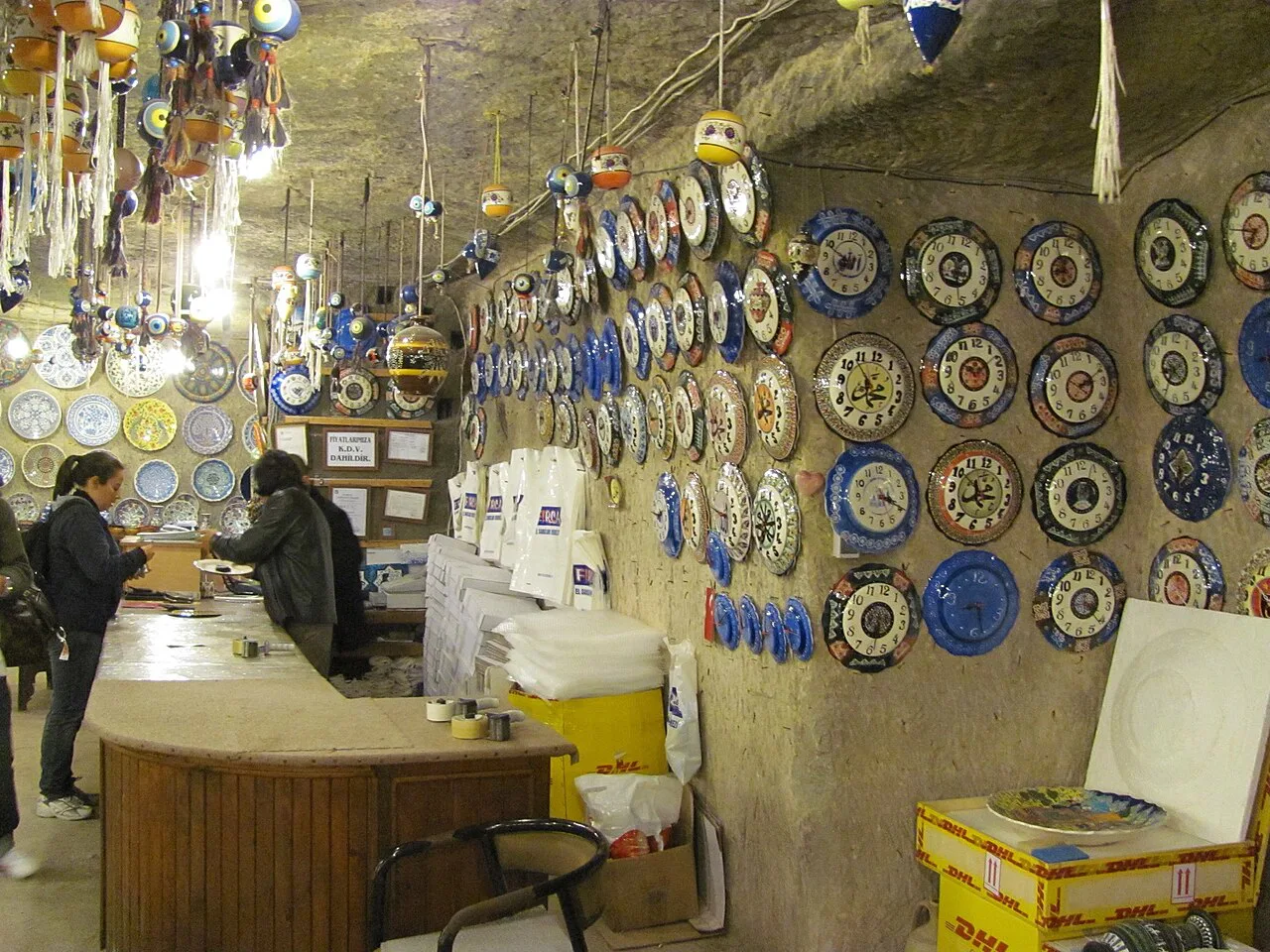
The defining technical fact about historic İznik ware is the recipe. Many authentic pieces contain more quartz than clay, and finely ground glass was often added to bind the mixture during firing. That is a demanding formula to control in a wood-fired workshop, long before anyone could measure temperatures precisely.
Is İznik pottery still made today? Workshops and retailers continue to sell ceramics in the İznik tradition, and contemporary decorative objects appear in their catalogues. The historic achievement described here belongs to the Ottoman period, when the quartz-rich body and raised coral red were developed.
How can I tell a hand-painted tile from a printed one? Look for small differences in line, spacing and colour depth between two pieces of the same design, and check whether the coral red sits on top of the glaze or lies flat within it. Printed transfers tend to repeat exactly.
Where can I see Turkish tiles in a building rather than a shop? The interior of the Blue Mosque in Istanbul is decorated with more than 20,000 handmade İznik tiles in blue, green, turquoise and red. Its glazed surfaces change with the daylight, so the interior reads differently at different times of day.
For a buyer, this matters as a question to ask rather than a test you can run in a shop. Ask whether a piece is handmade and how it was fired, and look at the underside and the edges as carefully as the painted face. Pick a plate up before deciding: weight and thickness vary between hand-thrown and moulded work.
The colours: cobalt blue, turquoise, green and coral red
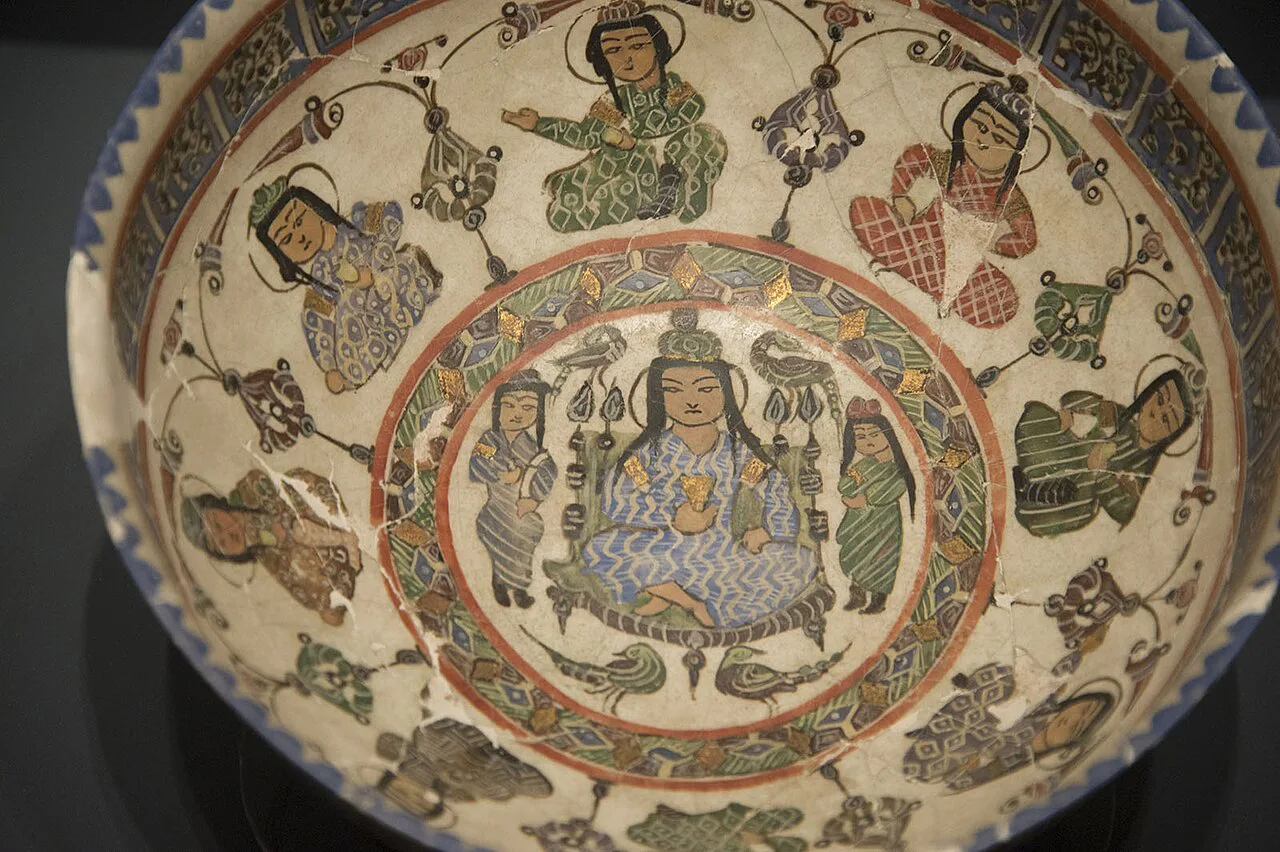
Deep cobalt blue made İznik famous first, its pigment reflecting artistic exchange that ran from China through Persia into the Ottoman world. Turquoise followed and became one of the defining colours of Turkish ceramic art, with rich greens arriving in the sixteenth century. Look for variation within a single colour field on hand-painted work.
The signature colour is the raised coral red, known as Armenian bole, which sits slightly above the glaze rather than flat within it. On a genuine piece of the period the decoration has a texture you can feel with a fingertip, and modern makers find the same vivid result hard to reproduce consistently. Look for that red first on any piece claiming the İznik tradition.
The motifs: tulip, carnation, hyacinth, cypress and pomegranate
İznik surfaces look like gardens, but the plants carry meanings. The tulip stood for refinement and spiritual beauty in Ottoman art long before tulip mania gripped Europe, carnations suggested happiness and vitality, and hyacinths gave rhythm to repeating patterns. Cypress trees pointed to eternity and resilience, and pomegranates hinted at abundance and prosperity.
The curling cloud bands that drift through many compositions trace back to Chinese decorative traditions carried west along trade routes. None of this was random ornament: nature, faith and imperial identity were bound together in the design. Knowing the vocabulary lets you judge a piece by how confidently the motifs are drawn and spaced, not only by whether the colours appeal.
Seeing İznik tiles in place: the Blue Mosque interior
The Blue Mosque in Istanbul takes its popular nickname from an interior decorated with more than 20,000 handmade İznik tiles, many in blue alongside green, turquoise and red. The building was never officially intended to be blue. What repays attention is the placing of the tiles: glazed surfaces pick up changing daylight, so the interior reads differently in the morning and the afternoon.
Treat a tiled mosque interior as your benchmark before you shop. Look at how motifs are repeated across a large panel, how borders frame a field, and how much plain white body is left visible around the pattern. A plate in a shop window is easier to judge once you have seen the same design logic carried across a wall.
Hand-painted work and printed imitations
Printed transfers give a crisp, uniform line that repeats exactly across a stack of plates; hand-painting leaves small differences in pressure, spacing and colour depth. Compare two pieces said to be from the same design, then check whether the red sits on top of the glaze or lies flat within it. Neither test is proof on its own, so use them to shape your questions rather than to pronounce a verdict.
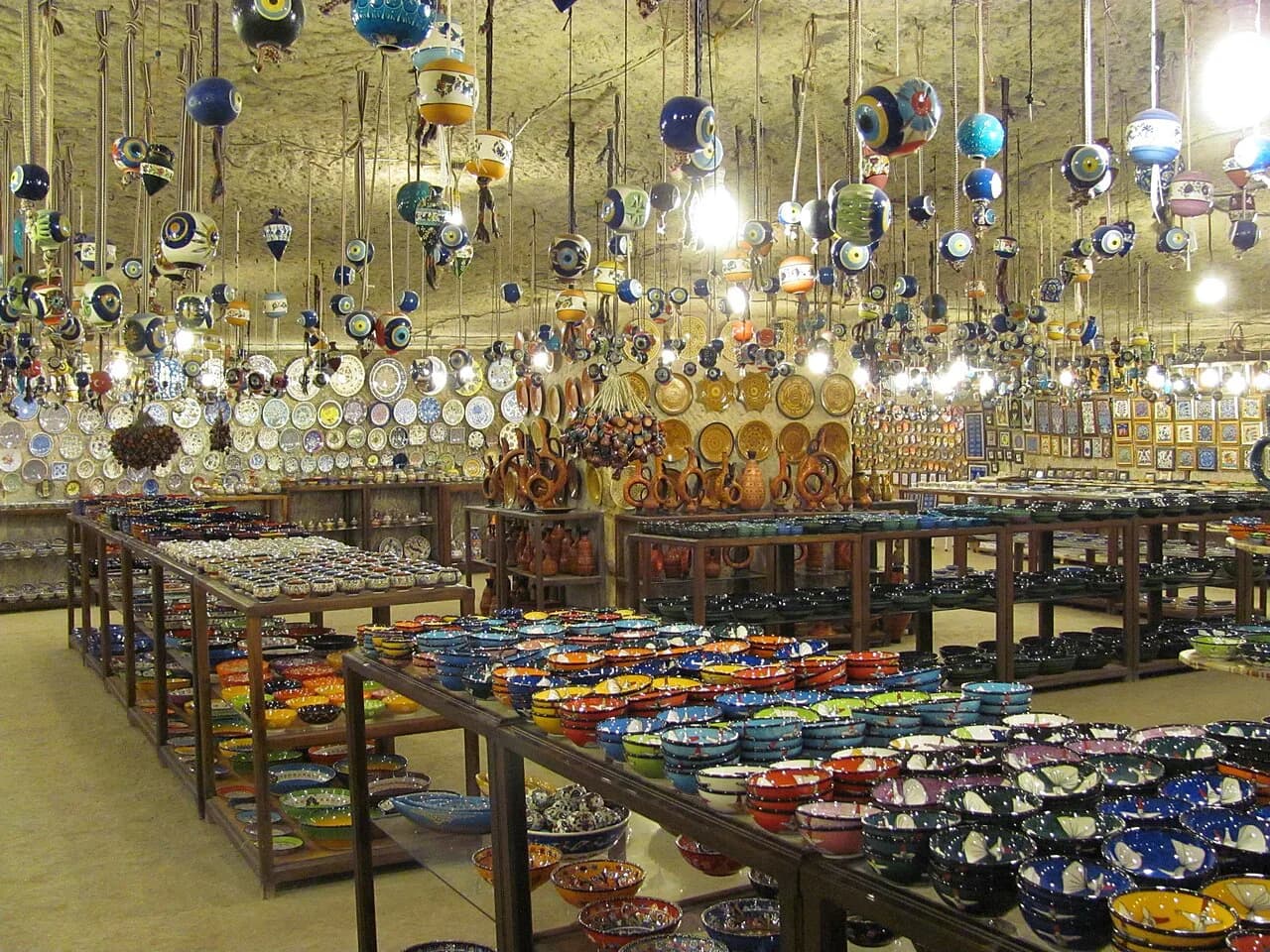
Outside the main resort towns, ceramics are still a village craft in places, and seeing the work made is often more instructive than a shop display. If you are touring inland or along the coast, it is worth checking whether a village workshop is open when you pass.
Buying as a traveller: weight, packing and materials
Ceramics are the heaviest souvenir most travellers buy, and a dinner plate or tile panel has to survive a flight in a suitcase. Ask the seller to wrap the piece in bubble wrap and card and carry it in hand luggage if the airline allows it; a framed panel travels better padded flat between clothes than stood on an edge. Decide before you buy whether you have the space and weight allowance at all.
Ask what a piece is made of and how it was fired, and expect the answer to affect the price. Prices in Turkish lira, euros and pounds move, so treat any figure quoted on an earlier trip as history rather than a benchmark. If you are paying in cash, keep small notes ready and settle the price before wrapping begins.
İznik tiles as a UK interior purchase
Buying tiles for a bathroom or kitchen wall is a different decision from buying a holiday souvenir, because wall tiles are sold by area and the total depends on coverage rather than on one object. UK retailers list handmade tiles in the İznik tradition by the square metre and border tiles by the linear metre, with named designs such as Iznik, Istanbul, Izmir, Bursa and Efes. Order samples and measure the wall before you commit.
These are undated retail listings, so check the price shown on the page when you order rather than relying on a figure you read earlier. For reference, the same listings showed a sale price of £82 per square metre on the main tile designs and £48 per linear metre on borders at the time of writing. Allow for wastage on cuts and for a border course if the design calls for one.
What to look for before you buy a piece
Start with the red: if the coral tone sits raised above the glaze and the motifs vary slightly from piece to piece, you are looking at work in the hand-painted tradition rather than printed decoration. Then check the body, ask how it was fired, and decide whether you are buying a plate for a shelf or tiles for a wall, because the two purchases are measured and packed differently.
Set your benchmark in a tiled interior before you shop, and keep your own photographs of pattern and border layouts for comparison. If ceramics are part of a wider interest in Turkish craft, our guides to Turkish Carpets and the Turkish Bath cover the textile and hammam side of the same buying trip.
Explore more Turkey guides
Frequently Asked Questions
Is İznik pottery still made today?
Workshops and retailers continue to sell ceramics in the İznik tradition, and contemporary decorative objects appear in their catalogues. The historic achievement described here belongs to the Ottoman period, when the quartz-rich body and raised coral red were developed. Ask any seller directly whether a piece is handmade and how it was fired.
How can I tell a hand-painted tile from a printed one?
Look for small differences in line, spacing and colour depth between two pieces of the same design, and check whether the coral red sits on top of the glaze or lies flat within it. Printed transfers tend to repeat exactly. These are useful signals rather than proof, so use them to frame your questions.
Where can I see Turkish tiles in a building rather than a shop?
The interior of the Blue Mosque in Istanbul is decorated with more than 20,000 handmade İznik tiles in blue, green, turquoise and red. Its glazed surfaces change with the daylight, so the interior reads differently at different times of day. Check current visitor arrangements before you go.
Sources
Notes for your next Turkey trip
Optional updates when we add or correct a town guide.
You might also like
Continue reading
More guides you'll find useful