Turquoise Coast, Turkey: Where It Is and How Resorts Compare
The Turquoise Coast is the Turkish Riviera, the southwest shore of Turkey. See how Antalya, Fethiye, Kaş, Kalkan and Bodrum differ before you choose a base.
On this page
The Turquoise Coast is the southwestern shore of Turkey that most travellers know as the Turkish Riviera, and it is best planned as three separate stretches rather than one long resort strip. The first runs around Antalya, the second covers Muğla province from Fethiye through Ölüdeniz and Kaş, and the third is the Aegean end around Bodrum and Kuşadası. What follows is how each stretch feels, what you do there, and how many days to give it.
Two decisions shape a good trip here. The first is whether you want a city with an old town and a working harbour, or a small town where the sea and the boats set the pace. The second is whether you plan to move between stretches or settle in one and take day trips, because the distances between Antalya, Fethiye and Bodrum are long enough that hopping between all three in a week wastes a lot of it.
What the Turquoise Coast is and which provinces it covers
The coast takes in the provinces of Antalya, Muğla and Aydın, plus southern İzmir and western districts beyond, so the name covers a very long run of shore rather than a single bay. That matters when you book: a flight into Antalya and a flight into Bodrum put you at opposite ends of the same coastline, with several hours of road between them. Treat the province names as your planning units and the resort names as the places inside them.
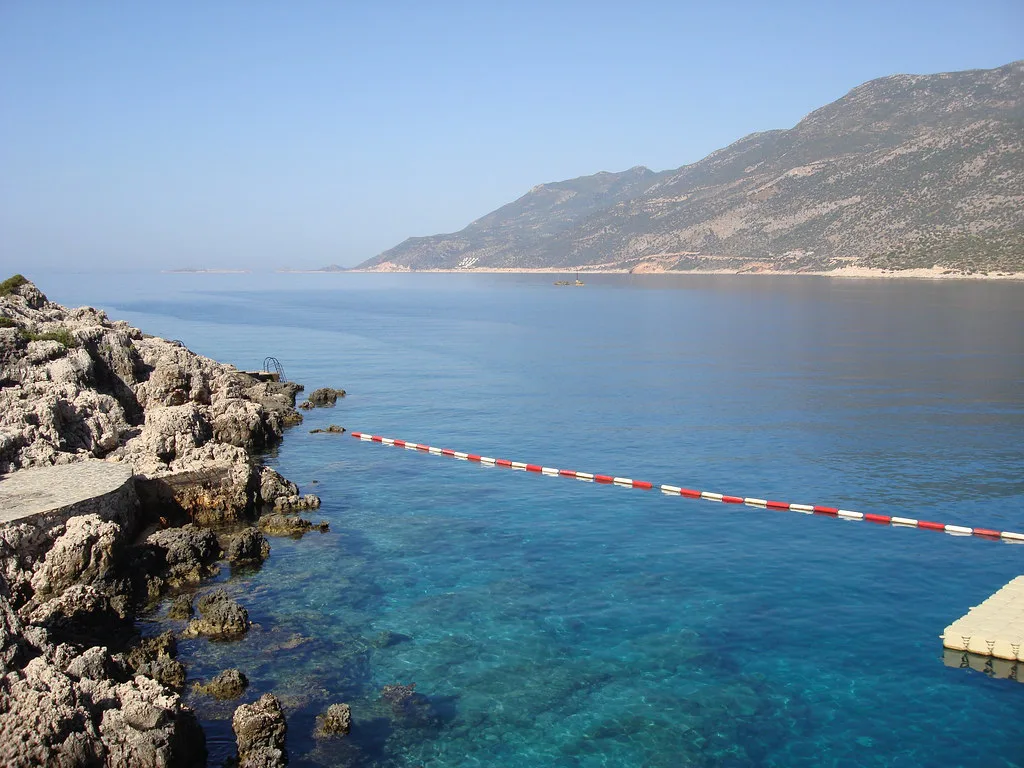
The coastline is known for beaches, mountain scenery and a warm climate, which is why it fills with European holidaymakers each summer. It sits along the Mediterranean in southwest Turkey and, unlike the French Riviera it is often compared with, it stays comparatively low-key outside the biggest resorts.
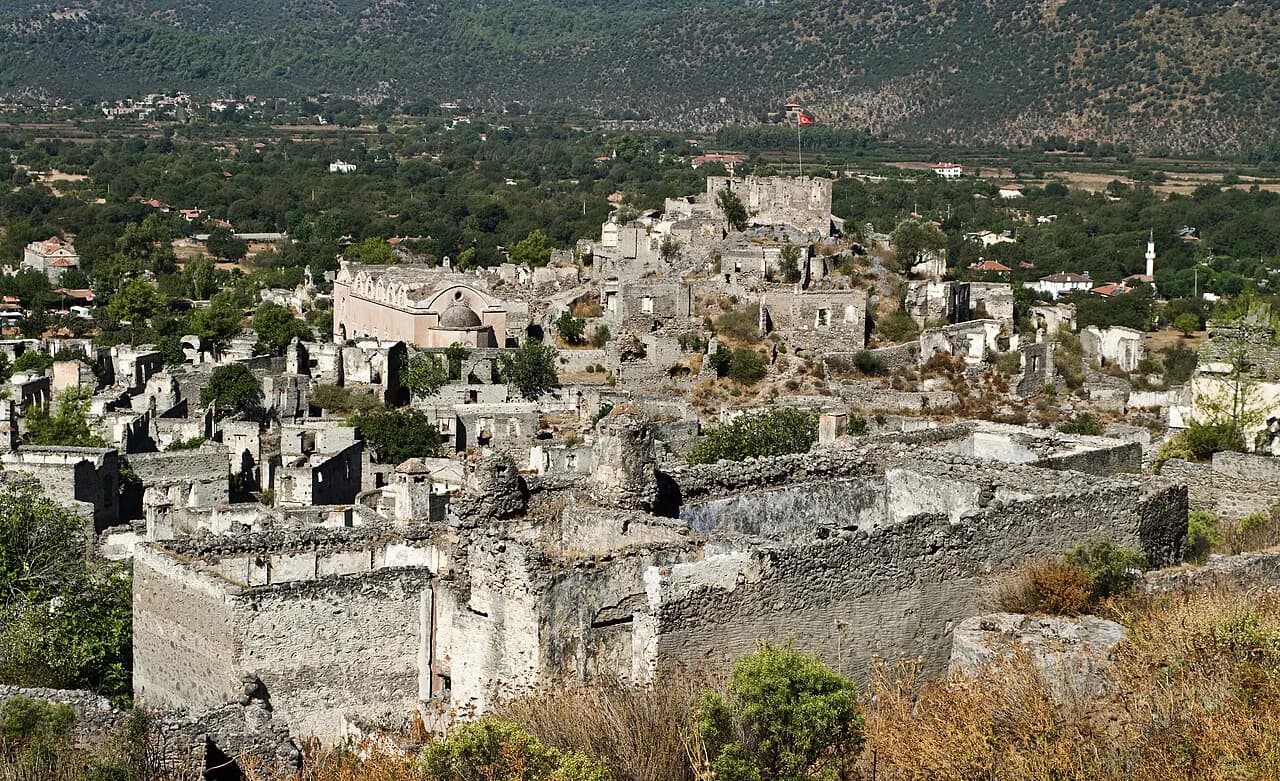
The stretch around Fethiye and Kaş is where the ancient side of the shore is easiest to combine with a beach base, including the Antiphellos Theatre in Kaş and the Lycian tombs above Fethiye. If the ancient side of the trip is your reason for coming, plan the Muğla stretch around those sites rather than treating them as a bonus between beach days; the Lycian coast guide sets out what sits where.
Antalya: the city base with an old town and a harbour
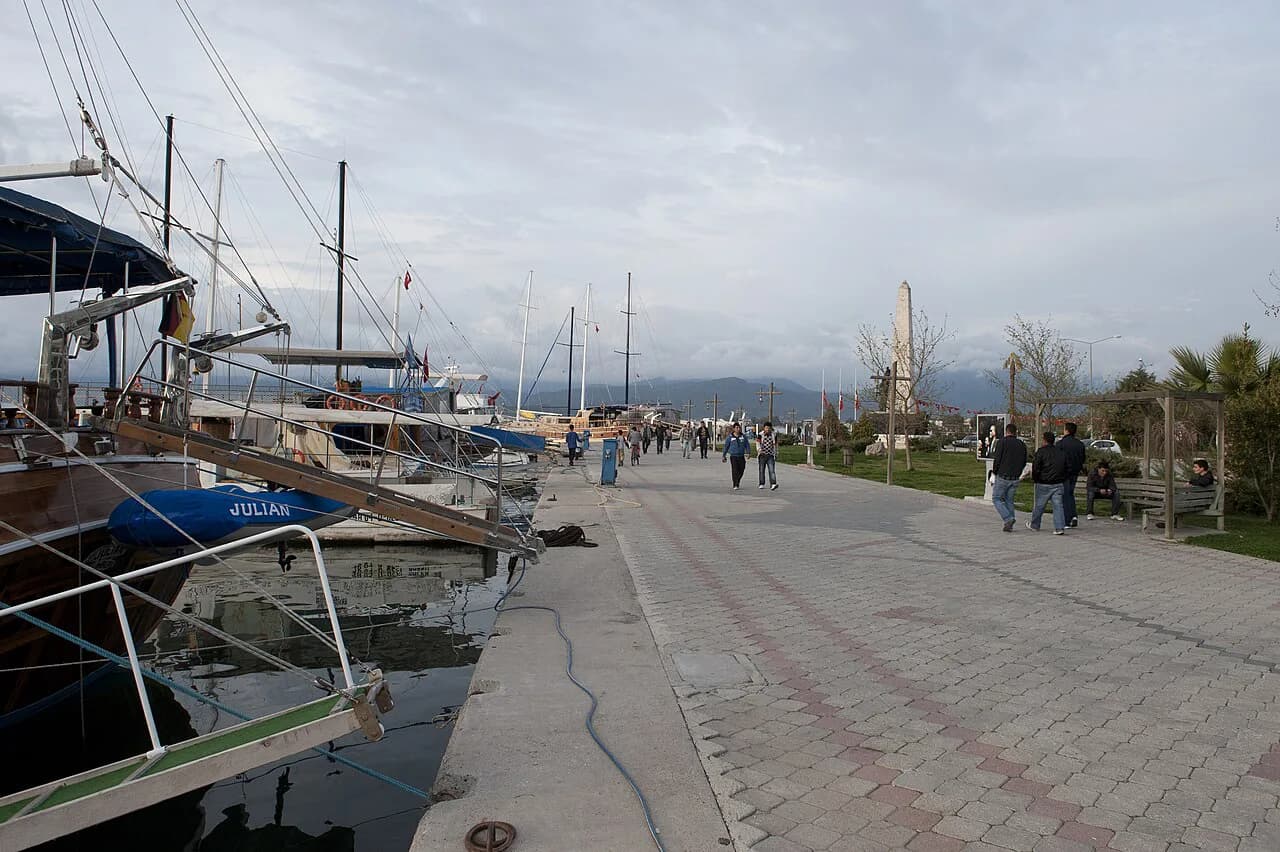
Antalya is the largest city on the coast and the one that works best if you want a proper urban base rather than a resort. The old quarter, Kaleiçi, sits above the harbour, so you can walk from narrow streets of old houses down to the water and the boats in a few minutes. It also has the airport and coach links that make it the natural first or last stop on a coastal itinerary.
The trade-off is scale. Antalya gives you museums, a bazaar, a harbour promenade and a big choice of places to eat, but it does not give you the small-town feel that draws people to Kaş or Kalkan. If you want both, use Antalya for two or three nights at the start of the trip and move west afterwards.
Fethiye, Ölüdeniz and Hisarönü: one area, three kinds of stop
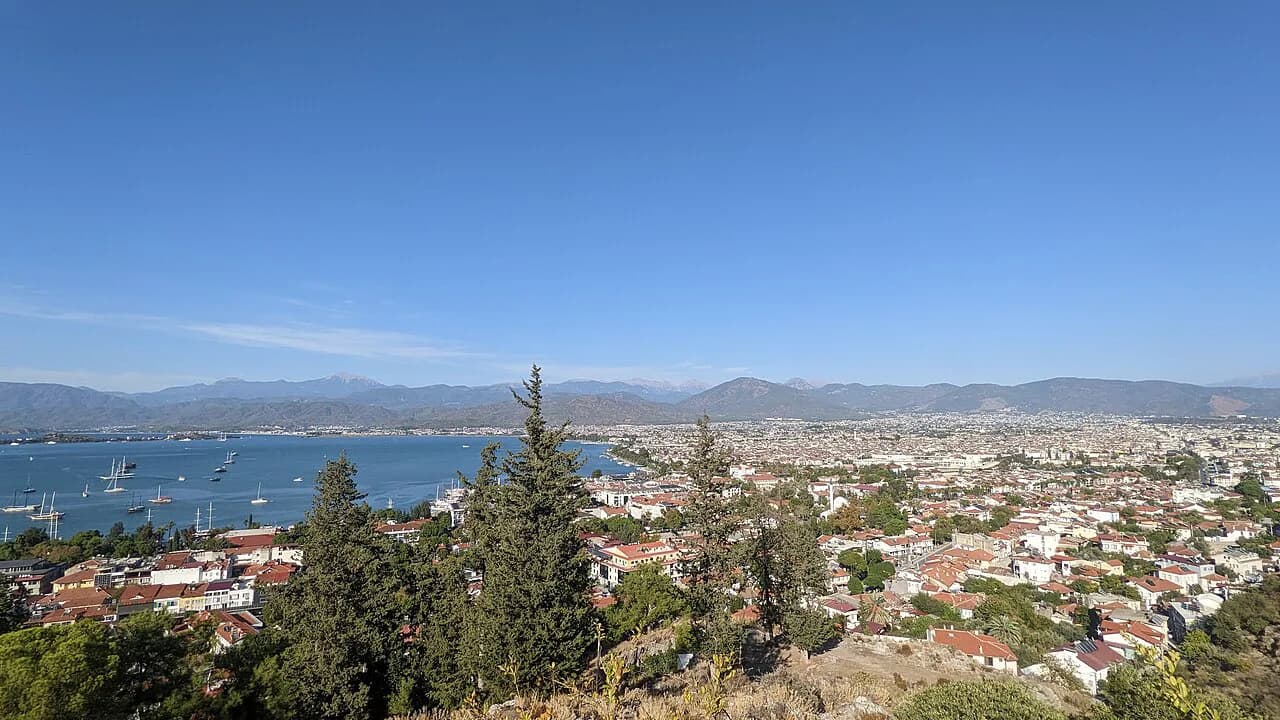
Fethiye, Ölüdeniz and Hisarönü sit close enough together to be one visit rather than three separate trips. Fethiye is the working town with the harbour, market and bus station; Ölüdeniz is the lagoon and beach end of the same district; Hisarönü is the hillside village above it where many package holidays are based. Choose by atmosphere, not by distance, because you can move between them by minibus.
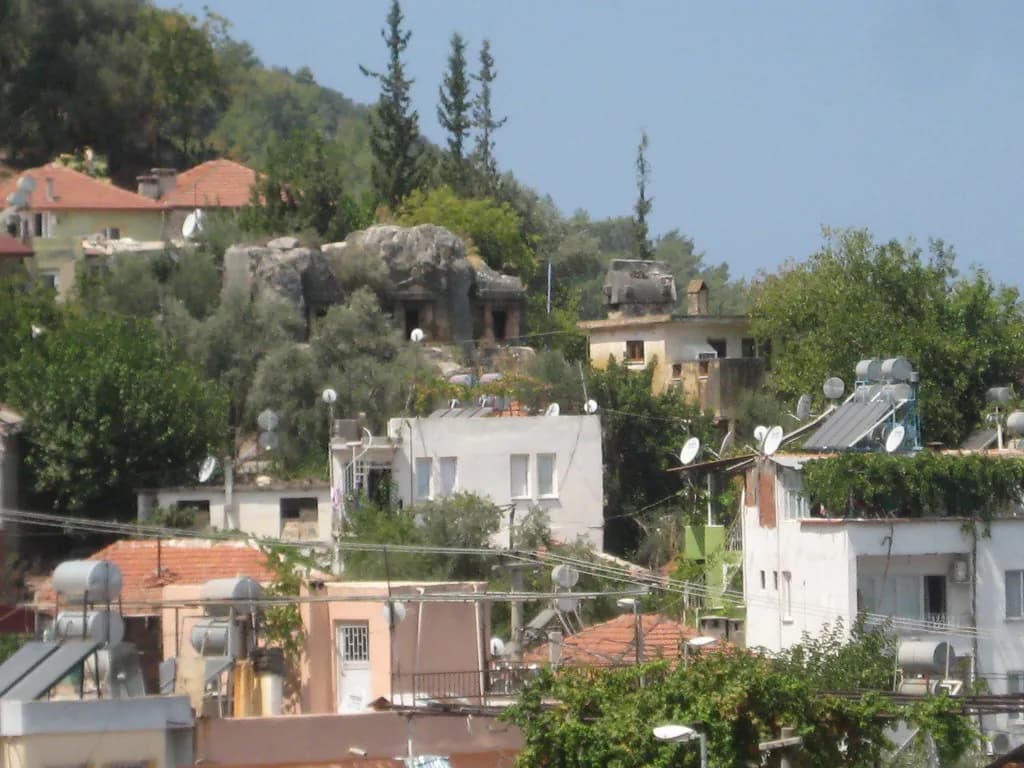
This is also where the ancient side of the coast becomes easy to reach. The Lycian rock-cut tombs above Fethiye are carved into the cliff face and are visible from much of the town, and the Lycian tombs page explains what you are looking at and how to approach them. Allow an hour or so for the climb and the view rather than a whole morning.
Inland from Fethiye, Saklıkent Gorge is a narrow limestone canyon that makes a half-day trip when the coast is at its hottest. The water running through it is cold, which is the point, and the gorge is usually combined with a stop in Kayadibi village on the way back. Check the gorge's own arrangements before you go, since access and facilities change with the season.
Kalkan and Kaş: small towns on the Lycian shore
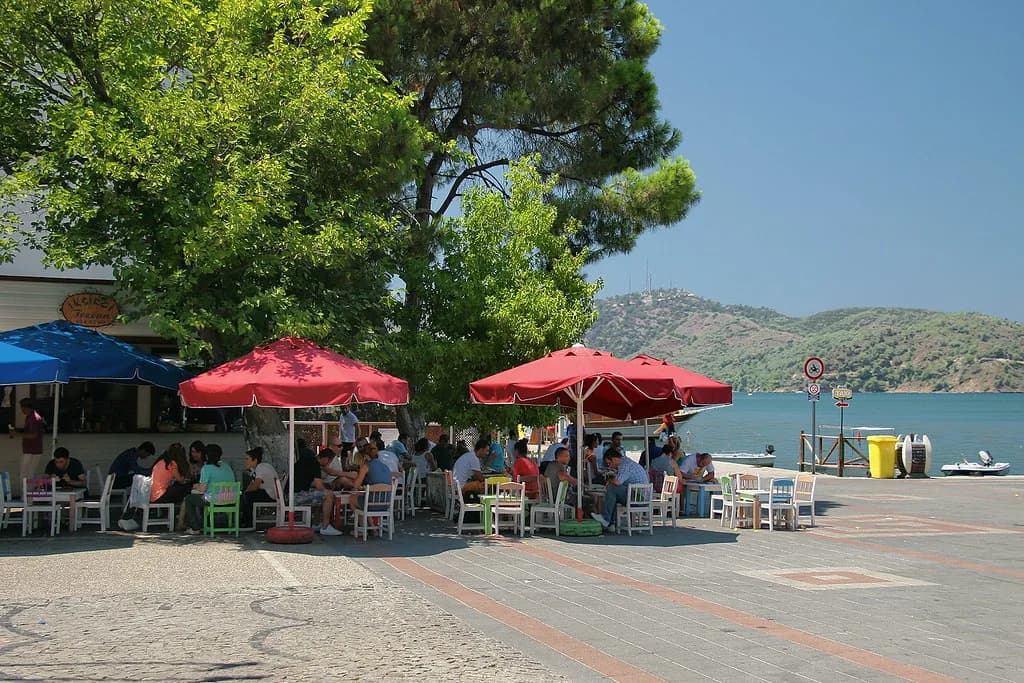
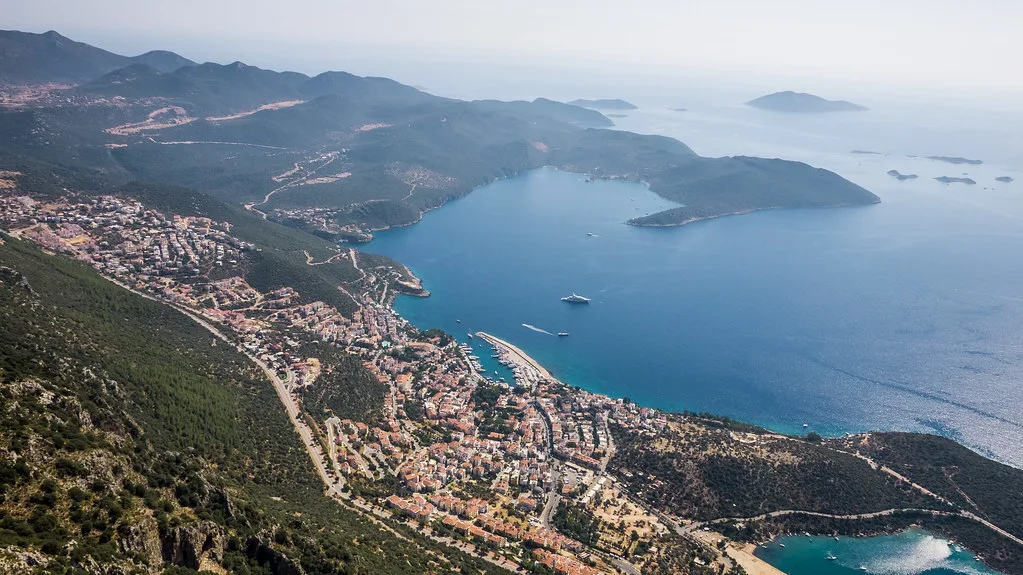
Kaş is a small coastal town on the Mediterranean with a population of just over 7,000, and it has stayed relatively under the radar compared with the bigger resorts. Its centre is compact: a small town square, seafood restaurants along the front, and streets of whitewashed houses and boutique hotels draped in bougainvillea. That compactness is the appeal, and it also means you can walk almost everywhere.
Kalkan, further west towards the Muğla–Antalya border, suits travellers who want a quieter base with easy access to the water. Neither town is a resort strip, so if you want big hotels, pools and entertainment programmes, base yourself at Ölüdeniz or Belek instead. If you want to walk to dinner and hear the sea from your room, these two are the better fit.
Bodrum and the Aegean end of the coast
Bodrum anchors the Aegean end, where the water is cooler and the peninsula is dotted with small bays rather than one long beach. It is a good base for travellers flying into Bodrum–Milas airport and staying put, with boat days and the castle as the centrepiece of a short break. From here, Kuşadası and Ephesus lie to the north and are usually done as a separate stop rather than a day trip.
The practical consequence is that the Aegean end and the Antalya end rarely belong in the same week. A first trip often works better as Antalya plus the Muğla stretch, or Bodrum plus the Aegean sites, with the other half saved for a return visit.
Getting there and getting around: flights, coaches and minibuses
Two airports do most of the work for this coast: Antalya in the east and Dalaman for Fethiye, Ölüdeniz, Kalkan and Kaş, with Bodrum–Milas serving the Aegean end. Book your arrival airport to match your first base, not your last, because the road transfer between the ends of the coast is long. Package operators and Airlines both sell seats into all three, and the coastal holiday operators' own pages list which airport serves which resort.
Once you are on the coast, dolmuş minibuses cover the short hops between towns and beaches, and coaches link the bigger centres. Renting a car pays off if you plan to reach Xanthos, Patara or Kekova under your own steam, but it is a liability in Antalya's old streets and in small towns where parking is tight. A common compromise is minibuses for the first few days and a car for the inland and ancient-site days.
Boat trips and the Kekova sunken city: what a day on the water involves
A day on the water usually means a gulet-style boat out of Kaş, Kalkan or Fethiye, with swimming stops, lunch cooked on board and a run past the sunken city of Kekova. On the Kaş run described in one account, the boat headed for Kekova and Simena Castle with a barbecue lunch served on deck and an ice-cream seller pulling alongside in a speedboat. Boats leave from small harbours outside the main towns, so expect a short van transfer at the start and end of the day. If Kekova is the reason you are choosing between bases, our Kekova guide covers what the trip actually involves.
Plan the day honestly. The Kaleköy stop involves a climb to the Simena Castle ruins that is awkward in sandals and beach gear, even though the view from the walls is the reward. Take shoes you can climb in, a hat and water, and treat the boat's lunch as the main meal of the day rather than planning a big dinner.
Ancient sites along the coast, from Antiphellos to Simena Castle
In Kaş itself, the Antiphellos Theatre is an ancient Greek theatre overlooking the sea, restored so that it is easy to visit and still able to hold a couple of thousand people comfortably. It works best at the end of the day, when people gather on the seats to watch the sun go down over the water. Entry arrangements are worth confirming locally, since small sites change how they are managed.
Above Fethiye, the rock-cut tombs are the coast's most visible ancient monument and the reason many people start reading about the Lycians at all. The Amyntas rock tombs page covers the climb, the setting and what the carvings represent, and pairs naturally with a morning in Fethiye's old quarter. Further inland, Tlos is a larger Lycian city site with a theatre and tombs, best done with a car.
The tomb tradition runs right along this shore, from the cliff face at Fethiye to the sarcophagi scattered through the hills behind Kaş and Kekova. If you want the wider picture before you go, the Lycian Tombs in Turkey guide sets out the main groups and where each one sits. Reading it first makes the on-site information boards far easier to follow.
What a coastal stop costs: tickets, boats and food
Prices on this coast move with the lira, so treat any figure you read online as a starting point and confirm it where you pay. Boat days, site tickets and restaurant bills are all quoted in Turkish lira locally, and some operators price boat trips in euros for foreign visitors. Ask before you board whether lunch and entrance fees are included, because a cheap-looking boat ticket often excludes both.
For a realistic budget, add up the components rather than looking for one headline number: the boat day, the minibus fares, the site entries and two meals. Cash in lira is still useful in small towns and at rural sites, and cards work in most town restaurants and hotels.
When the crowds and heat change the trip
Summer on this coast is hot and busy, and the difference between July and October is felt most in the middle of the day. In one October account the sea off Kaş was still warm enough for swimming, the weather stayed warm, and only a few other tourist boats shared the water. That does not make October the right month for everyone, but it shows how much the experience shifts at the edges of the season.
Plan around heat rather than against it: ancient sites and castle climbs in the early morning, boats and swimming in the afternoon, towns in the evening. Small towns with narrow streets and little shade are harder work at midday than a city with museums and covered bazaars.
How many days each stretch needs, and how to link two or three
For a one-week trip, pick one stretch and stay in it. Antalya with Kaleiçi, the harbour and one ancient site fills four or five days; Fethiye with Ölüdeniz and a Kekova boat day fills the same; Bodrum with a boat day and one site works for a short break. Trying to cover Antalya plus Bodrum in seven days leaves you in a coach rather than on the coast.
For two weeks, link two stretches with a road transfer or an internal flight and keep the third for another year. The natural pairing is Antalya in the east with the Muğla stretch around Fethiye, Kaş and Kalkan, since Dalaman airport sits between them. Walking groups cover the same ground on foot, with daily distances listed on Explore's Walking Turkey's Turquoise Coast itinerary page.
Build in one unscheduled day per move. Transfers, boat departures and site opening change with weather and season, and a buffer day turns a rushed itinerary into a holiday that still has room for a second swim.
Which stretch of the Turquoise Coast should you book first?
Book the stretch that matches the holiday you actually want: Antalya for a city with an old town and harbour, the Fethiye area for a mix of lagoon, town and tombs, Kaş or Kalkan for a small-town base with boats and ruins on the doorstep, Bodrum for the Aegean end. Then choose your arrival airport to suit that base and leave the other stretches for a return trip.
Confirm boat departures, site arrangements and airport transfers with your accommodation or operator close to the date, since these are the details most likely to shift between seasons.
Explore more Fethiye guides
Frequently Asked Questions
Where is the Turquoise Coast?
It is the southwestern shore of Turkey, also called the Turkish Riviera, taking in the provinces of Antalya, Muğla and Aydın along with southern İzmir and western districts beyond. In holiday terms it runs from Antalya in the east through Fethiye, Ölüdeniz, Kalkan and Kaş to Bodrum and the Aegean end.
Is the Turquoise Coast the same as the Turkish Riviera?
Yes. The two names describe the same stretch of southwest Turkey, and you will see both used by tour operators and travel guides. Either way, the practical planning units are the provinces and the towns inside them.
Which airport should I fly into for the Turquoise Coast?
Match the airport to your first base rather than your last: Antalya for the eastern end, Dalaman for Fethiye, Ölüdeniz, Kalkan and Kaş, and Bodrum–Milas for the Aegean end. Road transfers between the ends of the coast are long, so changing airports mid-trip rarely saves time.
Can I visit the Turquoise Coast in Australia?
No. In this context the Turquoise Coast means Turkey's Turkish Riviera; the name is not used for an Australian destination. If you were searching for somewhere in Australia, this guide will not help.
Sources
Notes for your next Turkey trip
Optional updates when we add or correct a town guide.
You might also like
Continue reading
More guides you'll find useful