Dolmuş in Turkey: How the Minibus Works and How to Use It
A dolmuş is a shared minibus on a set route for a fixed fare. Here is how to find a stop, read the destination, pay the driver and ask to get off.
On this page
A dolmuş is a shared minibus or small bus that runs a set route between two points on a fixed fare, picking up and dropping off passengers along the way. For holidaymakers in Antalya, Fethiye, Ölüdeniz, Kemer and the resorts around them, it is usually the cheapest and most frequent way to move between a town centre, a beach and a neighbouring village. This guide walks through the four decisions that matter: finding the stop, reading the destination, paying, and getting off where you want.
The name comes from the Turkish word for full, because a dolmuş in its older form waited until enough passengers had climbed aboard before it set off. In practice you will meet two versions: the classic minibus that you flag down from the roadside, and the newer municipal minibuses in provinces such as Muğla, which keep to set routes and timetables.
What a dolmuş is and why the name means 'stuffed'
The word comes from dolmak, to fill, and describes a vehicle that leaves when it has enough passengers rather than at a strict clock time. That origin still shapes how the older-style dolmuş behaves: it pauses for anyone who signals, and it can feel tightly packed at busy hours. Officially it is simply a shared taxi or minibus running a pre-determined route, with each passenger paying only their own fare.
Cars, minibuses and even boats have been used as dolmuş in the past, though today the minibus is what you will see on Turkish roads. Do not expect a route map inside the vehicle, a printed timetable at every stop or a numbered line system like a city bus. Treat the dolmuş as a local shared service and ask at your hotel or the nearest stop which vehicle goes your way.
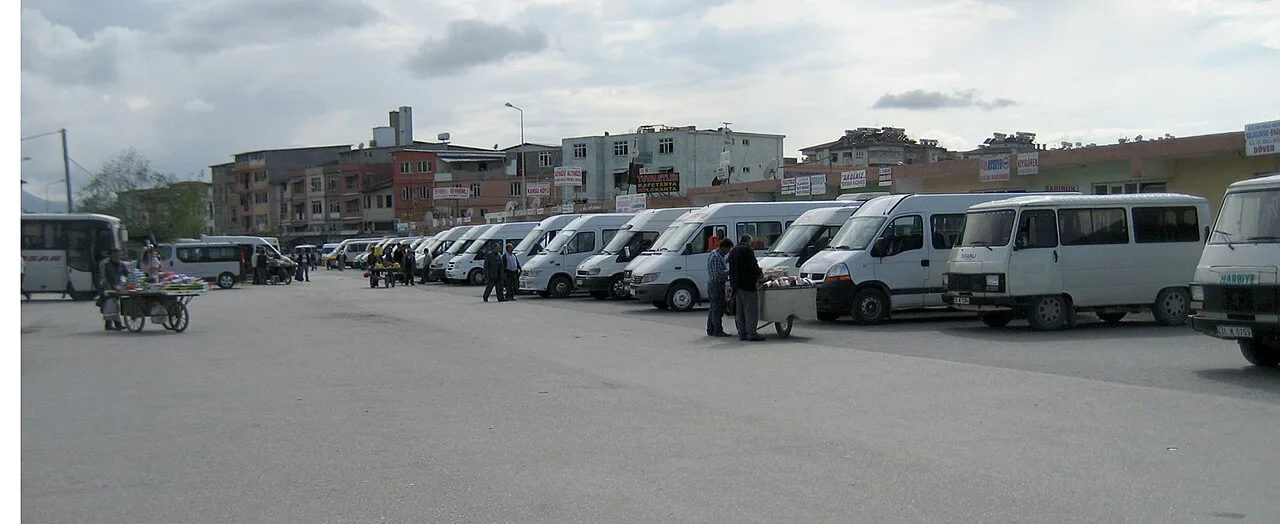
Where dolmuş routes run, from town centres to resort beaches
Dolmuş services operate in cities and in the countryside, so they cover both the short hop from a resort strip into an old town and the longer run to a neighbouring district. In Antalya alone there are around 70 different routes, and the vehicles also connect the city with places such as Alanya, Kaş, Kemer, Manavgat, Belek, Beldibi, Finike, Akseki and Aksu.
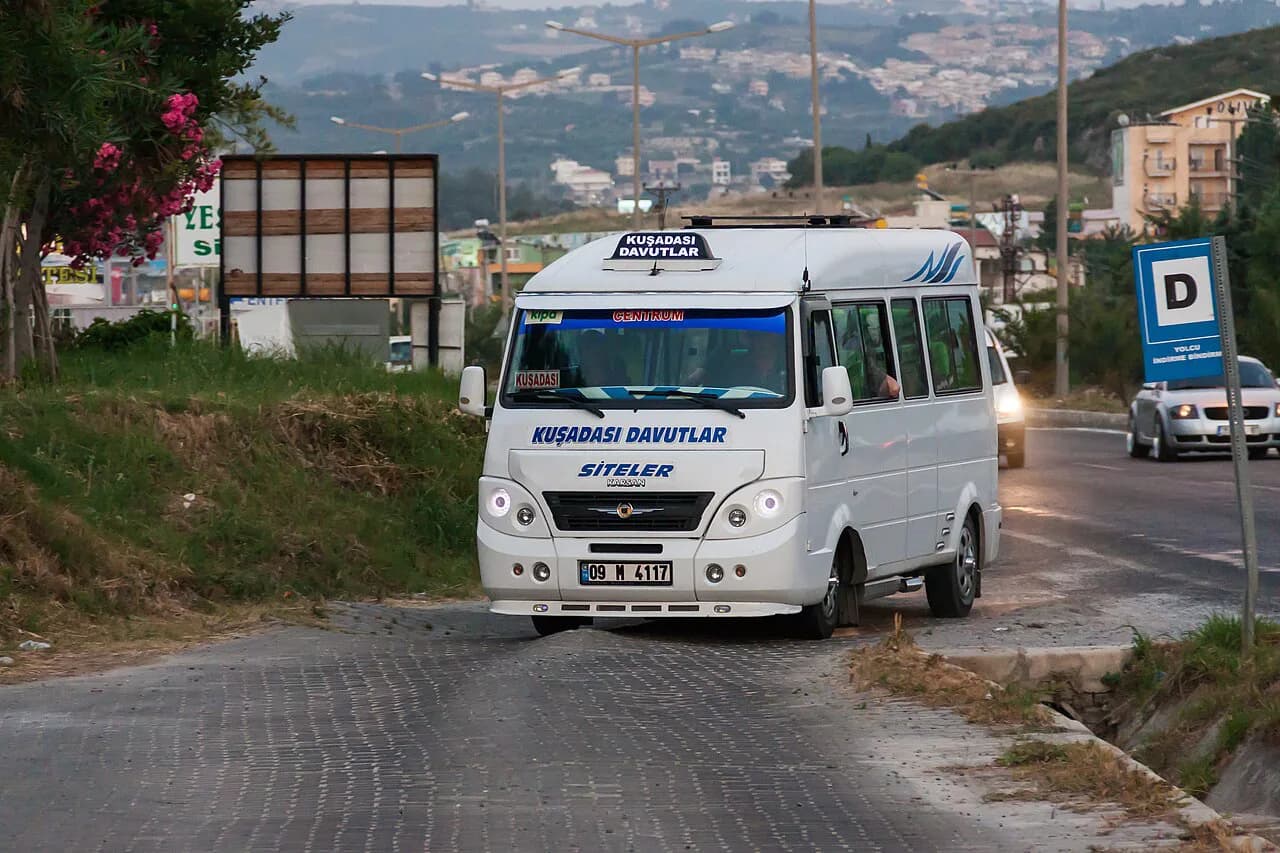
How do I stop a dolmuş in Turkey? Stand at a marked stop where one exists, or at the roadside on routes where there is no fixed stop, and step towards the vehicle as it approaches. In Muğla province you will usually need to be at a stop marked with a black D on a white sign.
How do I pay for a dolmuş? On the traditional Antalya system you pay a fixed cash fare for the route, handed forward to the driver, who gives change from a box beside the gear stick; no ticket is issued. Some services have moved to contactless payment on a terminal by the driver.
How much is a dolmuş ride? Fares are set for each route and change often, so ask the driver or your accommodation for the current fare when you arrive rather than relying on an old figure. For scale, one rider reported 20 Turkish lira for a 20-minute ride into Fethiye in 2023, with fares generally in the 10 to 20 lira range at that time.
In Muğla province, which covers Fethiye, Ölüdeniz, Çalış, Hisarönü and the surrounding coast, the dolmuş network has been taken over by the provincial municipality and runs on determined routes with a relatively reliable timetable. Urban services run on a regular basis whatever the time of year, while some rural areas in winter see only a few minibuses through the day.
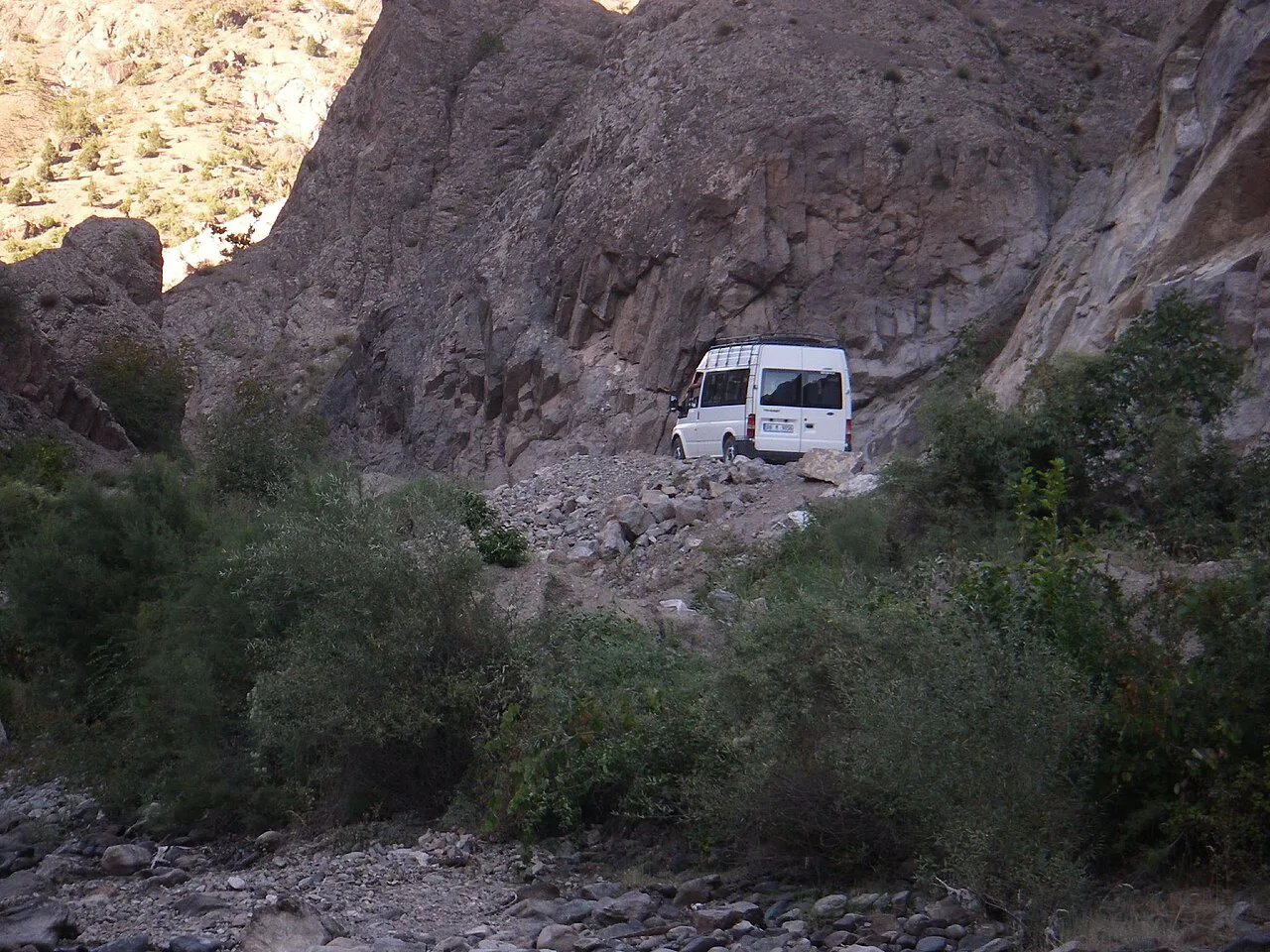
Finding a stop: the black D on a white sign in Muğla province
In Muğla province, roadside stops are marked with a black D on a white background with a blue frame, the D standing for durak, or stop. In towns you will usually need to be at one of these stops to board; in remote rural areas you can still flag the minibus down along the road. If several routes share a stop, check the front window before you step up.
The Antalya pattern is looser: apart from the starting and finishing points there are no precisely defined stops, and passengers signal the dolmuş from the roadside and climb off wherever they want along the route. That gives you flexibility on a coastal road, but it also means you should have a rough idea of your landmark before you set off.
Flagging down a dolmuş and reading the destination in the front window
The end destination, and sometimes the main areas in between, is displayed in the front window, either on an electronic sign or a printed card. If you are unsure, say your destination to the driver as a question before boarding; a nod means yes, and a shake of the head means try the next one. Standing at the kerb and stepping towards the vehicle as it slows signals that you want it to stop.
Do not rely on finding a route map at the stop. Stops on main roads are usually frequent, and in built-up areas you will spot them by the small shelter and the group of people waiting, but printed timetables appear only at some stops. Map your destination on your phone before you board and track it during the ride so you know when to move.
Paying the fare: cash passed to the driver, change from his box, contactless cards
On the traditional system the fare for each route is fixed and paid in cash, handed forward from passenger to passenger until it reaches the driver, who keeps a compartmented change box beside the gear stick. No ticket is issued, so keep small notes and coins to hand. Prices change with inflation, so ask the driver or your accommodation what the fare is on the day rather than budgeting from an old figure.
Some services have moved to contactless payment, where you tap a bank card or a stored-value ticket card on a terminal by the driver. Cash is still accepted, but use small bills if you are paying that way. As a rough marker of scale, one rider reported paying 20 Turkish lira for a 20-minute ride into Fethiye in 2023, with fares generally in the 10 to 20 lira range at that time; treat those as history, not today's rate.
Asking to get off, and what 'inecek var' means
To get off, call out inecek var, which means someone wants to get out, and the driver will pull over at the next safe opportunity. In tourist areas you can also simply tell the driver where you want to stop when you board, or name your landmark as you approach it. Sit near the front if you want to be heard easily over a full vehicle.
Knowing your stop matters more than knowing the route, because there is rarely a display announcing the next one. Watch for a mosque, a square, a harbour turn or a supermarket you noted on the map, and press your way towards the door a little before you reach it. If you overshoot, ask the driver to stop and walk back rather than riding to the terminus.
Intercity dolmuş services from Antalya to Alanya, Kaş, Kemer, Manavgat and Belek
Dolmuş also run between cities, not just within them. From Antalya you can reach Akseki, Aksu, Alanya, Finike, Kaş, Kemer, Manavgat, Beldibi, Belek and other places by dolmuş, which makes the minibus a realistic option for a day out along the coast rather than only a local shuttle. Journeys are longer and less comfortable than a coach, so weigh the saving against the time.
For longer legs, confirm at the otogar or the local dolmuş station which vehicle serves your destination and roughly how long it takes, since long-distance minibuses may leave only when full. If your priority is a fixed departure and a reserved seat, a scheduled coach is the safer choice; if you want to leave soon and travel cheaply, the dolmuş wins.
Summer timetables and late-night services on busy holiday routes
Summer changes the service pattern on holiday routes. Popular runs become more frequent and the last dolmuş of the day is much later than in winter; on the Fethiye to Ölüdeniz route, for example, vehicles run every few minutes in summer, with the last return to Fethiye in the early hours. Winter brings a thinner service, particularly to rural villages.
Some routes also shift shape in summer, such as the Karagözler dolmuş, which continues around the Fethiye peninsula so passengers can reach the beach clubs there. Because these seasonal extensions and late departures change, check with your accommodation or the dolmuş station on arrival before you rely on a late return. That is also the moment to confirm the current fare.
Dolmuş in Fethiye and Ölüdeniz, including the Karagözler peninsula route
Fethiye is the clearest example of a resort town that would barely function without its dolmuş. The minibuses link the town centre with Çalış, Ölüdeniz and Hisarönü, and in summer they run frequently enough that letting a full one go by costs only a few minutes. Vehicles are now white minibuses carrying the Muğla Büyükşehir logo, and they are air-conditioned in summer.
For a visitor, this is the easy way to split a day between the harbour at Fethiye and the lagoon at Ölüdeniz without moving the car or paying for a taxi each way. The ride is short on a frequent summer service, and you let the dolmuş do the driving. Plan your return before dinner if you are travelling outside the summer months.
Practical trade-offs: crowded vehicles, no route maps and air conditioning
The dolmuş is cheap and frequent, but it comes with trade-offs. Vehicles fill up, passengers still pile on, and you may stand or squeeze onto a bench seat at peak times; there is no printed route map at most stops, and little English beyond the destination card. On the other hand, newer municipal minibuses in Muğla province are air-conditioned, which matters in July and August.
Use it for short hops and for the run between a resort and its nearest town, and keep a taxi or a booked transfer for late nights, heavy luggage or airport runs. If you are heading to a Turkish bath, a bazaar or a market, ask which dolmuş stops nearest the entrance rather than the town centre. For the bazaar side of a Turkish trip, the guide to Turkish markets, Turkish carpets and evil eye Turkey covers what you will see on the stalls.
Is the dolmuş the right way to get around on your trip?
Take the dolmuş for the journeys it does well: the ten-minute run from a resort into town, the climb to a beach, the hop between a harbour and a neighbouring village. Skip it when you are carrying luggage, travelling after the last summer service or heading somewhere rural in winter, where departures thin out sharply.
Before your first ride, note your destination on a map, keep small notes for the fare and learn the phrase inecek var. Check the current fare and the last departure locally when you arrive, since both change with the season and with inflation.
Explore more Turkey guides
Frequently Asked Questions
How do I stop a dolmuş in Turkey?
Stand at a marked stop where one exists, or at the roadside on routes where there is no fixed stop, and step towards the vehicle as it approaches. In Muğla province you will usually need to be at a stop marked with a black D on a white sign. Check the destination in the front window before you board.
How do I pay for a dolmuş?
On the traditional Antalya system you pay a fixed cash fare for the route, handed forward to the driver, who gives change from a box beside the gear stick; no ticket is issued. Some services have moved to contactless payment on a terminal by the driver. Cash payers should carry small notes.
How much is a dolmuş ride?
Fares are set for each route and change often, so ask the driver or your accommodation for the current fare when you arrive rather than relying on an old figure. For scale, one rider reported 20 Turkish lira for a 20-minute ride into Fethiye in 2023, with fares generally in the 10 to 20 lira range at that time.
Does the dolmuş run to Ölüdeniz from Fethiye?
Yes. The Fethiye to Ölüdeniz dolmuş runs every few minutes in summer, with the last return to Fethiye in the early hours, and vehicles are air-conditioned. Out of season the service is thinner, so confirm the last departure locally before planning a late return.
Sources
Notes for your next Turkey trip
Optional updates when we add or correct a town guide.
You might also like
Continue reading
More guides you'll find useful