Lycian Coast, Turkey: Fethiye, Ölüdeniz, Kaş and Patara
Plan a trip along Turkey's Lycian coast: Fethiye, Ölüdeniz, Kaş, Kalkan, Patara and Kekova, how the places fit together and what each one is like.
On this page
The Lycian coast is best treated as a line, not a single resort: Fethiye and Ölüdeniz sit at the western end, Patara, Kaş, Kalkan and Kekova fill the middle, and the Xanthos valley and Saklıkent lie inland behind them. Grouping your days this way stops you zig-zagging along the coast road, and it makes the choice between one base and a one-way route much clearer. This guide covers what each stop is like, how the airports and minibuses connect them, and how to pace a first trip.
What the Lycian coast is and where it begins and ends
The coast takes its name from Lycia, the historical name for the Tekke Peninsula that juts into the Mediterranean on Turkey's southern shore, where mountains rise steeply from a rocky coastline. It lies across the Muğla and Antalya provinces on the border between the Aegean and the Mediterranean, and it is the stretch of the Turquoise Coast, Turkey that visitors usually mean when they say Lycia. Fethiye anchors the western end and Antalya the eastern one, with the resort towns and ancient sites strung between them.
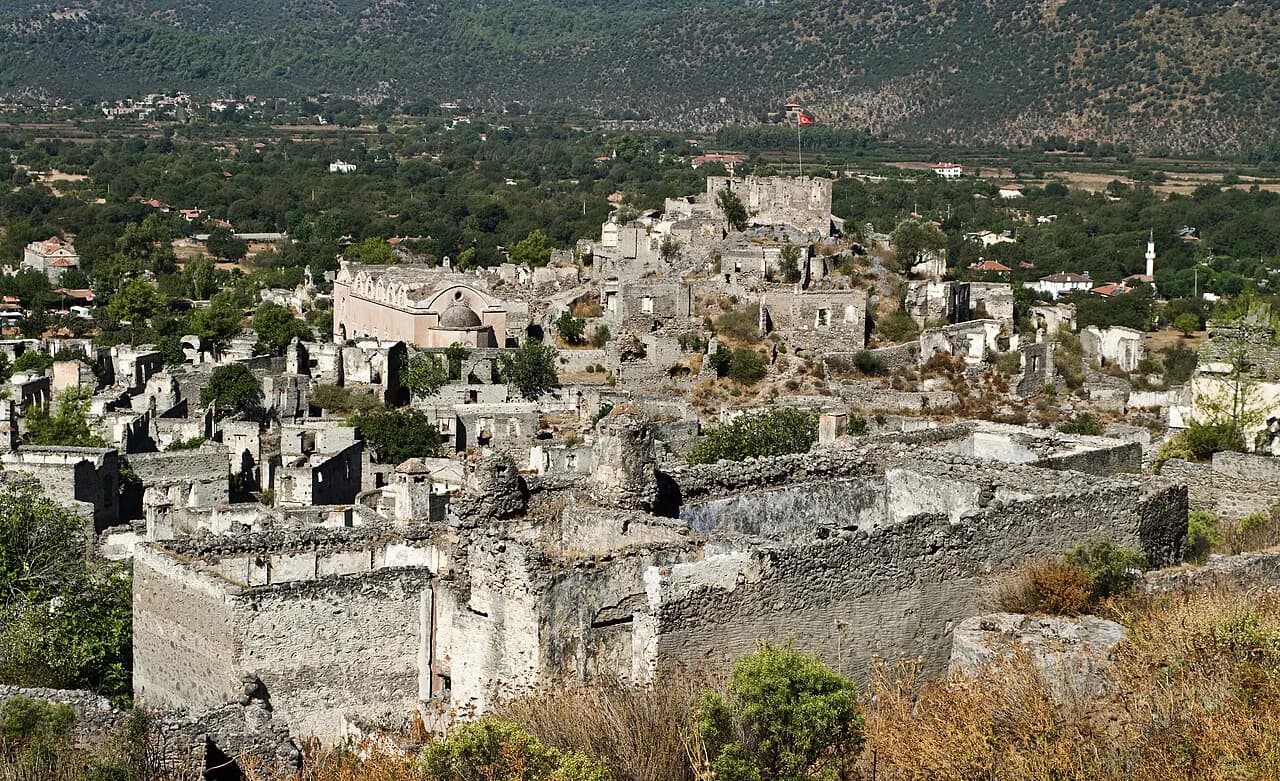
The coast's defining feature for a visitor is the pairing of blue bays with Lycian remains: rock-cut tombs in the cliffs, sarcophagi scattered through town streets and ruined cities in the hills behind. That combination is why the region feels different from an all-inclusive beach stay, and why it rewards a car or a well-planned sequence of day trips. Our Lycian Tombs guide explains the tomb types you will keep meeting along the route.
How to reach the coast: Dalaman and Antalya airports, bus, shuttle and hired car
Two airports serve the region: Dalaman for the western half and Antalya for the eastern end, with Fethiye and the other coastal towns reachable from either by bus or a hired car. A shuttle bus runs from Dalaman airport directly to Fethiye town centre, which makes the western end workable without driving on arrival day. From Antalya you are better placed for the eastern sites and for a route that runs west towards Kaş.
Think about which airport you fly into and out of before booking anything else, because a one-way route between Dalaman and Antalya usually means a different arrival and departure airport. If you would rather not drive, pick one base and use minibuses, boat taxis and organised day tours from it. The Lycian Way's start point at Ölüdeniz is about two hours from Dalaman airport, which gives a sense of the transfer times involved.
Fethiye: harbour, fish market, Old Town and the rock tombs above the city
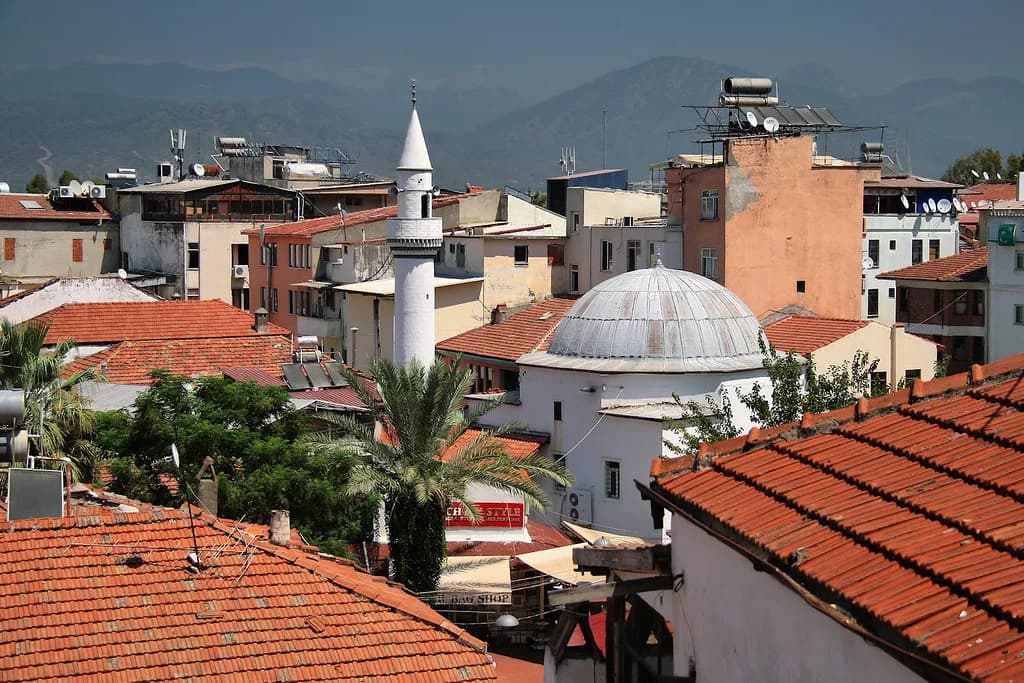
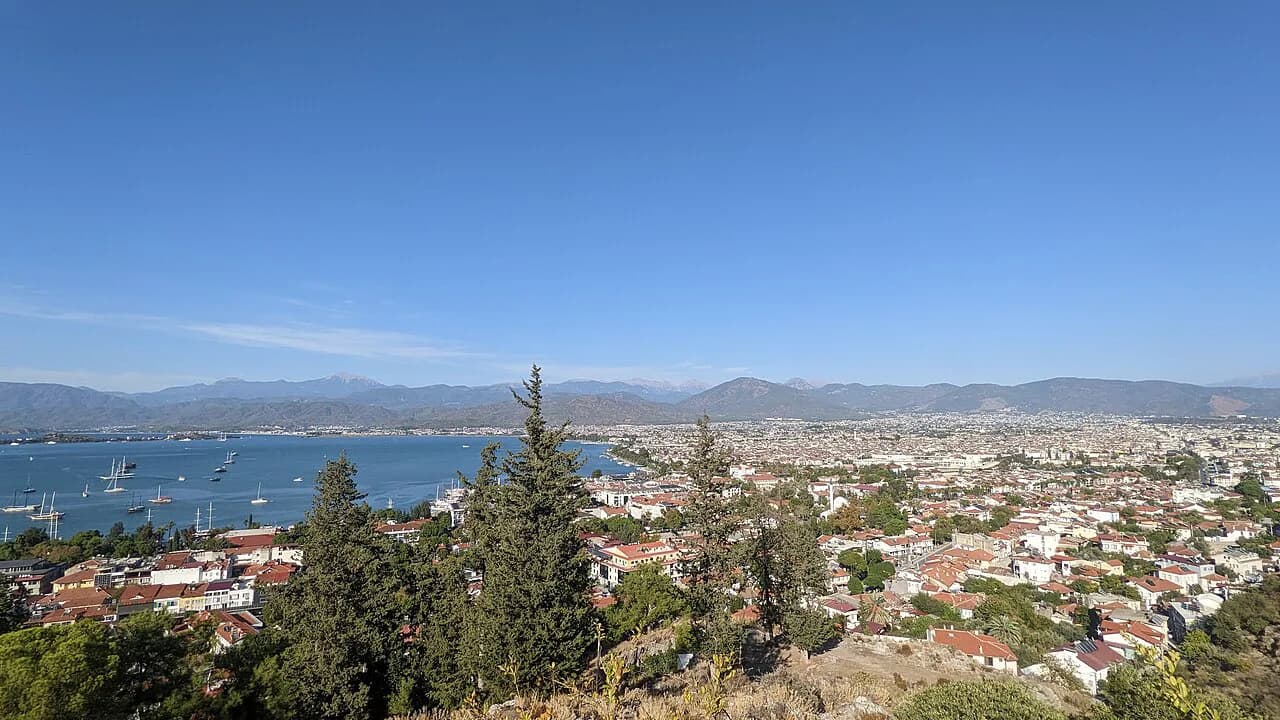
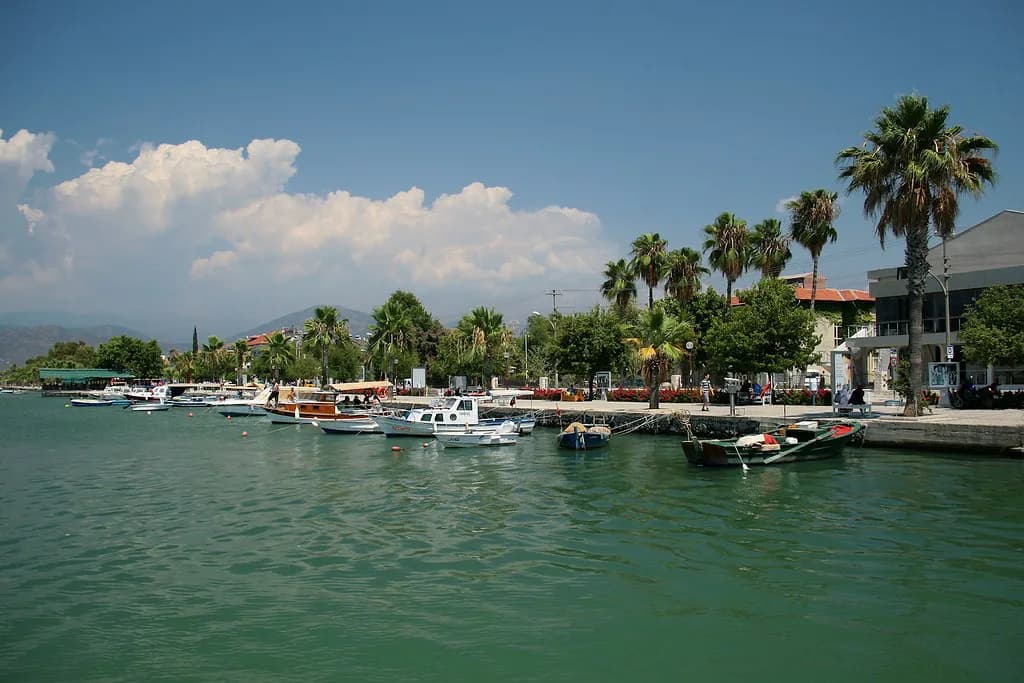
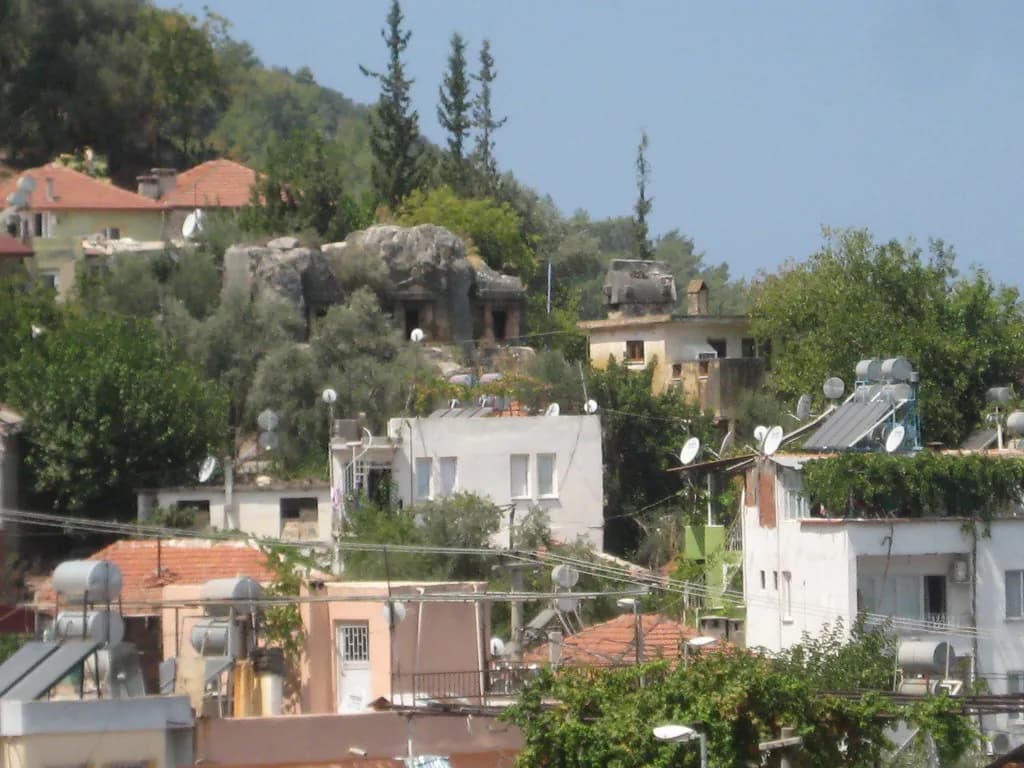
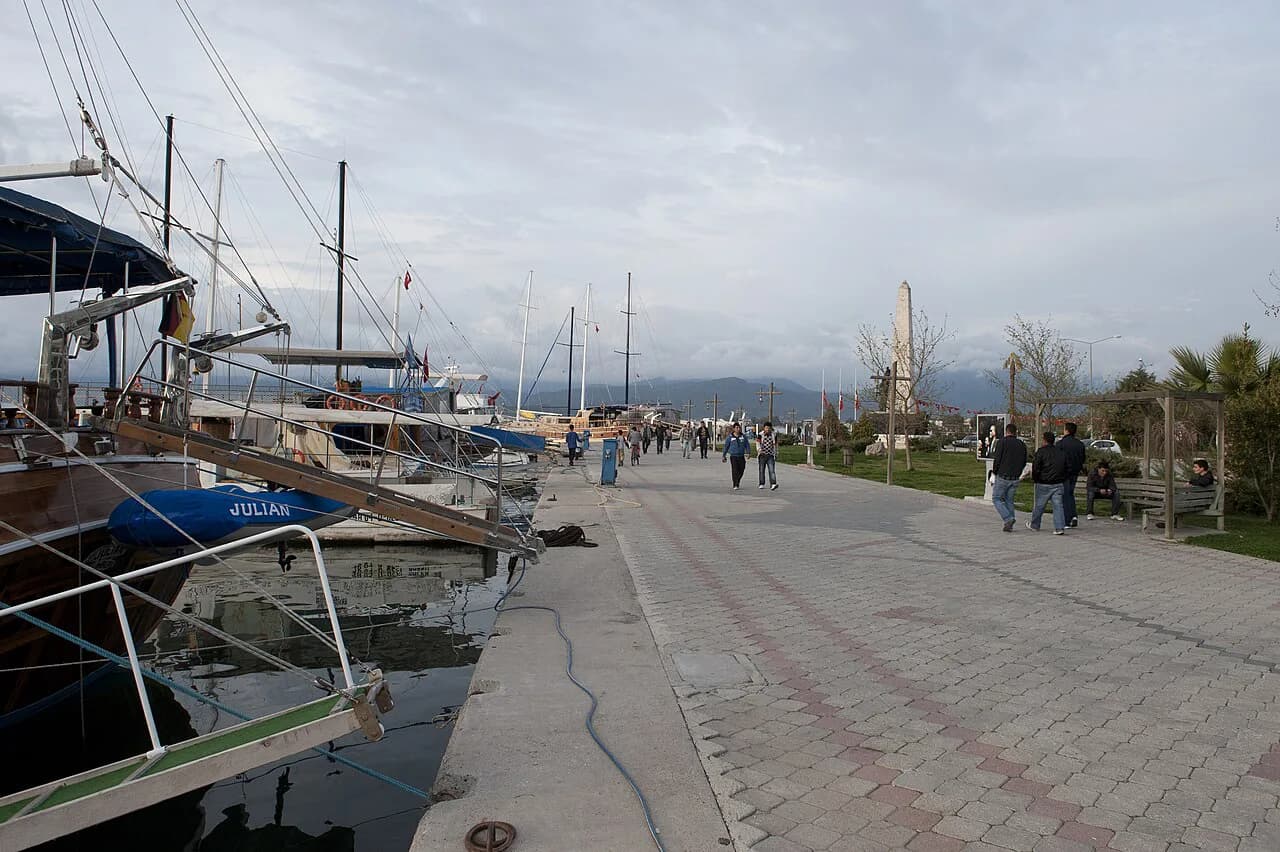
Fethiye is the coast's working port and market town, and a sensible first base because it has the harbour, the Old Town restaurants and the transport links all in one place. The sight that defines it is the cluster of rock-cut tombs in the cliff above the streets, cut into the rock and visible from the town below. Allow a morning for the climb and the view back over the harbour, then eat in the Old Town in the evening. If you are weighing it against the lagoon resort nearby, our comparison of Fethiye or Ölüdeniz covers the choice. sets out the trade-offs.
The fish market, Balık Pazarı, works on the choose-and-cook principle: pick your seafood from the traders and take it to one of the surrounding restaurants to be cooked. That makes it a good bet for a group with mixed tastes, and it sits naturally with a wander through the Old Town. Fethiye also functions as the gateway to Ölüdeniz, Kabak and the Lycian Way, so a couple of nights here saves a lot of back-and-forth.
Ölüdeniz and the start of the Lycian Way at the lagoon
Ölüdeniz is the lagoon-and-mountain resort just south of Fethiye, and it marks the start of the Lycian Way, the waymarked long-distance footpath that runs around the coast towards Antalya. The route was researched, designed and waymarked by Kate Clow in 1999 as Turkey's first long-distance walking route, built to identify and protect some of the country's old roads. Day-walkers can sample a section from Ölüdeniz without committing to the full trail.
For anyone not walking, Ölüdeniz is a place to swim, take a boat out and use as a base for the surrounding bays. Bird's-eye views of the lagoon come from the mountain above, and the resort is close enough to Fethiye for an easy day out. If you want the walking without the logistics, guided and self-guided versions of the Lycian Way are sold as packages.
Kabak and the Butterfly Valley: boat access and quiet bays
Kabak is the bay beyond Ölüdeniz, reached along the coast road and known for being quieter than the main resort, with simple accommodation in the bay. The Butterfly Valley sits nearby and is generally approached by boat rather than on foot, which makes it a natural addition to a day on the water from Ölüdeniz. Both suit travellers who want a slower few days between the busier stops rather than a full itinerary.
Plan boat days around the weather rather than a fixed schedule, and ask at the harbour in Ölüdeniz which services are running when you are there. Seasonal boat services on this stretch are not something to assume; operators confirm departures locally. Build in a spare day if a particular bay is the reason for your trip.
Patara: the long beach, the dunes and the ancient site
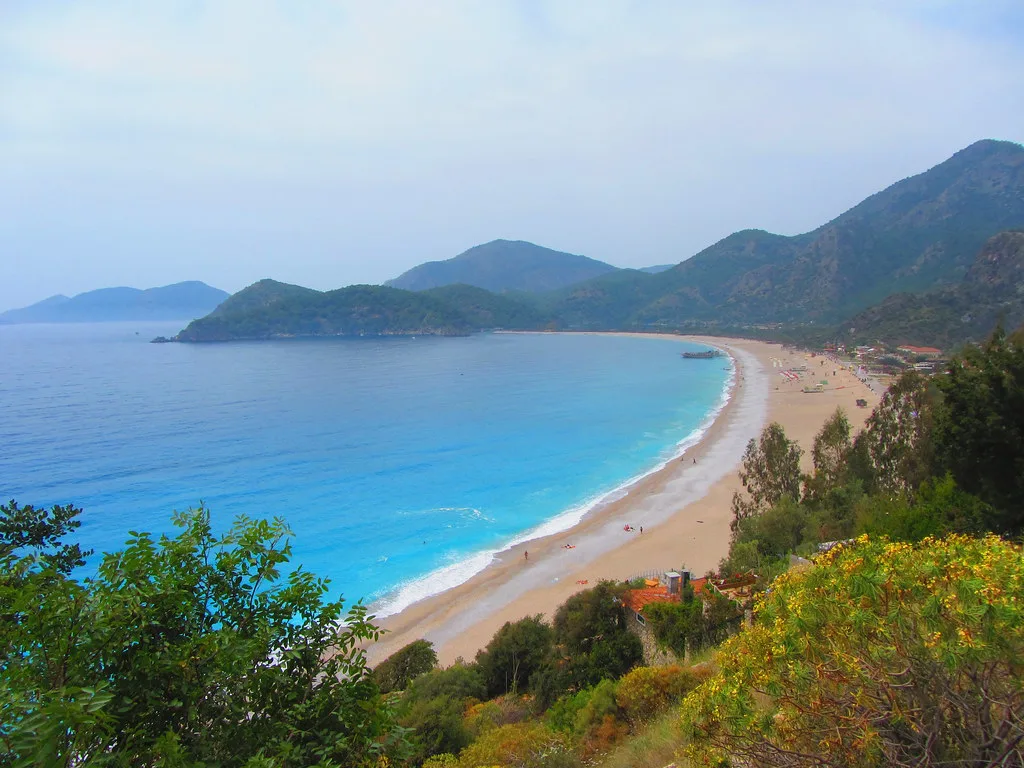
Patara combines a very long sandy beach with dunes and marshland behind it, and the ancient city of Patara sits alongside. The wider Patara area is a designated national park and a recognised breeding ground for loggerhead turtles, which is why the beach has been kept free of development. Come for a full half-day: the site and the beach are best done together rather than as two separate outings.
Patara sits between Kalkan and Kaş, so it fits neatly into a middle-coast base or a day trip from either town. Water taxis from the Kalkan quayside are a scenic alternative to driving for the beaches in this stretch, though you should confirm what is running on the day. The ancient site has a theatre and harbour remains worth an hour before you head for the sand.
Kaş: cobbled lanes, Lycian sarcophagi and boats to Kekova
Kaş is the harbour town at the heart of the middle coast, with narrow cobbled lanes lined with boutiques and restaurants and Lycian sarcophagi scattered through the streets. Traditional Ottoman houses with overhanging balconies sit among the lanes, which makes simply wandering the centre worthwhile. It is the most natural base for boat trips out to Kekova and the sunken ruins.
Kalkan: harbour town, Kaputaş and Patara within day-trip range
Kalkan is a harbour town built around a small bay, with a quayside that runs water taxis to nearby beaches and a compact centre that fills with restaurants in the evening. It works well as a base for Kaputaş and Patara, both within day-trip range along the coast road. Kalkan is also a departure point for boats to Kekova, so you can see the sunken city without moving hotels.
The trade-off with Kalkan is that it is a town for strolling and eating rather than sightseeing on the doorstep; the ruins are a short drive away. If you want antiquities within walking distance, Kaş or Fethiye suit better. If you want a harbour, a swim and a good dinner, Kalkan is hard to beat.
Kekova and Kale: the half-submerged ruins of Simena by boat
Kekova is the island and bay where the half-submerged ruins of ancient Simena lie directly opposite a sheltered bay, an unusual sight best seen from the water. Kale, the village above, has a well-preserved castle built by the Knights of Rhodes and views over the sunken city. Boats reach the area from Kaş or Kalkan, and this is one of the coast's signature days out.
Because the ruins are partly underwater, a boat trip is the point rather than an optional extra, so book one rather than trying to see Kekova from the road. Ask locally what a trip includes, since operators vary in how long they stop at Kale and whether lunch is aboard. Keep the day flexible in case the sea decides otherwise.
The Xanthos valley: Xanthos, Letoon and Pinara
Inland behind the coast, the Xanthos valley holds some of the most celebrated ancient Lycian towns, including Xanthos, Letoon and Pinara, set among gorges, valleys and mountain villages. The amphitheatre and acropolis at Xanthos-Letoon are recognised and protected as a UNESCO World Heritage Site. Pinara, in its mountain setting of pines and olive trees, is far quieter and retains a tranquil atmosphere.
This is car country: the three sites are spread through the valley and public transport between them is thin. Give the valley a full day from a Kalkan or Kaş base, starting early to avoid the worst heat. Tlos, another Lycian city in the same hinterland, is covered separately.
Saklıkent Gorge and the inland villages behind the coast
Saklıkent Gorge cuts deep into the mountains behind the coast and is the usual escape from the beach when the heat peaks, with the gorge itself cooler than the coast road. Inland villages such as Islamlar, in the hills above Kalkan, make a natural lunch stop on the way back down. A day combining the gorge with a village meal gives you a break from ruins and harbours.
Wear shoes you can get wet if you plan to walk into the gorge, and go early in high summer. The gorge is a popular coach stop, so mid-morning to early afternoon is the busiest window. Pair it with the valley sites only if you have a car and a long day.
Dalyan and the river: rock tombs and mud baths from the water
Dalyan is reached by boat along the river, with Lycian tombs cut into the cliffs above the water and mud baths among the standard stops. Boats from the river let you see the tombs from below, and there is a rehabilitation centre for turtles in the area. It is a day trip rather than a base for most visitors, and it fits well with a stay in Fethiye.
Getting around without a car: dolmuş, boat taxis and day tours
Public transport runs along the coast, and minibuses plus boat taxis cover most of what a visitor wants between Fethiye, Ölüdeniz, Kaş and Kalkan. The Lycian Way has good public transport all along it, with opportunities to swim, canoe or paraglide, which tells you how well served the coast road is. A car still makes the inland sites and the Xanthos valley much easier.
Small-group tours are another option if you want the ancient sites without driving; operators such as Esplora run a nine-day Lycian coast itinerary that includes one night in Akyaka, two in Fethiye, two in Kaş and three in Antalya, with entrance fees to the main sites and museums included. Their published 2027 departure from 10 to 18 April is priced at £3,750 per person, not including flights. Treat that as a specific 2027 holiday rather than a typical cost of visiting the coast.
How long the coast needs: a linear route versus two bases
A one-way route from Dalaman to Antalya takes in far more, but it means packing and moving every two or three nights and booking different airports at each end. Two bases, one west around Fethiye or Ölüdeniz and one middle around Kaş or Kalkan, cover the coast's best-known stops without the constant repacking. Choose two bases if this is your first trip; choose the linear route if you have a fortnight or more.
As a shape, give Fethiye and Ölüdeniz three or four nights, the Kaş and Kalkan stretch four or five including a Kekova boat day, and a day each for Patara and the Xanthos valley. That leaves the eastern end around Antalya for a separate trip or the final leg of a longer route. Our Turquoise Coast, Turkey guide puts the wider region in context.
Heat, crowds and season: what summer and autumn change
July and August are very hot, with air temperatures reaching around 35°C and the sea already warm, while early autumn into mid-October brings air of about 27°C and water around 25°C. Spring is the other good window, and it is the recommended season for walking, with February to May and September to November the best months for the Lycian Way and summer too hot for long walks. Plan sightseeing for early mornings in high summer and save the beaches for the afternoon.
Crowds concentrate at the headline sites, so start at Patara or Xanthos when the gates open and leave the middle of the day for the harbour or the water. If you are walking, carry water and check the route notes before setting out on any section. Booking boats and tours a day or two ahead is usually enough outside the peak weeks.
Which end of the coast should you base yourself in?
For a first trip, base yourself in Fethiye or Ölüdeniz for the west and in Kaş or Kalkan for the middle, and treat Patara, Kekova and the Xanthos valley as day trips from the second base. That combination covers the tombs, the sunken city and the long beach without a different hotel every night. Add Antalya and its eastern sites only if you have the time for a proper one-way route.
Book flights into Dalaman if the west and middle are the plan, and check shuttle and boat arrangements with your accommodation before you travel, since services change with the season. Then decide the one question that shapes everything else: one base or a route.
Explore more Fethiye guides
Frequently Asked Questions
What country is Lycia now in?
Lycia is the historical name for the Tekke Peninsula on Turkey's southern coast, so the Lycian coast lies in modern Turkey across the Muğla and Antalya provinces. The main towns on it are Fethiye, Ölüdeniz, Kaş, Kalkan and Patara, with Antalya at the eastern end.
How difficult is the Lycian Way hike?
The Lycian Way is a waymarked long-distance footpath from Fethiye to Antalya, made mainly of Roman roads, old footpaths and mule trails that are often hard and stony underfoot and rise steeply between coast and mountains. It is not a casual stroll, but there is good public transport along it and accommodation in village houses, pensions and small hotels most nights, so day sections and shorter trips are realistic. Trekking is best in spring or autumn.
How many days does it take to complete the Lycian Way trail?
The Culture Routes Society, which maintains the route, gives a day count for the full trail, but it is a long walk of several weeks rather than a short break, and the figure has changed over the years. For a holiday, walk a few day sections from Ölüdeniz or one of the coastal towns; check current route notes and the guidebook before relying on any duration.
Who were the Lycian people?
The Lycians were a democratic but independent, warlike people with a developed art style and a high standard of living, whose strategic position gave them opportunities in sea trade. They later absorbed Greek culture after welcoming Alexander the Great and then became part of the Roman Empire, which built the theatres, baths and roads whose remains you see across the coast.
Sources
Notes for your next Turkey trip
Optional updates when we add or correct a town guide.
You might also like
Continue reading
More guides you'll find useful