Tlos Ruins Travel Guide: Plan Your Visit from Fethiye
Plan a visit to the Tlos ruins near Fethiye: the acropolis climb, Lycian rock tombs, stadium and theatre, plus how to get there and what tickets cover.
On this page
Tlos needs about half a day from Fethiye, and the visit splits cleanly into two parts: a flat lower plain of Roman public buildings and a short, steep climb to the acropolis where the Lycian rock tombs and an Ottoman castle sit. The site lies on the eastern side of the Xanthos valley at the foot of the Akdağlar, roughly 25 km north of Xanthos, in the hills above the modern town of Seydikemer.
This guide covers what stands on the plain and on the hill, how the drive from Fethiye works, the footwear the ground demands, what the entrance fee and Müzekart cover, and how Tlos slots into a day with the gorge and the valley villages. The Lycian coast is dense with sites of this kind, and Tlos is one of the quieter ones to walk around.
What the Tlos ruins are and where they sit
Tlos was one of the six principal cities of Lycia (the others being Patara, Xanthos, Pınara, Olympos and Myra), and its Lycian name was Tlawa. In about 100 BCE, according to Strabo, it was one of the six cities holding three votes in the Lycian League, and a road monument at Patara records it at the junction of seven routes. The site sits on the eastern side of the Xanthos valley beneath the Kragos Mountains, known today as the Akdağlar.
Charles Fellows identified the site in 1838 and took plaster casts of the Izraza reliefs on a return visit in 1842. Systematic excavation has run since 2005, which is why so much of the lower city can now be read as buildings rather than tumbled stone. The theatre, the Temple of Kronos and the stadium are the set pieces.
Nearby Seydikemer is the practical reference point on the map, and the ruins lie a few kilometres northwest of Saklıkent. If you are working through the rock-cut monuments of the region, this is a natural companion to the other Lycian tombs scattered along this stretch of coast.
Getting to Tlos from Fethiye and Kalkan
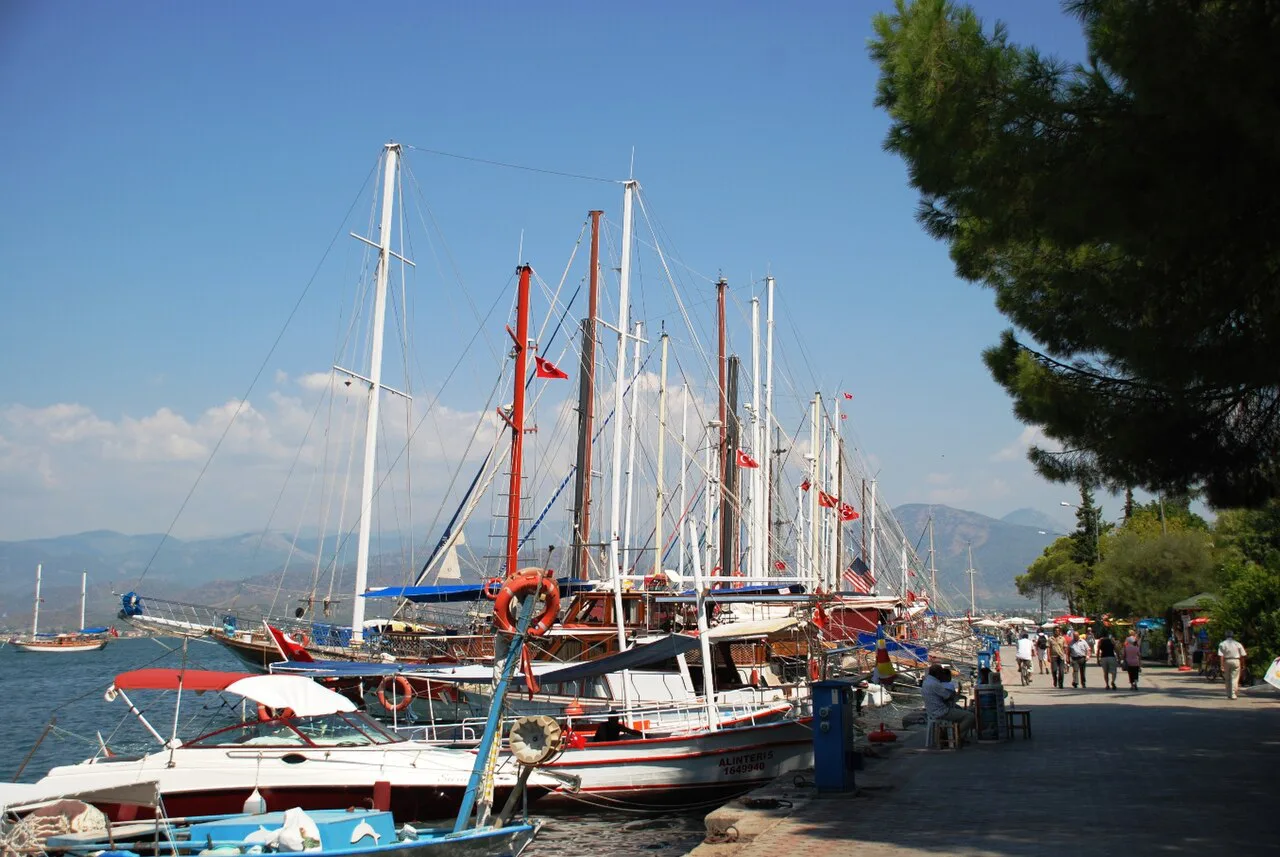
Tlos is about 35 km from Fethiye, approached on a secondary road that runs through the ruins themselves. Formal parking near the site is limited, and most visitors leave the car along the side of that secondary road, so allow a few extra minutes before you start walking. From Kalkan or Kaş the drive is longer but straightforward along the valley road towards Seydikemer.
Many summer visitors arrive on an organised day trip from Fethiye that strings Tlos together with Yakapark and Saklıkent Gorge, which removes the driving and the parking question in one go. Independent travel by dolmuş is possible in principle along the Seydikemer road, but services, stops and fares change and are not the sort of thing to build a tight schedule on.
Coming from the Turquoise Coast resorts further west, the Xanthos valley road is the sensible spine for a day that takes in more than one site. Driving yourself gives you the freedom to time the acropolis climb for the coolest part of the day, which matters in high summer.
The acropolis climb: rock tombs, Bellerophon and the castle
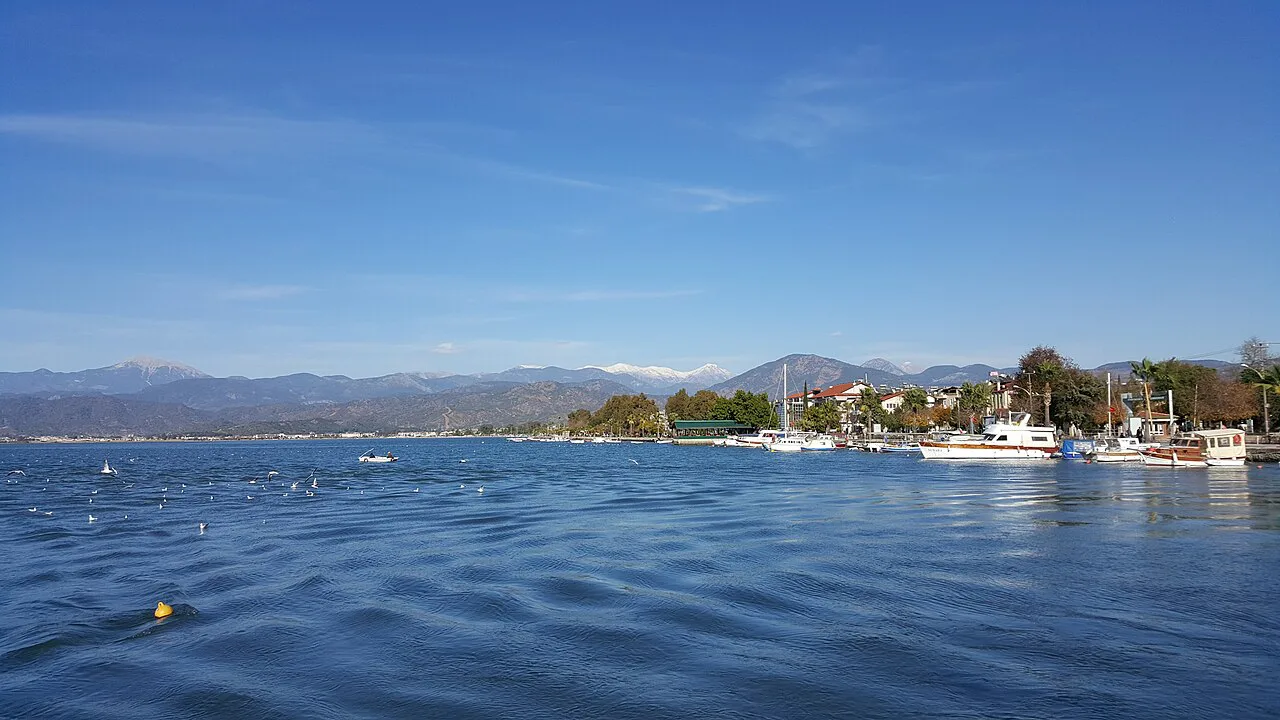
The climb starts at the entrance kiosk at the foot of the hill, where you pay, and immediately enters the necropolis. Free-standing Lycian tombs line the path while rock-cut tombs are carved into the cliff face above, and the walking is rough and steep even though the distance is short. Sturdy shoes beat summer flip-flops here, and the rock is slippery in places.
The Bellerophon Tomb is the most elaborate of the rock-cut monuments, with an Ionic temple-style façade of four columns, an architrave and a triangular pediment, and a relief inside showing Bellerophon on Pegasus fighting the Chimera. A Lycian inscription on the left of the façade names the tomb's owners as Hrixttibili and his wife, and the structure is dated to the first half of the fifth century BCE. It sits near the base of the necropolis and is awkward to reach; it can also be seen through the trees from the main road.
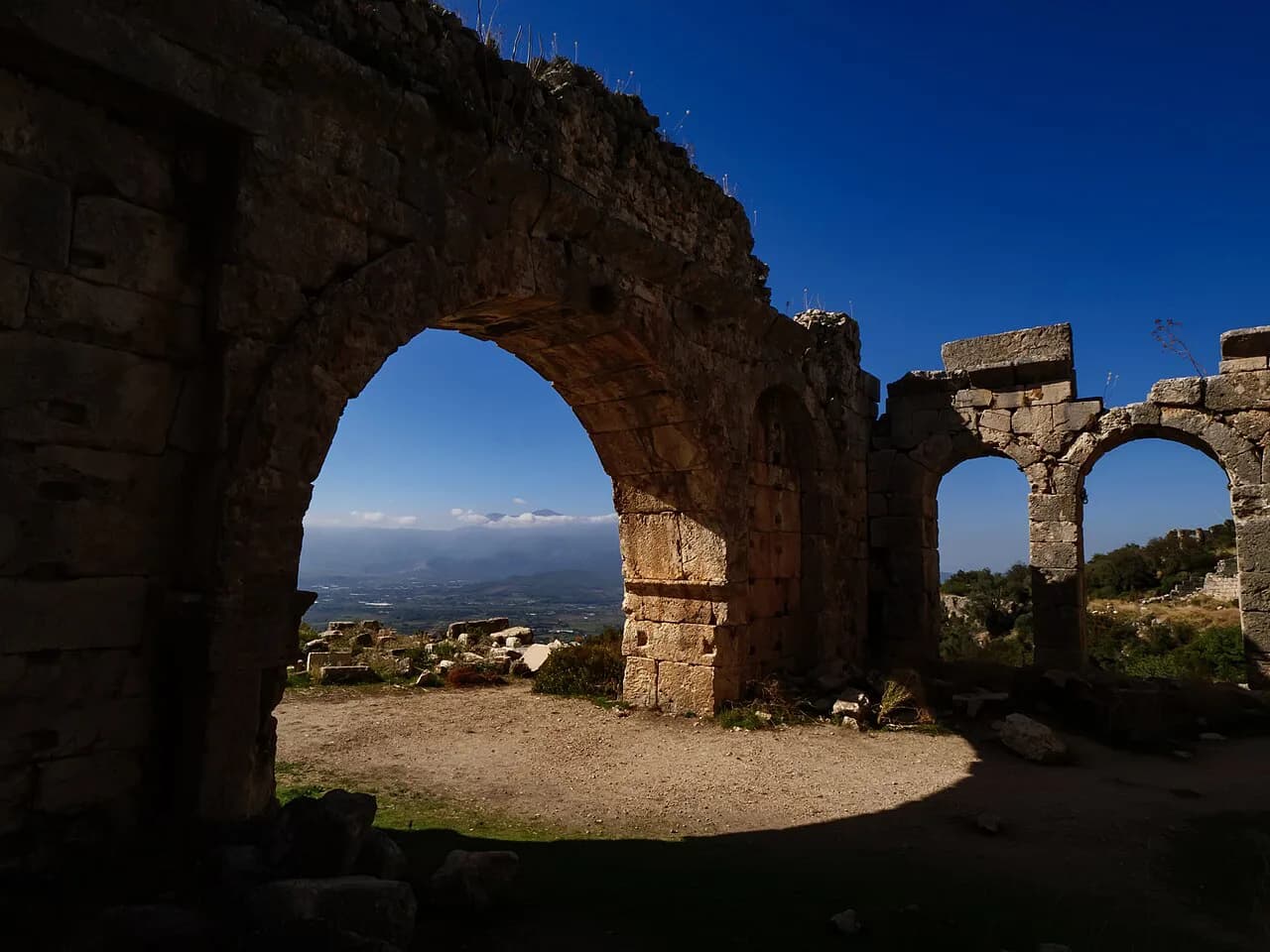
At the summit are the remains of an Ottoman-period castle, built over older foundations and associated with Kanlı Ali Ağa. Views open back over the stadium, the valley and the Akdağlar, which is the reward for the climb. The stairs up are weathered and lack handrails, so take them slowly.
The stadium and its carved seating
Look back from the climb and the stadium lies below you, 148 m long, with nine rows of seating still leaning against the acropolis slope. Archaeologists place its construction in the Hellenistic period, with repairs and enlargement under Roman rule. A pool and fountain in the middle of the track suggest the space hosted social and religious occasions as well as sport.
The seating is cut from the bedrock at the foot of the hill rather than built up in masonry, which is why it reads as part of the slope. Much of the structure has been reclaimed by vegetation, so pick your line rather than expecting a cleared stand.
The theatre, agora, baths and the Temple of Kronos
East of the Roman city stands a large theatre with 37 rows of seating, next to a complex of agora, gymnasium, palaestra, baths and temples. The theatre began in the Hellenistic period and was enlarged in Roman times; its unusual feature is a small Doric temple at the centre of the upper seating, a configuration otherwise known at Patara.
West of the agora are the remains of a Corinthian temple, the only known temple dedicated to Kronos in Lycia. Down on the plain the site also holds two bathhouses, one a grand bath with seven arched windows looking over the Xanthos valley, plus a palaestra, gymnasium, basilica and the agora itself between the church and basilica.
This is the flat half of the site, and it is where most of an unhurried visit is spent. Allow time to read the ground plan rather than rushing from the tombs to the car.
The Izraza Monument and what went to the Fethiye Museum
The Izraza Monument survives in two stacked rectangular prisms decorated in relief on every face, reconstructed from six fragments, and dated on stylistic grounds to between 350 and 330 BCE. The reliefs show warfare and victory, which leads many scholars to read it as a tomb monument, though its form matches no known Lycian tomb type and its function remains debated. The name Izraza appears in Lycian letters beside a warrior figure on two faces.
The Izraza Monument was moved to the Fethiye Museum in 1974, and five relatively intact statues found at Tlos in 2011 were also handed to that museum. Do not turn up at the ruins expecting either the reliefs or the statues.
Fethiye Museum has been out of operation, so the statues have not been on display there. If seeing them matters to your trip, confirm the museum's status before you set off, and treat the pieces in the town's archaeological collection as a separate outing from the ruins.
Tickets, cash and Müzekart
Tlos is an archaeological park in the state museum network, and in 2024 the entrance fee was 3 euro, payable only in Turkish lira at the rate on the day of your visit. Cards were not accepted, so carry cash. Treat that figure as a historical reference point rather than today's price, and check the current charge at the kiosk or through the official museum ticketing service before you travel.
Holders of a Müzekart enter Tlos without paying the entrance fee, according to the site description. Carry the card with you and check its current validity at the kiosk alongside the day's ticket price.
Footwear, underfoot conditions and the stairs
Most of Tlos is on a flat plain that is easy walking, but the acropolis section is the part that catches people out. The climb is short yet steep, the surface is uneven, and the weathered stairs at the top have no handrails and can be slippery.
Trainers or walking shoes with grip make the difference between enjoying the tombs and watching your feet. The path up through the necropolis is the roughest ground at the site, so if anyone in your group is unsteady on slopes, plan for them to stay with the plain and the stadium views.
How long Tlos needs and pairing it with the gorge
Give Tlos two to three hours if you want the lower plain and the acropolis without hurrying, and longer if you are photographing the tombs. The site is open to visitors year-round and rarely feels crowded, though it is busier in peak season when day trips are running.
The obvious pairing is Saklıkent Gorge, a short drive away, and YakaPark in the village of Yaka on the winding road back down. Doing the gorge first and the ruins second puts the steep Tlos climb at the end of the day, when the heat has eased.
If you are driving yourself, the same loop works in reverse and gives you a quiet start at the tombs. Either way, the driving between the three stops is short enough that the day stays relaxed.
Where Tlos fits against Xanthos, Patara and Myra
Tlos differs from its neighbours in shape rather than scale. Xanthos and Patara sit lower and spread out; Tlos packs its necropolis onto a single acropolis rock above a plain of Roman civic buildings, which makes the relationship between the dead and the living city easier to see in one sweep. The theatre's Doric temple has its only Anatolian comparison at Patara.
Myra, near Demre, is the better-known stop on the coach circuit, and its rock tombs are the image most travellers carry home. Tlos is the quieter alternative, and it works well as the second or third site on a Lycian ruins run rather than the headline.
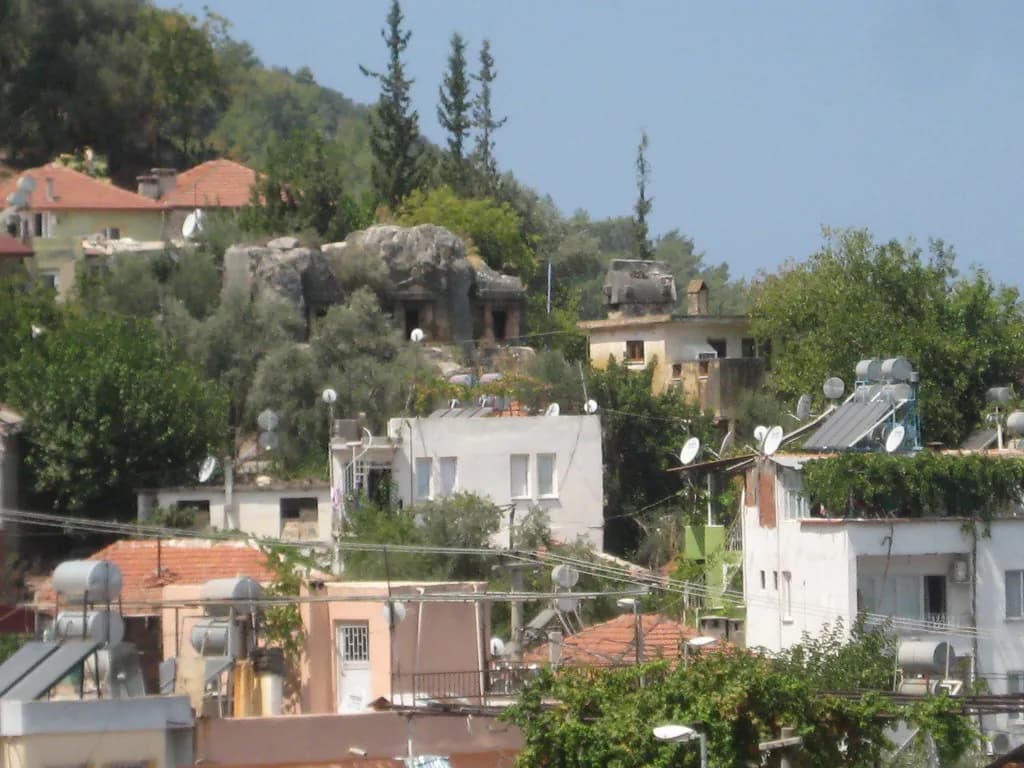
If your base is Fethiye itself, the town's own rock-cut monuments are a shorter outing and a useful warm-up for Tlos. The Amyntas rock tombs above the centre give you the same Lycian tomb architecture without the drive.
Is Tlos worth the detour?
Yes, if you want Lycian tombs without the crowds and are willing to trade a coach tour for a rough path and a short climb. The tombs, the stadium and the Temple of Kronos sit within a compact site, and the entrance arrangement is simple once you have cash and a Müzekart if you hold one.
Skip it if anyone in your party cannot manage uneven ground and steep, weathered stairs, or if your day is already full of ruins at Xanthos and Patara. Otherwise, pair it with the gorge and make a full day of the Xanthos valley.
Explore more Fethiye guides
Frequently Asked Questions
Do I need cash for the Tlos entrance fee?
Carry Turkish lira. When the fee was recorded in 2024 it was payable only in cash, in lira at the day's exchange rate, with cards not accepted, and Müzekart holders entered free. Check the current arrangement at the kiosk before you rely on a card.
Can I reach the Bellerophon Tomb at Tlos?
It is the most elaborate of the rock-cut tombs, with an Ionic temple façade and a relief of Bellerophon on Pegasus fighting the Chimera. It sits near the base of the necropolis and is difficult to access on foot, but it can also be seen through the trees from the main road.
Where are the statues found at Tlos now?
Five relatively intact statues uncovered at Tlos in 2011 were handed to the Fethiye Museum, and the Izraza Monument was moved there in 1974. The museum has been out of operation, so confirm its status before planning a visit around them.
Is Tlos open all year?
The site is described as open to visitors year-round and is rarely busy, though it is more popular in peak tourist season when day trips from Fethiye include it. Opening hours are set by the site management, so confirm them locally before a winter or evening visit.
Sources
Notes for your next Turkey trip
Optional updates when we add or correct a town guide.
You might also like
Continue reading
More guides you'll find useful