Turkish Riviera: Where to Go Along Turkey's Turquoise Coast
The Turkish Riviera runs along Turkey's south-west coast, taking in Bodrum, Fethiye, Ölüdeniz, Kaş, Antalya and Ephesus. Here is how the coast fits together.
On this page
The Turkish Riviera is the south-west coast of Turkey, also called the Turquoise Coast, and it packs an unusual amount into one shoreline: Yachting harbours, Lycian rock tombs cut into cliffs, a lagoon under a paragliding mountain, and Roman cities such as Ephesus. The coast is usually split into three working stretches for planning — the Bodrum peninsula and İzmir in the north, the Fethiye–Ölüdeniz–Kaş run in Muğla, and Antalya with its eastern resorts. This guide groups the places that way, names the specific sights that justify each stop, and explains how the towns connect.
What the Turkish Riviera covers
The Riviera takes in the provinces of Antalya, Muğla, Aydın and southern İzmir, a long band of the south-west coast rather than a single resort. The same shoreline is marketed as the Turquoise Coast, so a hotel or tour described under either name is usually in the same place. Treat the region as a chain of bases rather than one destination, because the distances between the northern and eastern ends are the single biggest planning decision.
The landscape explains the appeal: mountains such as the Bey, Akdağ and Babadağ ranges dominate the shore, with coves and harbours folded into the foothills behind them. For a history-led trip the region is unusually dense, since ancient cities, castles, ports and temples sit within short drives of the resort towns. The regional tourism board frames the coast precisely this way, as shores, forests and mountains peppered with ancient ruins.
How the coast divides
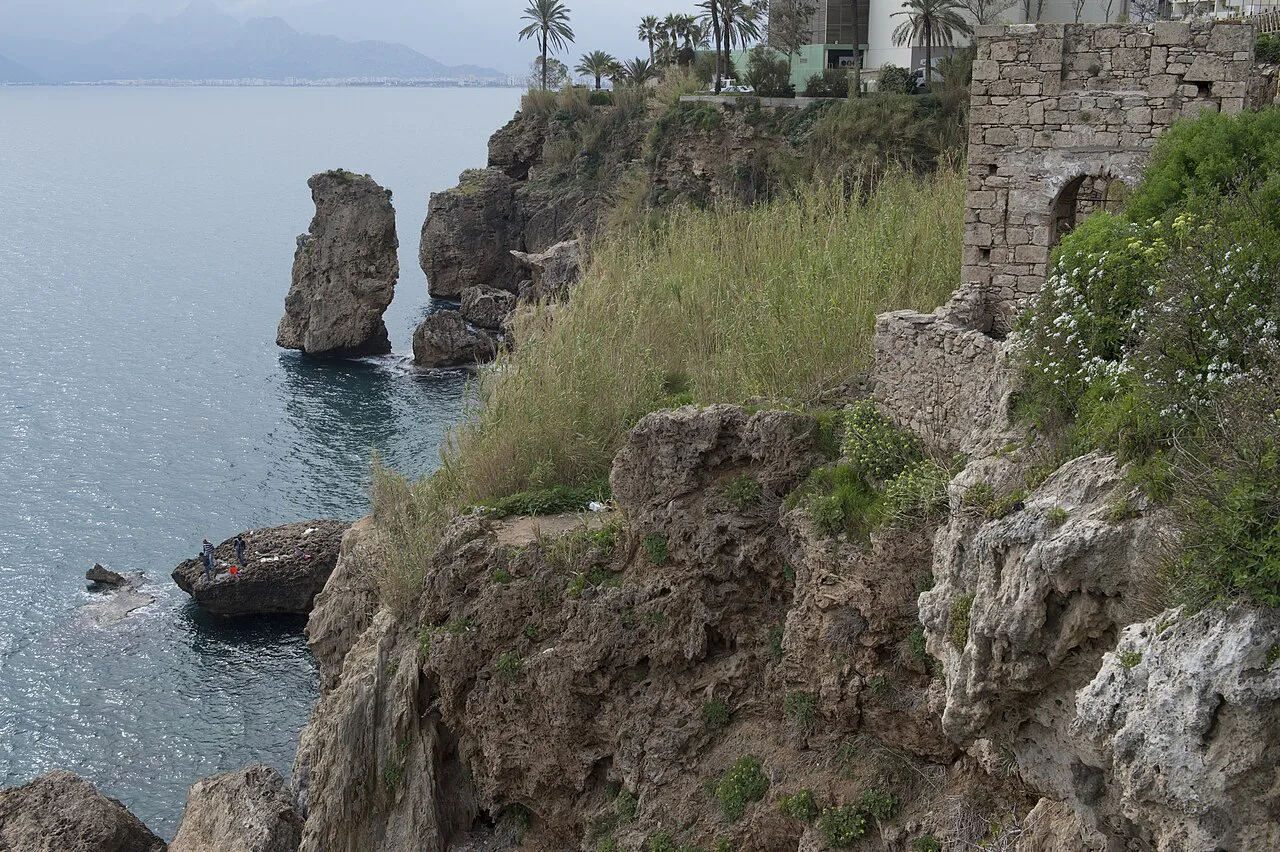
For planning, the northern end means the Bodrum peninsula and İzmir, the middle means Fethiye, Ölüdeniz, Göcek and Kaş in Muğla, and the eastern end means Antalya with Side and Alanya beyond it. Each stretch has its own airport and its own bus network, which is why a single base rarely covers two of them comfortably. Pick the stretch that matches your interests first, then choose the town inside it.
Is the Turkish Riviera worth visiting? Yes, if you want history and sea in the same trip. The coast combines Roman cities, Lycian tombs and Yachting harbours with resort towns, and the distances between them are manageable within a stretch.
Which towns sit on the Turkish Riviera? The best-known are Bodrum, İzmir, Fethiye, Ölüdeniz, Göcek, Kaş, Antalya, Side and Alanya, with Ephesus near Selçuk inland. They fall into three groups: the Bodrum peninsula and İzmir, the Muğla stretch around Fethiye and Kaş, and Antalya with its eastern resorts.
Can you reach the Riviera towns without a car? Yes. Dolmuş minibuses link towns, beaches and bus stations, intercity coaches cover the long legs, and boats such as the Çalış–Fethiye water taxi replace some road journeys.
The Muğla stretch concentrates the scenery most people picture: the lagoon at Ölüdeniz, the sheltered harbour at Göcek and the Lycian tombs above Fethiye. The Antalya end is a full city with an old quarter and a working harbour, backed by the ruins at Perge and Aspendos. The northern end is more urban and more sailing-oriented, which suits travellers who want a town with a life of its own rather than a strip.
Bodrum: whitewashed lanes and a Yachting harbour
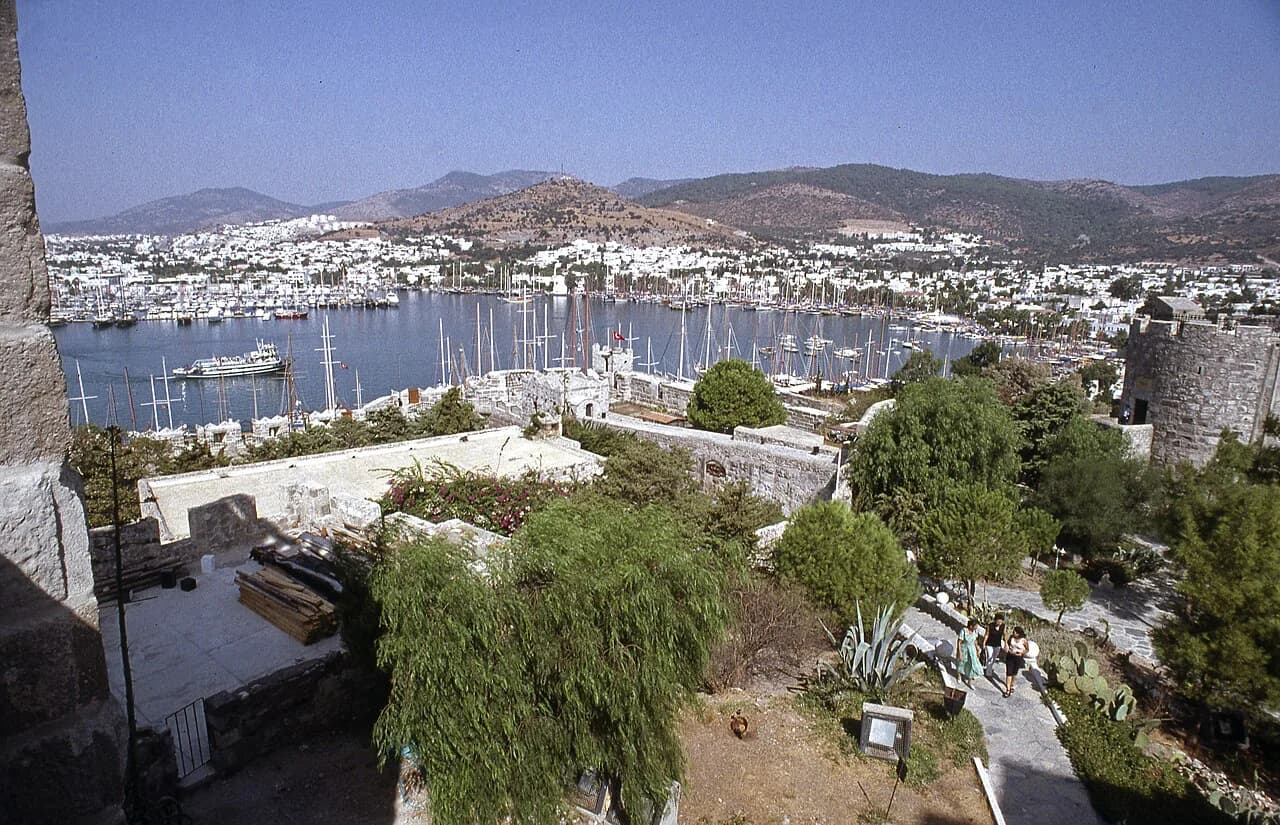
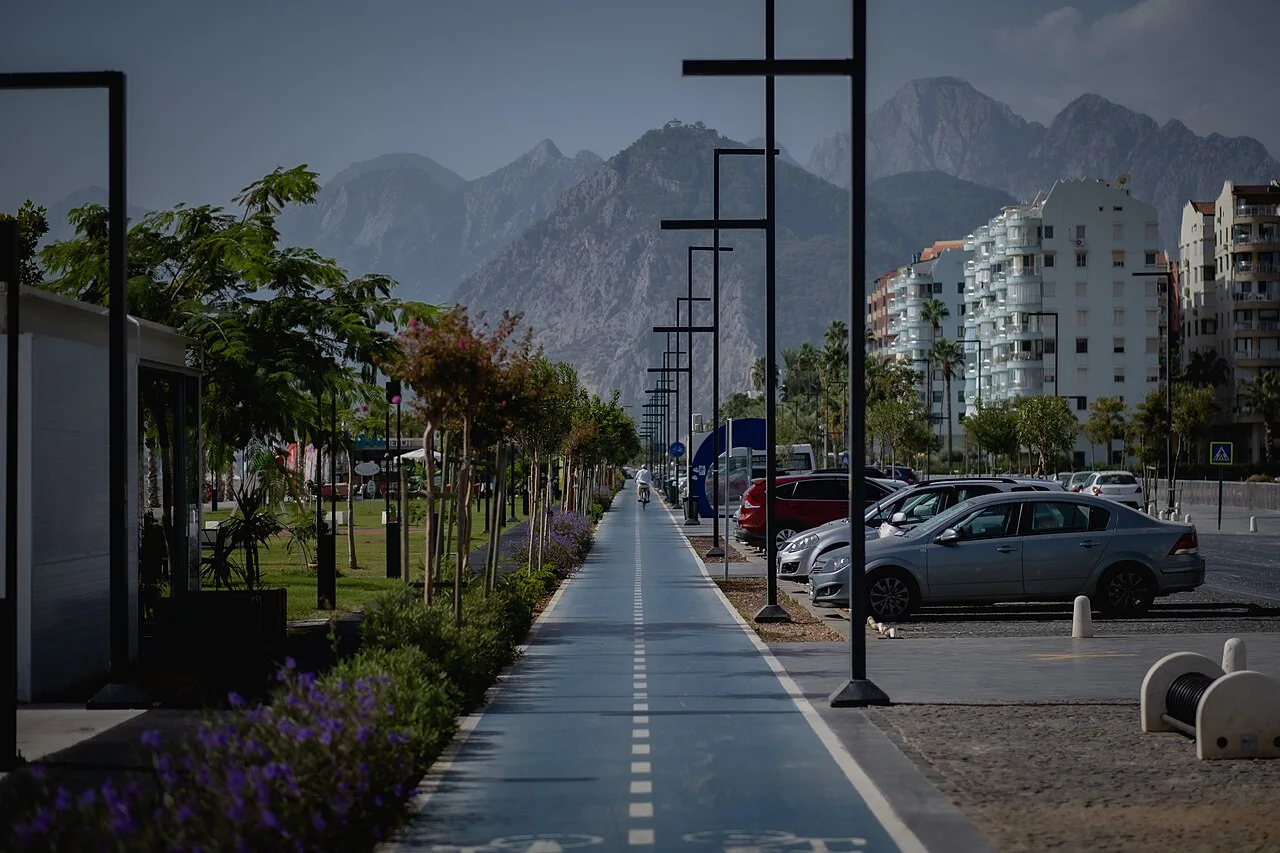
Bodrum has kept much of its traditional character while acquiring a cosmopolitan edge, so old whitewashed buildings sit alongside boutiques and cocktail bars. It has long been favoured as a Mediterranean break and has picked up a reputation as Turkey's Côte d'Azur, with marinas and restaurants to match. The result is a town that works for a harbour stroll and a slow lunch as well as for a boat out to a bay.
Treat Bodrum as the northern anchor and the rest of the peninsula as an extension of it, since the harbour is where the yachts and the sailing traffic concentrate. It pairs naturally with the wider Aegean coast, where ancient sites sit between resort towns. The Bodrum Castle is the obvious historical stop in town; check the current ticket arrangements at the gate or on the official museum site before you go.
İzmir: an Aegean city with a café culture
İzmir sits on the Aegean in a strong coastal setting, with a café culture, boutiques and a restaurant scene built around fresh seafood. Olive groves surround the city and produce the region's olive oil, and the city holds several museums and historic landmarks, among them Kadifekale Castle. It is a city break rather than a beach stay, and the cruise traffic that calls here reflects that.
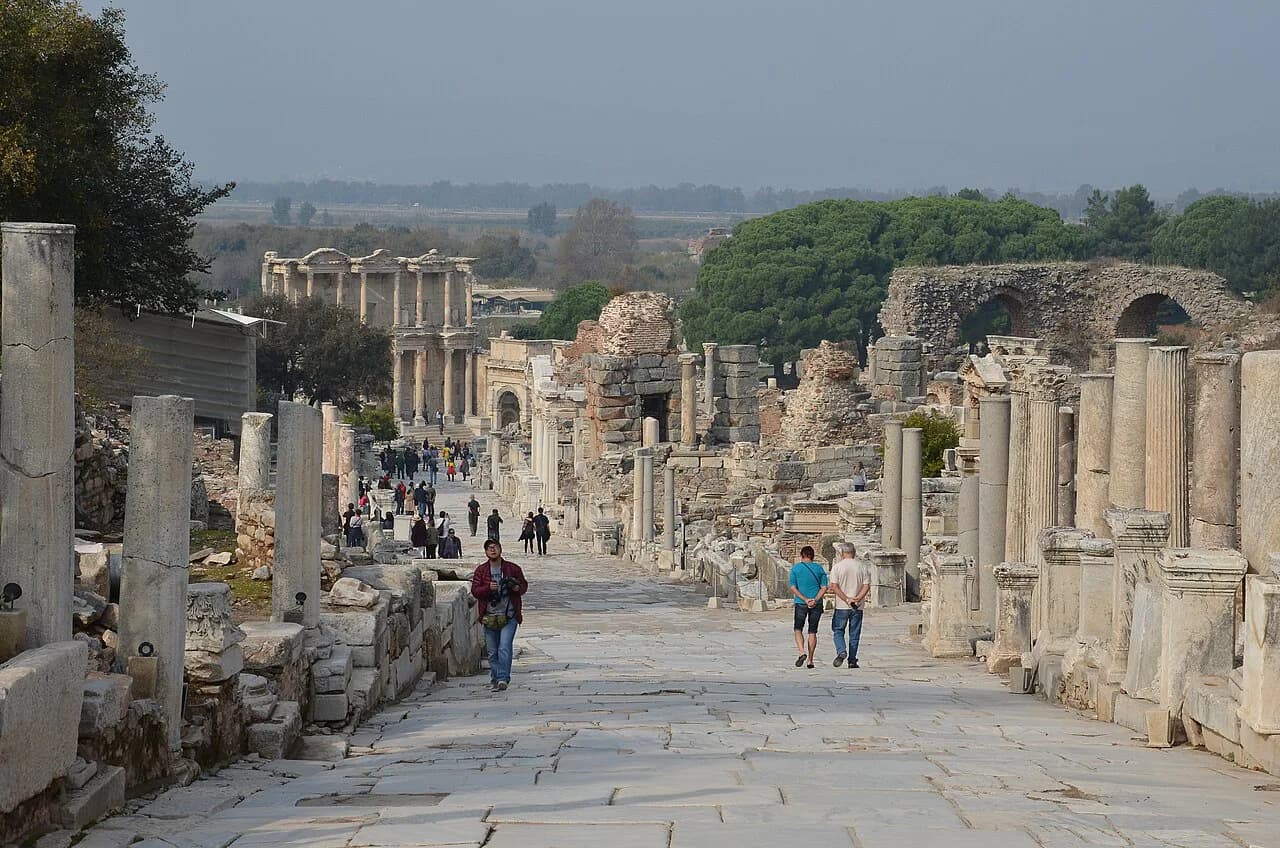
Use İzmir as the gateway to Ephesus rather than as a resort: the Roman city near Selçuk is the coastal region's headline ancient site, and it holds the largest number of Roman ruins outside Pompeii. The theatre is the standout, cut to hold a crowd in the tens of thousands, and the site is a UNESCO World Heritage listing. Give Ephesus a half day at least, and go early if you want to move at your own pace before the coach groups arrive. For the practical details, see the Roman ruins in Turkey.
Fethiye: promenade, Paspatur and the Lycian tombs
Fethiye is touristy and rough-edged but layered with Lycian history, and the rock tombs are carved high into the cliffs above the town like ancient penthouses watching over it. Down at street level, Paspatur is the old bazaar, a warren of mosaic lamps and alleyways shaded by rows of coloured umbrellas. The combination means you can see genuinely old fabric without leaving the centre.
The waterfront is the other half of the town: the promenade at Çalış Beach carries rooftop bars and breakfast spots, and a water taxi runs between Çalış and Fethiye proper along a canal that slides into the old town. Turtles and egrets turn up on that run, and it beats sitting in traffic if you are staying out along the beach. Bring cash for the boat, since the water taxi's card reader is not a safe bet.
Short drives from Fethiye reach Kayaköy, the abandoned village of faded blue stone houses with a crumbling church, and Göcek, the harbour town to the south-east. That cluster is why Fethiye works as a base for several days rather than a single night. If you want the quieter version of the same scenery, stay in Göcek and drive in.
Ölüdeniz: the Blue Lagoon and the cable car
Ölüdeniz is built around the Blue Lagoon, a turquoise pool behind a spit of sand that has become the most photographed beach in Turkey. Above it, Babadağ mountain rises to a launch point around 1,700 metres where paragliders throw themselves off every morning and land on the promenade. The Babadağ Teleferik cable car runs from near the beach up the mountain, taking about a quarter of an hour over pine forest, with panoramic restaurants at different levels.
Even if you have no intention of jumping, the cable car earns its place for the view and for lunch at altitude, where the weather can switch from blue sky to cloud in minutes. Boat trips from Ölüdeniz follow a six-island loop through secluded coves, and the usual star is Butterfly Valley, a V-shaped gorge reachable by boat. The beach is small white pebbles, so bring shoes you can swim in.
Göcek: a harbour made for sailing
Göcek is the opposite of a beach-club resort: yachts anchor in the bay and do very little, and that is the point. The town sits in a natural harbour ringed by twelve islands, sheltered and quietly known among sailors, and it stays calmer than the coast's headline resorts. Come here for anchorages and slow days rather than a strip of bars.
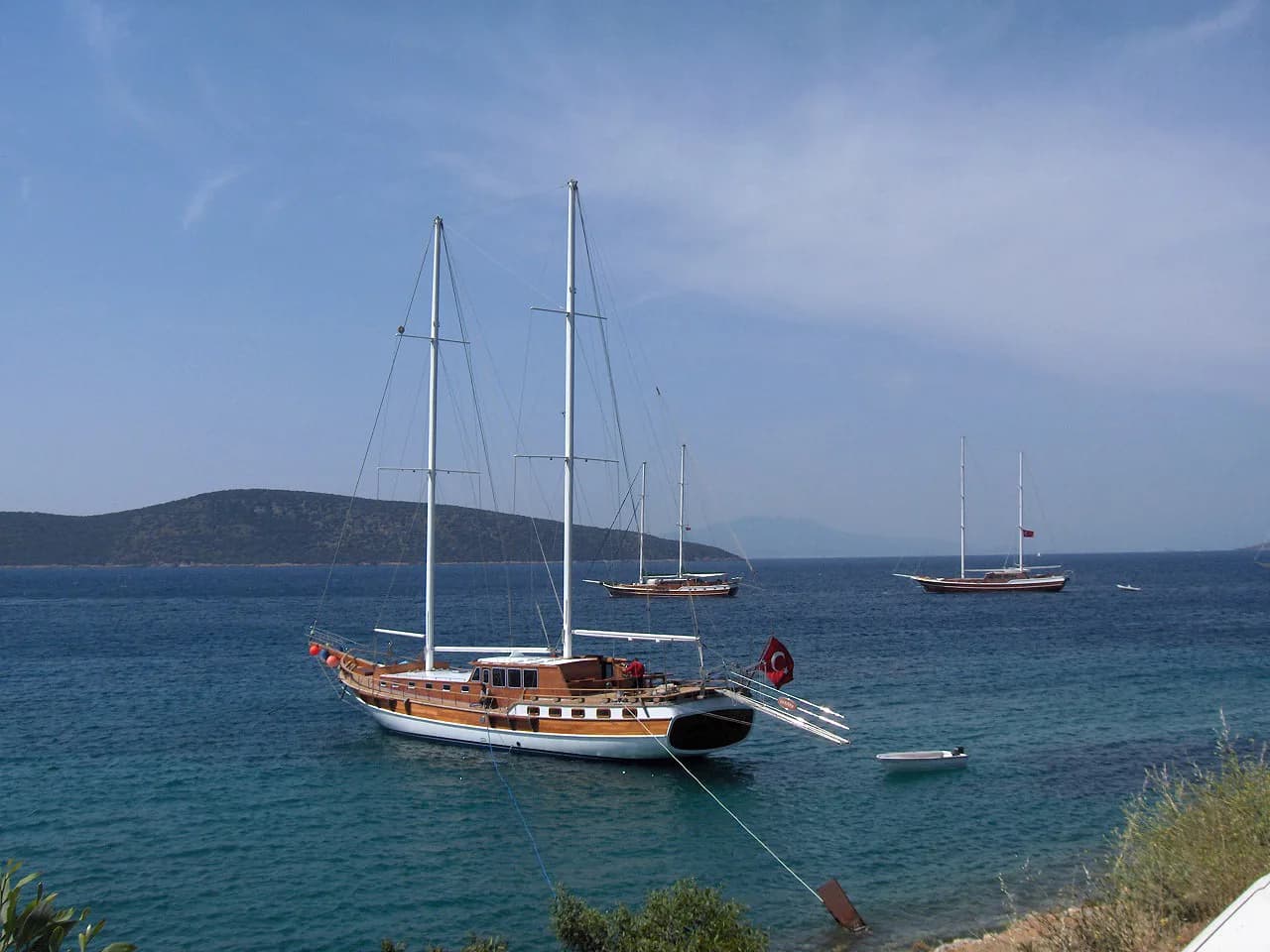
From Göcek marina you can charter a gulet and move between the Twelve Islands — Tersane, Yassıca, Domuz and Cleopatra's Bath among them — each a pocket of quiet water and pine-fringed coves. That is the Blue Voyage in its simplest form, and it suits anyone who wants the coast without a resort schedule. In town, the pleasure is smaller: carpet shops that double as tea cafés between sleepy lanes.
Kaş: platforms on the water and tombs above
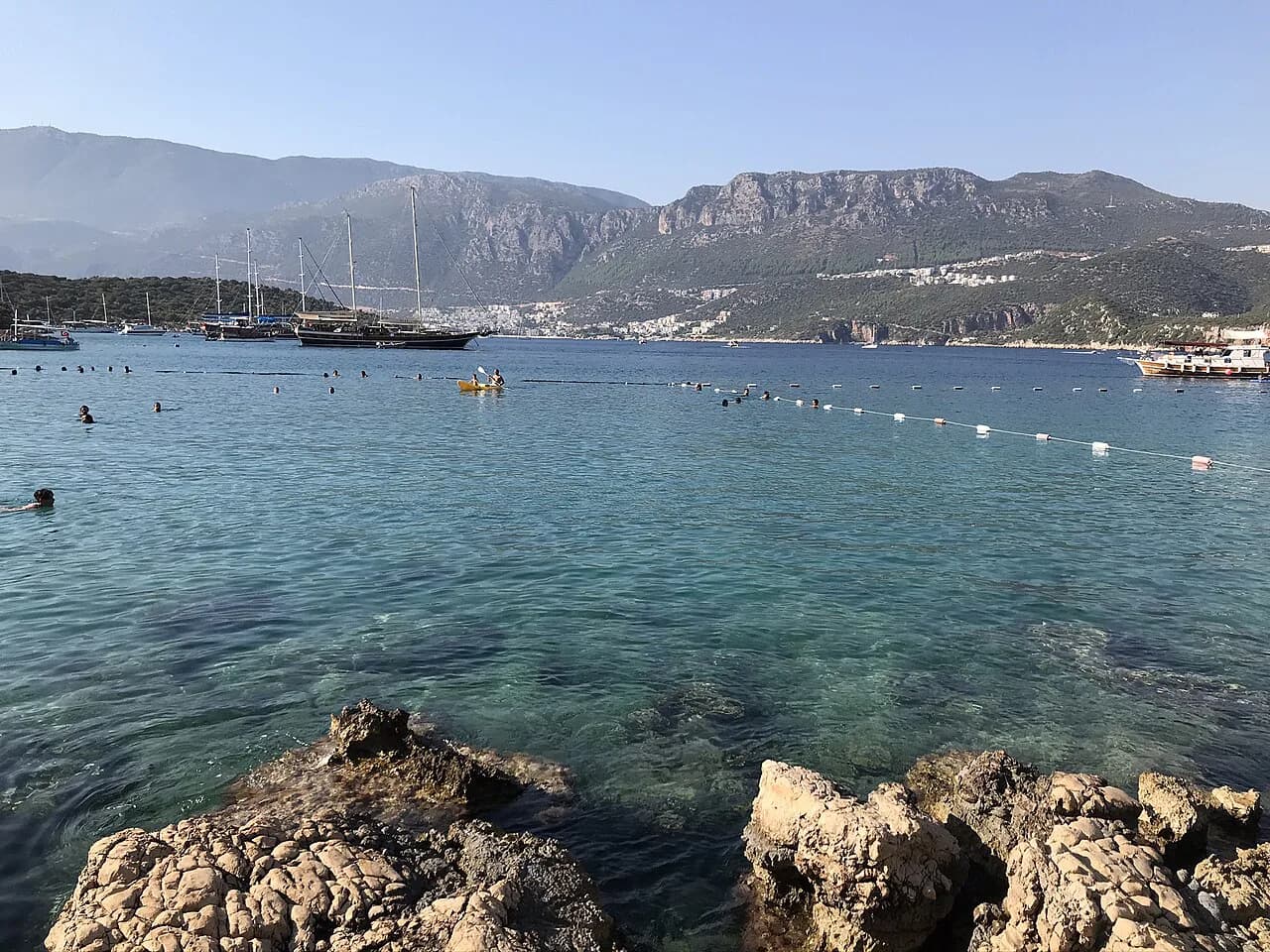
Kaş combines two very different afternoons: beach clubs built as platforms over the water, and Lycian rock tombs cut into the hillside above the town. It is a small place with a compact centre, so you can swim in the morning and walk up to the tombs later. The harbour and the lanes behind it are where most of the eating and drinking happens.
Kaş also works as a base for the quieter end of the Muğla coast, with boat days and island trips leaving from the harbour. Kalkan and Patara lie along the same stretch if you are driving. Between Fethiye and Kaş the road is the trip as much as the destinations.
Antalya and the eastern Riviera
Antalya is a full city with an old quarter, Kaleiçi, and a harbour at its foot, and it anchors the eastern end of the Riviera. Beyond it, Side and Alanya are the best-known resort towns, and the ruins at Perge and Aspendos sit close enough for a half-day each. This end of the coast is where you find the largest concentration of Roman engineering within easy reach of a city.
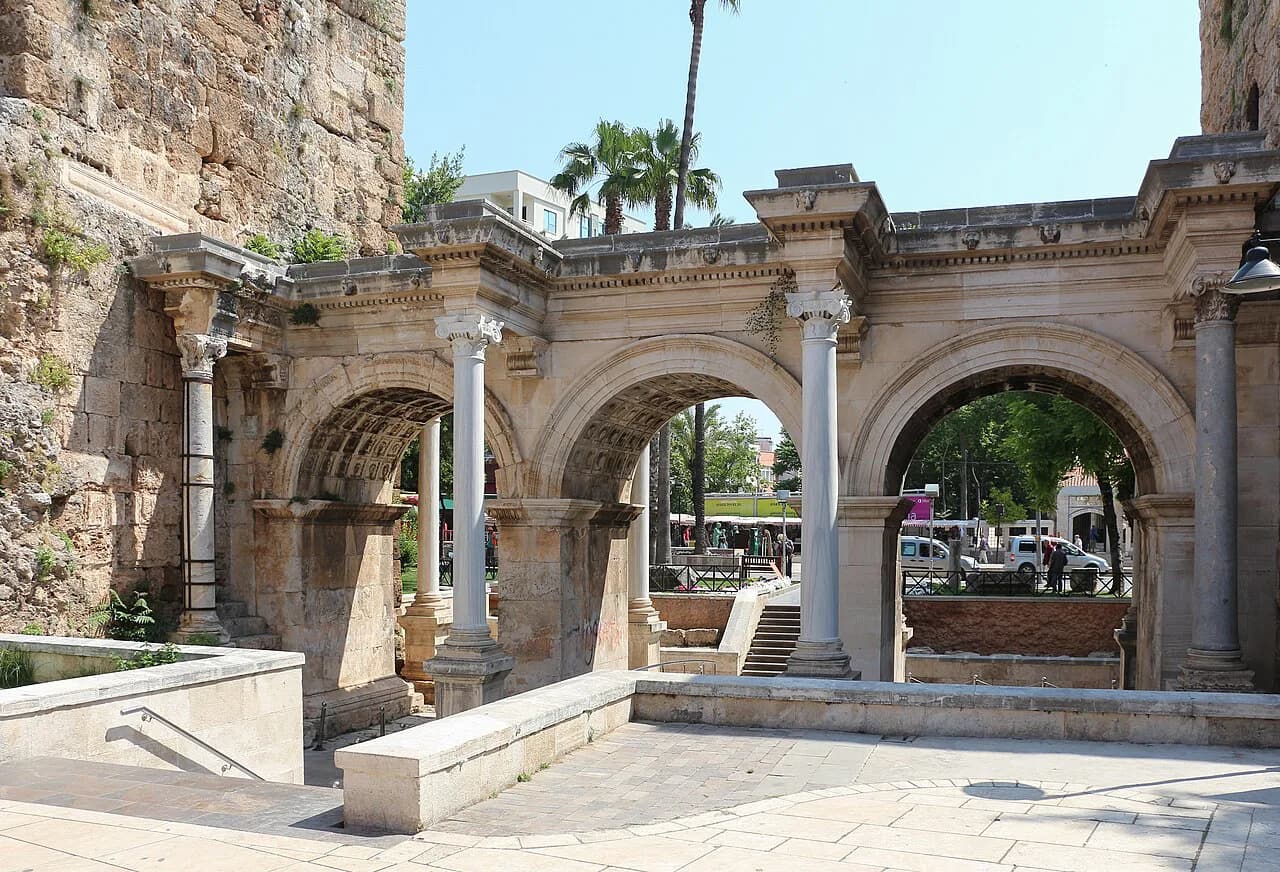
Hadrian's Gate is the most convenient ancient monument in Antalya, standing at the entrance to the old quarter, and it makes a natural starting point for a walk down to the harbour. Further east, Aspendos is famous for its theatre and Perge for its colonnaded streets. Both repay an early start in summer.
If you want a wider view of what the country's archaeological sites add up to, it helps to see them as a set rather than one-offs. The cast of sites within reach of this coast includes the Library of Celsus at Ephesus, the theatre at Aspendos and the hillside city of Termessos above Antalya. One trip cannot cover them all at a sensible pace.
How long the coast needs
The Bodrum peninsula and Antalya sit at opposite ends of a long coastline, so one base cannot serve both without losing days to transfers. A workable plan gives the Muğla stretch four or five nights and Antalya three, with a night near Selçuk for Ephesus. If you have a week, choose one end and do it properly.
The coast's inland edges extend the trip: Anamur, at Turkey's southern tip, holds Mamure Castle and the ruins at Anemurium, and it suits travellers with a car and time. The interior villages offer a different pace. Turkish villages inland from the resorts are worth a day if you want to see how the region lives outside the season.
Getting around without a car
The dolmuş minibus is the workhorse of the coast: short-hop minibuses connect towns, beaches and bus stations, and you flag them down at marked stops. Intercity coaches handle the long legs between İzmir, Fethiye and Antalya, and boats fill the gaps where a road would take hours. The Çalış–Fethiye water taxi is the clearest example of a boat that beats the road.
For the Lycian stretch, boat services and gulet charters let you hop between bays without a car, though timetables vary by season and operator. Book a gulet through the marina at Göcek if you want a private itinerary. For everything else, assume a dolmuş and a taxi will get you there.
When the heat and crowds bite
Summer on this coast is hot and busy, and the well-known sites such as Ephesus and Aspendos fill with coach groups by mid-morning. The shoulder months are more comfortable for walking ruins and old quarters, and the light is better for the cliffs at Fethiye and the platforms at Kaş. Spring and autumn also mean cooler cable-car rides at Ölüdeniz.
Resort strips and old quarters feel like different places even a short walk apart: Fethiye's promenade is busy and commercial, while Paspatur behind it is shaded and slower. Choose the base that matches your evenings. If you want the quiet version of the coast, Göcek delivers it.
Practical notes: currency, language and time zone
The currency is the Turkish lira, the language is Turkish and the time zone is GMT+3, which means the coast is two hours ahead of the UK in winter and three in summer. Cards are widely accepted in resorts, but keep cash for dolmuş rides, small cafés and boat tickets. Prices change quickly, so treat any figure you are quoted as a starting point rather than a fixed cost.
Mosque etiquette is straightforward: shoes off at the door, shoulders and knees covered, and quiet during prayer. In bazaars and markets, haggling is normal for carpets and leather but not in shops with fixed prices. In village cafés, tarhana soup is the thing to order on a cool morning.
Which stretch should you book?
Pick one stretch and do it well: Bodrum and İzmir if you want a harbour town, a city and Ephesus; Fethiye, Ölüdeniz and Kaş if you want the lagoon, the cable car and the Lycian tombs; Antalya if you want a city and Roman sites on the doorstep. Two stretches in one week means a lot of driving and little time at any of them.
Once the stretch is set, book the boat day and the cable car early in the trip so weather can reshuffle them, and keep a day spare for a site you did not plan. The Turkish Riviera rewards that flexibility more than a packed itinerary.
Frequently Asked Questions
Is the Turkish Riviera worth visiting?
Yes, if you want history and sea in the same trip. The coast combines Roman cities, Lycian tombs and Yachting harbours with resort towns, and the distances between them are manageable within a stretch. The trade-off is that the region is long, so one base will not cover both Bodrum and Antalya.
Which towns sit on the Turkish Riviera?
The best-known are Bodrum, İzmir, Fethiye, Ölüdeniz, Göcek, Kaş, Antalya, Side and Alanya, with Ephesus near Selçuk inland. They fall into three groups: the Bodrum peninsula and İzmir, the Muğla stretch around Fethiye and Kaş, and Antalya with its eastern resorts.
Can you reach the Riviera towns without a car?
Yes. Dolmuş minibuses link towns, beaches and bus stations, intercity coaches cover the long legs, and boats such as the Çalış–Fethiye water taxi replace some road journeys. Gulet charters from Göcek cover the sailing side.
What should you wear at the ancient sites?
Light clothing, a hat and shoes with grip, because the stone at Ephesus, Aspendos and the Lycian tombs is uneven and hot in summer. Cover shoulders and knees if you plan to visit a mosque in the same day.
Sources
Notes for your next Turkey trip
Optional updates when we add or correct a town guide.
You might also like
Continue reading
More guides you'll find useful