What Happens in a Turkish Bath: Rooms, Scrub and Massage
A Turkish bath means sweating on hot marble, a brisk kese scrub and a foam massage. Here is how the rooms, sessions, costs and etiquette work for a first visit.
On this page
A Turkish bath is a communal steam bath where you sweat in a hot marble room, are scrubbed and soaped, and come out cleaner and looser than when you went in. Expect a shared space, not a private treatment room, and expect to undress, sweat and be scrubbed by a stranger of the same sex. This guide walks through the rooms, what to bring, how men's and women's sessions differ, and how the scrub and massage work.
Most hamams share the same bones: changing rooms, a warm transition space and a hot marble room at the centre. If you want old fabric rather than a modern spa, ask what you are booking before you commit.
Why a hamam is a shared space, not a spa room
In a bath or shower you are alone, but a hamam is a public place, and that is the point rather than an awkward detail. The architect and hamam historian Ahmet İğdirligil describes it as a social institution, historically one of the few places where women could gather outside the home without needing permission. Hotel versions soften this into a spa, while a genuine neighbourhood bath keeps the communal character.
Istanbul has around 60 hamams still running, and its historic examples show how much architectural ambition went into bathing. The Ayasofya Hürrem Sultan Hamam was built in 1556 for Roxelana, wife of Süleyman the Magnificent, and the Zeyrek Çinili Hamam dates from the 16th century.
The rooms you pass through
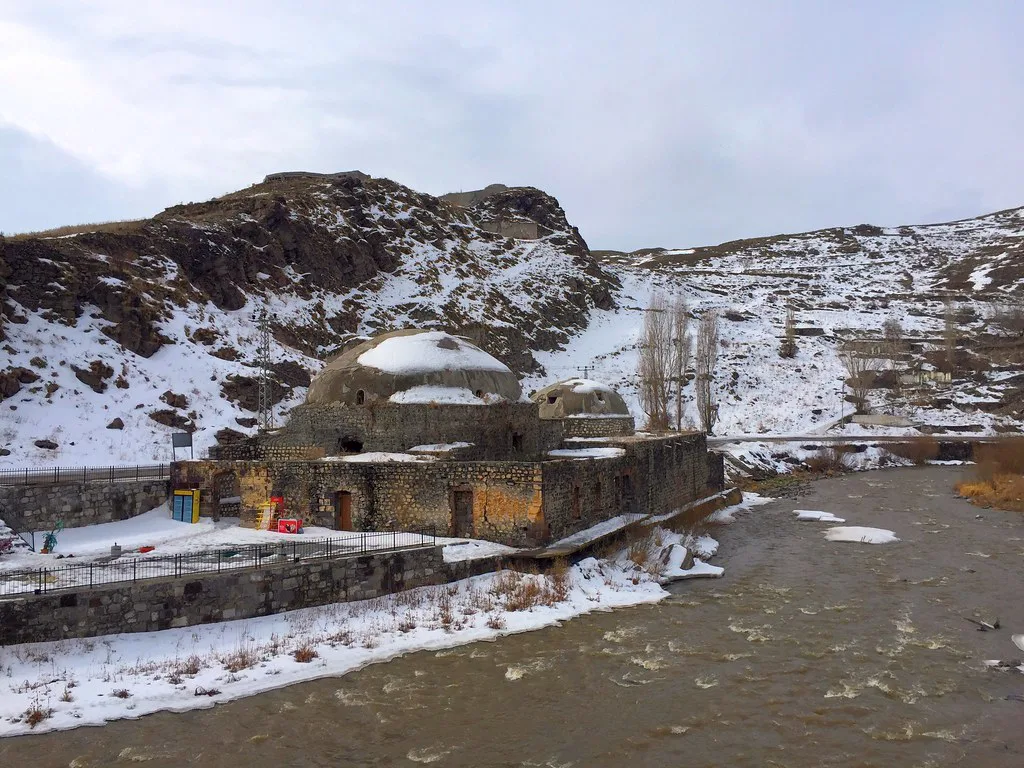
Most hamams follow the same plan: a changing area, a warm transition room, and a hot marble room at the centre. Small openings in the dome, called oculi, throw shafts of light across the wet stone, which is why photographs of hamam interiors look so distinctive. Knowing the order helps you relax rather than wonder what happens next.
Is a Turkish bath worth it for a first-timer? Yes, if you know what you are walking into. You sweat on hot marble for 15 to 20 minutes, are scrubbed with a rough kese cloth, washed and optionally massaged, and leave cleaner than a shower manages.
What is the traditional bowl and towel used in a hamam? The bowl is a hamam tası, sometimes embossed or jewelled, used to pour water over yourself at the kurna basin. The towel you wrap in is a peştemal, traditionally cotton, and the best have a hand-finished selvedge rather than a hem.
The largest space houses the göbek taşı, a raised marble platform in the middle of the room where you lie down to sweat and where the scrub takes place. Around the edges you will find the kurna, individual marble basins with taps, used for pouring water over yourself with a bowl. The traditional bowl is a hamam tası, often decorated, and the towel you wrap in is a peştemal.
What to wear and what to bring
You undress but not everything, and the top can stay on if you prefer, for men and women alike. Men and women are separated, either in different rooms or by different hours, so you are not bathing among the opposite sex. A swimsuit is the simplest way to feel comfortable if it is your first time.
Bring shampoo and shower gel if you want your own products, since you will wash properly as well as be scrubbed. Leave jewellery and valuables behind, and keep wet kit apart from the rest of your bag on the way out.
Men's and women's sessions at the door
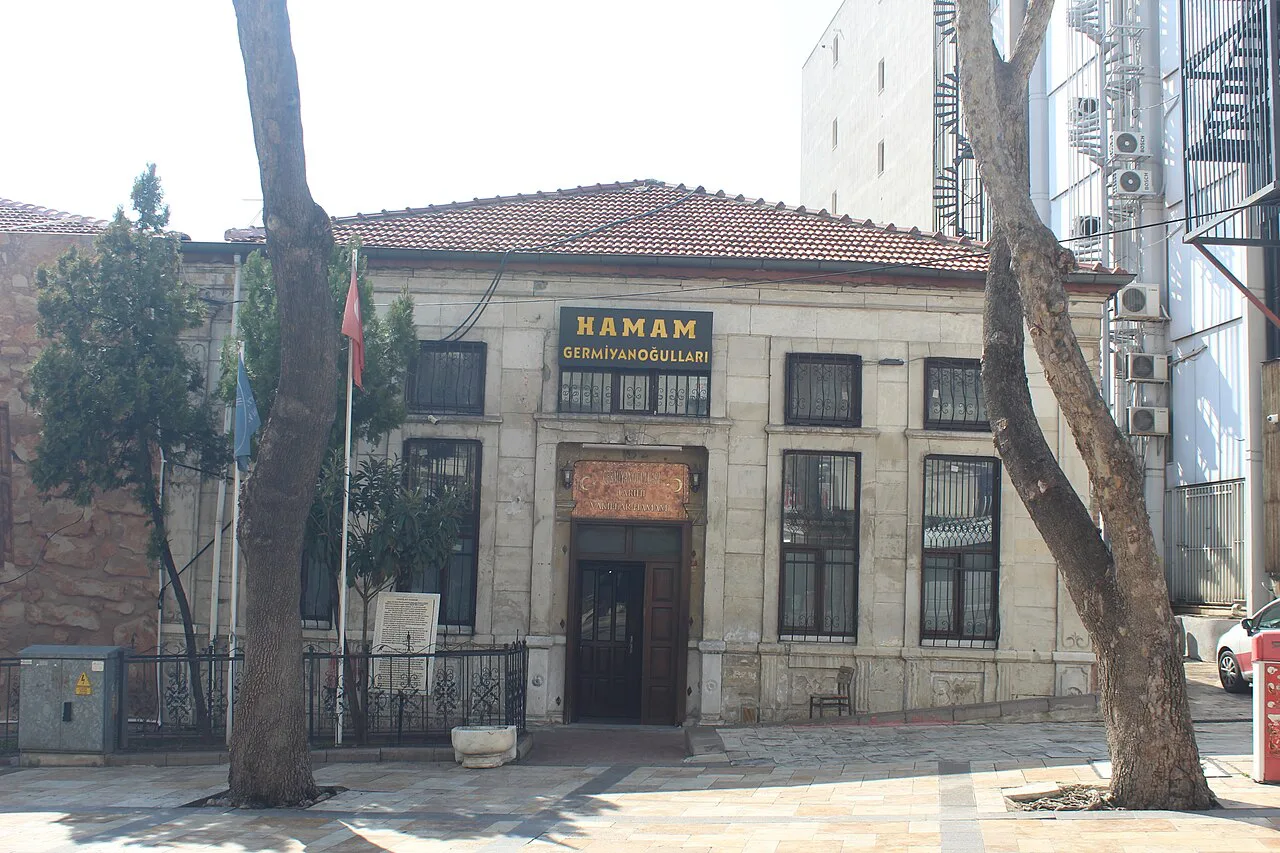
Some hamams admit both sexes at different times of day, while others have separate sections; in either case the arrangement is fixed, not improvised. The day's schedule therefore decides whether you can walk in now or come back later. At Karataş Hoşgör Hamamı in İzmir, the men's hours were split between morning and evening and the daytime block was reserved for women, as posted on the board outside at the time of that visit.
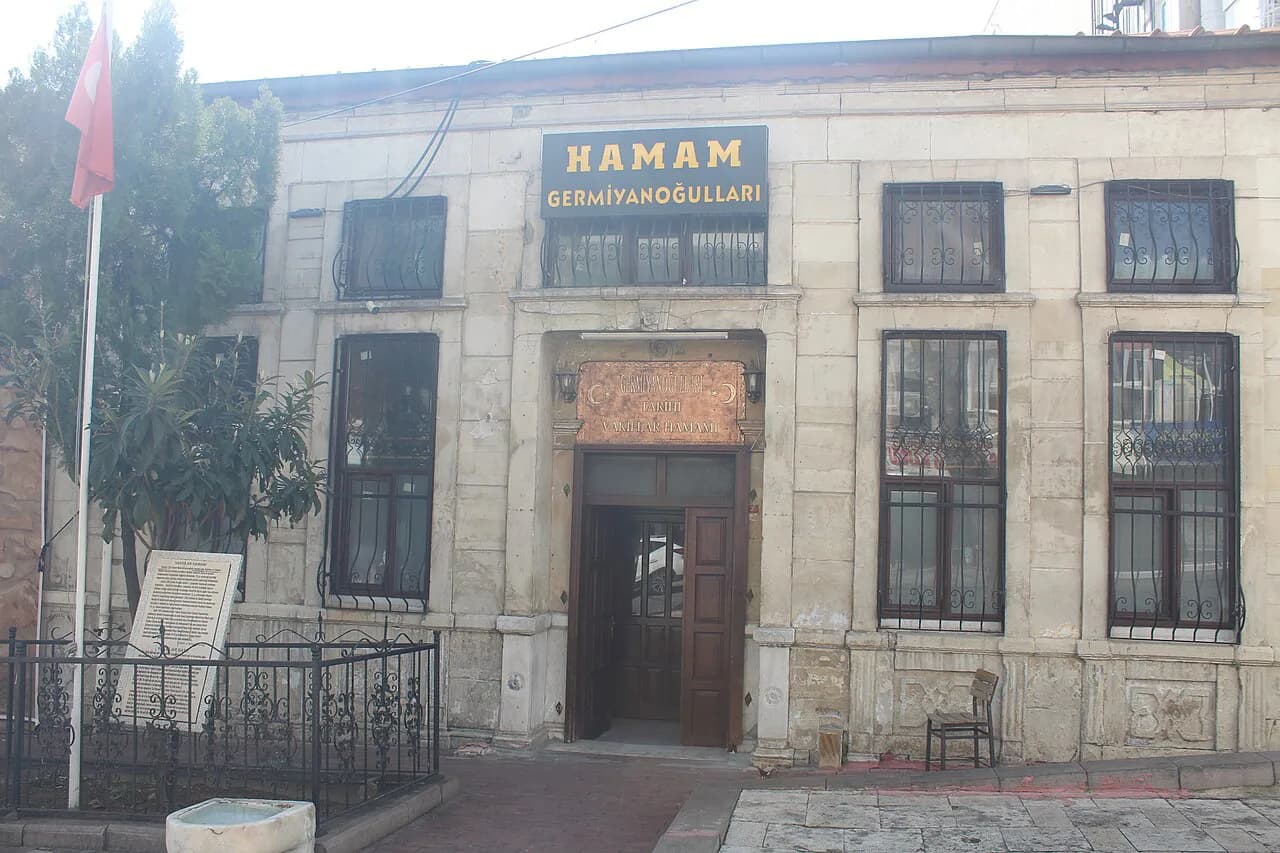
The lesson is to check the hours at reception before you commit half a day. Schedules like those are set by each bathhouse and change, so the board on the wall is more reliable than anything you read elsewhere. Old bathhouses can be scruffy outside and lovely within, and the entrance is sometimes easy to walk past, so allow a few minutes to find it.
The kese scrub on the marble slab
After 15 to 20 minutes sweating on the hot marble, your skin is soft and ready for the scrub. The tellak, or masseur, works with a kese, a rough cloth that lifts away dead skin, and you lie on the göbek taşı while it happens. The scrub itself takes around 10 minutes and is brisk rather than gentle; tell the tellak if you have a physical problem or the pressure is too much.
Washing comes after the scrub, with soap and water from the kurna, and then the massage. The tellak can also work up a cloud of lather for the foam massage you have probably seen pictures of; an oil massage is an optional paid extra and belongs at the end.
How hot it gets and how long you spend
You should expect to sweat heavily, which is the point of the exercise rather than a side effect to endure. Temperatures sit somewhere between 30 and 55 degrees Celsius, combined with humidity that can approach saturation, so the heat feels stronger than a dry sauna at the same reading.
Allow two to three hours in total: changing, a first sweat, the scrub, washing, the massage, then a slow sit with tea before you face the street. Drinking water beforehand and taking it easy afterwards saves you from the wobbly feeling that catches out people who rush straight back into the afternoon sun.
Historic hamam or hotel spa
A hotel or resort spa is the easier introduction: appointments are straightforward, towels are provided, and nobody expects you to know the ritual. The trade-off is that you lose the building and the sense of social occasion, since a marble dome and a courtyard entrance are half the reason to go.
A historic bathhouse gives you the architecture and the local rhythm, but not always polish. In İzmir, an old bath can look run-down from the outside and the door may be hidden enough that you circle the block before finding it. Pick the historic option for the experience itself, and the hotel option if you mainly want an easy, predictable hour.
What a first visit costs and what the price includes
What you pay depends on which services you take, and prices differ sharply between a neighbourhood bath and a tourist-facing hamam. Settle what the entry covers before you undress, and treat any figure you are quoted as that bathhouse's price on that day rather than a national rate.
Ask at the desk about paying for extras and about tipping, and carry some cash in case card payment is not accepted. For general guidance on tipping in Turkey, see the site's tipping guide before you go in.
Etiquette: tipping, aches and the bowl at the kurna
Tell the tellak before the scrub if you have a sore shoulder, a bad back or sensitive skin, and ask for less pressure if the cloth feels too rough. You wash yourself at the kurna, filling the bowl and pouring it over your head and shoulders rather than splashing water across the room. Keep your peştemal wrapped until you are at your basin, and leave the changing area tidy.
If you are booking independently, plan how you will reach the bathhouse, since old hamams sit in the middle of built-up neighbourhoods where parking is scarce. Public transport and shared minibuses usually get you closer, and a short walk at the end is normal.
Pairing a hamam with the rest of a Turkish trip
A bath is a good half-day activity to slot between the bigger sights, and it works well on a day when you are staying in town rather than heading out to the coast or the ruins. If you are building an itinerary around ancient sites and harbour towns, a morning at the hamam followed by an afternoon of wandering makes a balanced day.
Souvenirs fit naturally around a bath visit: Turkish markets sell the peştemal towels, kese cloths and decorated bowls you will have just used, and they make practical, light luggage. Textiles lead in the other direction too, from the towels themselves to the rugs sold in the same bazaar quarter.
From bathing ritual to the crafts you will see afterwards
The decorative instincts that produced jewelled bowls and embroidered towels run through Turkish crafts more widely. Turkish ceramics carry the same blue-and-white discipline, and Anatolian rugs are the textile equivalent of a well-made peştemal, woven for use rather than display.
Look out for the blue bead known as the evil eye, sold everywhere from bathhouse entrances to souvenir stalls, often attached to the towels and trinkets you will be tempted by on the way out.
Should you book a hamam or a hotel spa?
Book a historic hamam if you want the building, the ritual and the sense of a shared occasion, and accept that the fabric may be worn and the schedule fixed. Book a hotel spa if you want an easy hour with no guesswork. Either way, take your own shampoo, arrive early enough to read the schedule at the door, and say so if the scrub is too firm.
Explore more Turkey guides
Frequently Asked Questions
Is a Turkish bath worth it for a first-timer?
Yes, if you know what you are walking into. You sweat on hot marble for 15 to 20 minutes, are scrubbed with a rough kese cloth, washed and optionally massaged, and leave cleaner than a shower manages. Choose a historic bath for the building or a hotel spa for convenience, and check the men's and women's hours at the door.
What is the traditional bowl and towel used in a hamam?
The bowl is a hamam tası, sometimes embossed or jewelled, used to pour water over yourself at the kurna basin. The towel you wrap in is a peştemal, traditionally cotton, and the best have a hand-finished selvedge rather than a hem.
Sources
Notes for your next Turkey trip
Optional updates when we add or correct a town guide.
You might also like
Continue reading
More guides you'll find useful