Turkish Food: The Dishes to Know and What's in Them
A visitor's guide to Turkish food, from simit, börek and pide to köfte, manti, testi kebab and baklava, with what each dish is and how it is served.
On this page
Turkish food is a sequence of breads, small plates, grilled meat, flatbreads and very sweet desserts, and knowing the order makes a restaurant menu far easier to read. Order bread and meze to start, a soup or manti if you want one, then meat or pide as a main, and leave room for baklava or sütlaç. This guide groups the dishes by how they arrive at the table and explains what is actually inside each one.
The everyday food is not complicated: bread with sesame, pastry filled with cheese or spinach, meatballs spiced heavily and grilled over heat, thin dough with minced topping, and pastries soaked in syrup. Many of these you will have met under other names in Greece, the Middle East or the Balkans, which is why a visitor often recognises a dish before knowing what it is called here.
What Turkish food covers
The cuisine spreads across five broad groups, and almost every restaurant menu in the country is built from them. Breads and pastries cover simit, açma, börek and gözleme; meze covers the cold and warm small plates; pide and lahmacun are the flatbreads; köfte, şiş kebab and döner are the grilled and spit-roasted meats; and desserts run from baklava to sütlaç and künefe.
Two things catch British and Irish visitors out. Bread arrives early and often, so a table can fill up before anyone has ordered a main course, and there is no pork on the menu for religious reasons, so breakfast is a spread of cheese, olives, egg and cured meat rather than bacon.
Simit, açma and börek: what to buy from a street cart
Simit is a dough ring covered in sesame seeds, sold from red street carts at almost any hour and eaten plain or split and filled. It behaves like a cross between a bagel and a pretzel, costs little, and is the easiest thing to buy when you have just arrived and need something before a proper meal.
What is traditional Turkish food? It means the everyday cooking rather than restaurant showpieces: bread such as simit and pide, meze including ezme and cacık, grilled köfte and şiş kebab, döner shaved from a spit, and pastry desserts such as baklava. It is eaten in courses, with bread and small plates first and the grilled dishes after.
What is Turkey's most popular food? Döner is the dish most widely sold and most recognised abroad, and simit is the one you will see most often on the street. Pide and lahmacun are equally common at lunch, and no single dish is treated as a national one on menus.
Is there anything I should avoid ordering in Turkey? Pork is not served in Turkish restaurants for religious reasons, so you will not find it on the menu. If you do not want a very sweet dessert, ask for sütlaç rather than baklava, and if you are unsure what a dish contains, ask before ordering.
Açma is the softer, thicker round bread from the same carts, plainer than simit and less likely to leave sesame everywhere. Börek is the umbrella name for pastry built from layers of thin yufka dough, filled with cheese, spinach, meat or potato and baked in a tray or rolled and fried into cigars called sigara böreği. A melted cheese roll eaten warm from the counter is a better introduction than a cold slice.
Gözleme is a different pastry altogether: a thin sheet folded over spinach, cheese or potato and cooked on a griddle, closer to a savoury crêpe than to layered börek. Order it fresh where you see it being made, because it goes limp quickly.
Turkish breakfast: what a kahvaltı spread includes
Kahvaltı is a meal in its own right rather than a quick stop, and a full spread arrives as many small dishes rather than one plate. Expect olives, jams, honey, bread, cucumber, tomato, cheese, cured meat and scrambled or fried eggs, with tea poured throughout.
Menemen is the egg dish to order if you want something hot and cooked rather than assembled: eggs scrambled with tomato and peppers and served in a small pan, sometimes with feta added. Bazlama, a fluffy flatbread a little like naan, often turns up alongside it with sauces. If you want the longer, wider version of the meal, our guide to Turkish breakfast explains how a serpme kahvaltı is laid out and how much it usually involves.
Meze and dips: ezme, cacık, aubergine purée and stuffed vine leaves
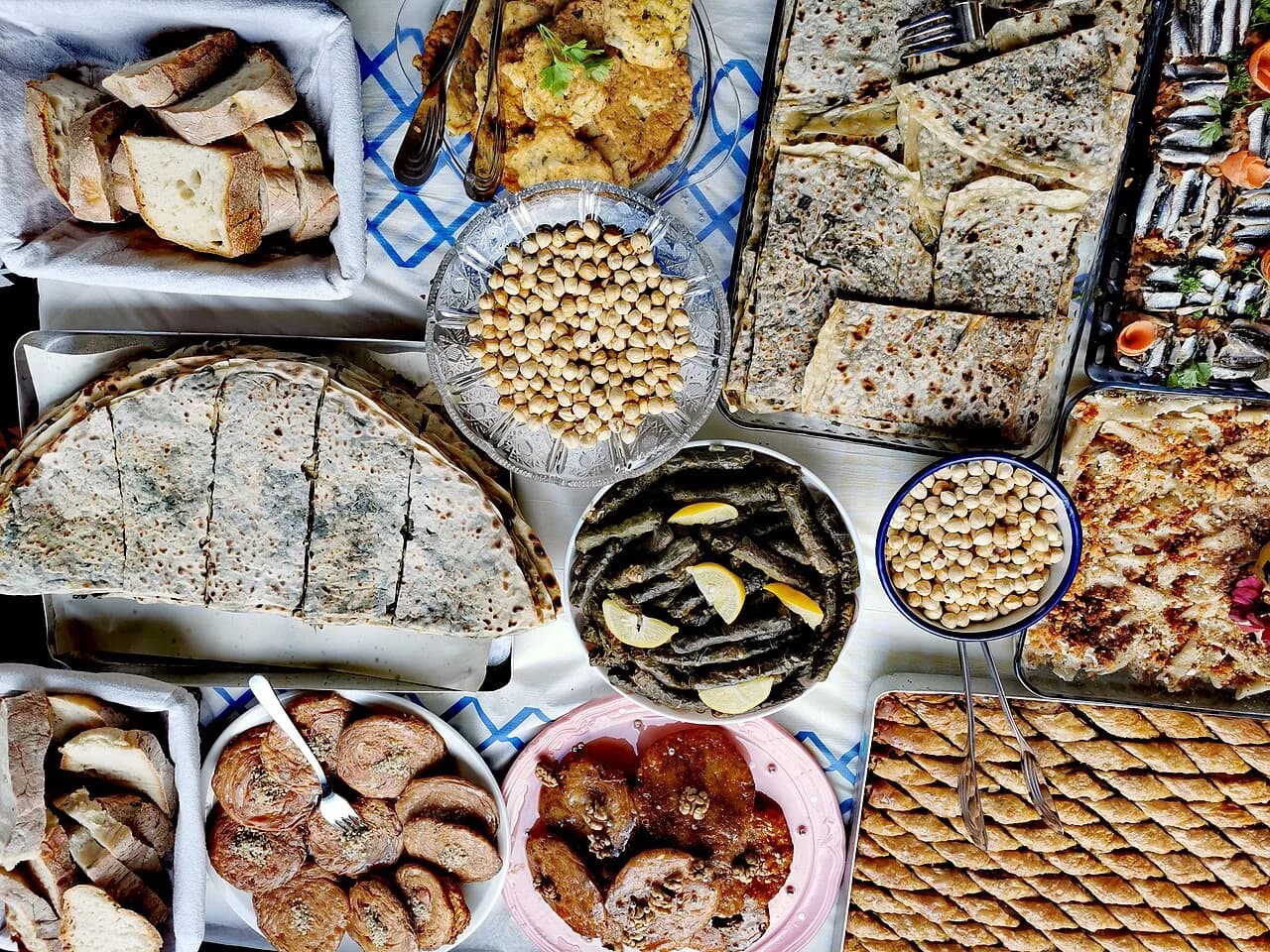
Meze is the Turkish equivalent of a spread of tapas, a run of small cold and warm dishes that can be a starter or, if you keep ordering, the whole meal. Typical plates include ezme, a chopped spicy tomato and pepper dip; cacık, yoghurt thinned with cucumber and garlic; aubergine puréed with cheese and butter; hummus; and crushed, spiced olives served with flatbread.
Sarma and dolma cover the stuffed branch of the menu: vine leaves rolled around a rice, garlic and olive oil mixture and finished with lemon, or whole vegetables such as peppers filled with a similar stuffing. They are eaten cold or at room temperature, and a plate of sarma with a squeeze of lemon is one of the lightest things on a hot day.
Order two or three meze between two people rather than one each, and treat them as the start of the meal rather than the whole of it. Bread comes with them, so resist filling up on it before the grilled dishes arrive.
Pide and lahmacun: the boat-shaped flatbread and the thin one
Pide is the boat-shaped flatbread, a little like a pizza with a lighter dough, with the sides turned up to hold the filling. Cheese is the one constant, but spicy sausage, spinach, tomato and minced meat versions all appear, and it is generally one of the cheaper things to order.
Lahmacun is the thin one: a flatbread spread with spiced minced meat and baked hot and fast, then rolled up with herbs, onion and lemon at the table. It is often called Turkish pizza, but the dough is thinner and the topping is spread rather than layered with cheese.
Köfte, şiş kebab and döner: how the grilled and spit-roasted meats differ
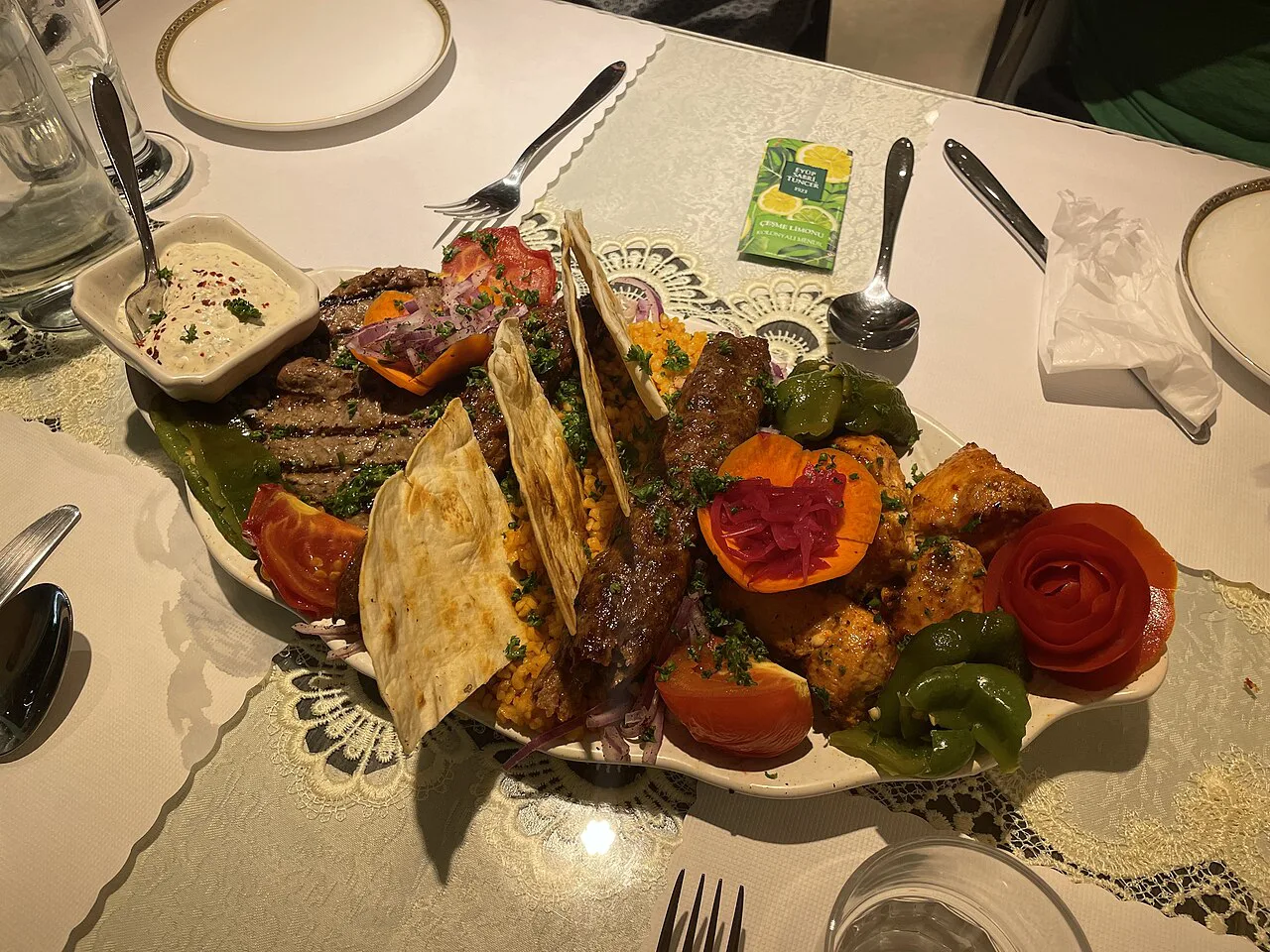
Köfte covers the meatball family, minced lamb or beef shaped oval, round or flat and seasoned heavily before grilling, often served with a bulgur salad on the side. Şiş kebab is the skewered version: marinated cubes of lamb, chicken or beef chargrilled and served with rice, vegetables and sometimes potatoes.
Döner is the meat cooked as a stack on a vertical spit and shaved off in thin strips, served either on a plate or rolled in flatbread with tomato, lettuce and sauce. İskender kebap takes that shaved meat further, laying it over chunks of bread with tomato sauce and burnt butter and adding yoghurt on the side. Adana kebab is the minced, spiced version pressed onto a flat skewer. İskender comes from Bursa, and our guide to things to do in Bursa names the Kayhan street-food area for it.
Ask for a mixed grill if you want to compare them in one sitting, and expect rice, grilled peppers and tomato rather than chips alongside. Sucuk, the spiced cured sausage, turns up as a side and is worth ordering once on its own.
Testi kebab: the sealed clay pot and how it reaches the table
Testi kebab is as much a piece of theatre as a dish: meat and vegetables are sealed inside a clay pot and cooked, then the pot is brought to the table, tapped or cracked open and the contents tipped onto the plate. It is traditionally associated with the Cappadocia region, which is where most visitors first order it.
Because the pot is cooked slowly and broken at the table, it is not a dish to order when you are in a hurry before a tour pickup. Order it at a sit-down meal where you plan to stay a while, and share it if the table also wants a grilled dish.
Manti and lentil soup: the pasta and soup courses to order
Mercimek çorbası is the lentil soup that opens countless meals, served with lemon slices that you are meant to squeeze in rather than leave on the side. It is thick, cheap and warming, and a good thing to order while you wait for the grill.
Manti is the pasta course: tiny dumplings filled with minced meat or lentils, served under yoghurt sauce, garlic and chilli oil and often finished with mint. It is somewhere between ravioli and pelmeni, and one plate is usually enough for a starter between two.
Balık ekmek and the fish you meet on the coast
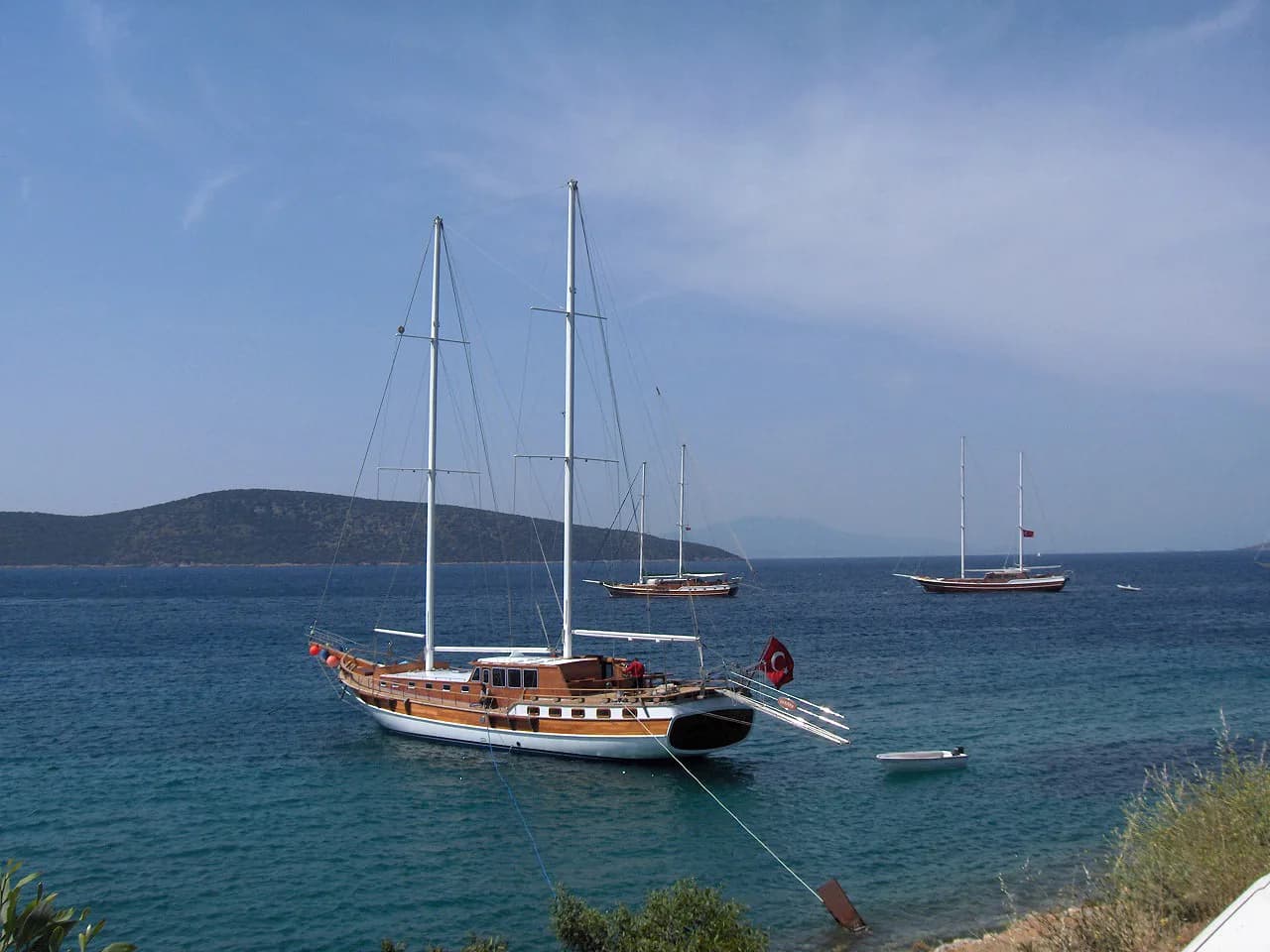
Balık ekmek is the fish sandwich of the Turkish coast: grilled or fried fish with vegetables inside bread, sold from stalls near harbours and bridges and eaten standing up. It is a cheap, fresh lunch rather than a restaurant meal, and a natural stop on a day spent around the water on boat trips in Turkey.
On a longer boat day, the lunch included often comes as grilled fish, rice and salad rather than a sandwich, so ask on the morning of departure what the crew is serving. Elsewhere along the coast, order fish by asking the price by weight before it is cooked, since it is the one item that regularly moves with the market.
Vegetable dishes: imam bayıldı, karnıyarık and dolma
Aubergine is the vegetable to get to know, appearing in several forms on the same menu. İmam bayıldı is a whole aubergine stuffed with onion, tomato and garlic and served cold in olive oil, while karnıyarık is the hot version, filled with minced meat and baked.
A third form is the aubergine purée, creamy and made with cheese and butter, often served under a lamb stew called Hünkar Beğendi but available with meatballs too. For a meat-free meal, build a plate from imam bayıldı, sarma, ezme and cacık rather than ordering one vegetarian main, which is often the weakest dish on the card.
Baklava, sütlaç, künefe and lokum: the desserts worth leaving room for
Baklava is layers of thin pastry with nuts, butter and syrup, cut into diamonds and served in small portions because it is very sweet. Sütlaç is the baked rice pudding, served cold in a clay bowl with a browned top, and lokum is Turkish delight, best bought fresh from a sweet shop rather than a sealed box.
Künefe is the odd one out: shredded wheat soaked in syrup over a layer of melted cheese, served hot with pistachio. It divides people precisely because of the cheese, so order one between several and see. Sütlaç, the baked rice pudding served cold in a clay bowl, is the gentler finish if you have already had baklava; our guide to Turkish desserts covers the wider sweet menu.
What to drink: çay, Turkish coffee and ayran
Çay is the everyday drink, served in small tulip-shaped glasses and refilled without asking, and Turkish coffee is the thicker, unfiltered version ordered after a meal rather than with it. Both are cheap and come in portions small enough to order twice.
Ayran is the salted yoghurt drink that arrives with döner and grilled meat, and it divides visitors sharply. Try a glass with köfte before deciding whether you want it with every meal.
How to order: meze first, main course after, and pork off the menu
A Turkish meal usually runs in order: bread and meze, then a soup or manti if anyone wants one, then grilled meat or pide, then dessert. If you order everything at once, the table fills up and the hot dishes arrive before you have finished the cold ones. Say what you want in courses, and the kitchen will pace it.
Pork does not appear on Turkish menus for religious reasons, so look for lamb, beef, chicken or fish instead, and ask what a dish is made from if the English menu is vague. Tap water is generally not served by default; ask if you want it.
Turkish food words to recognise on a menu
A few words unlock most menus: çorba means soup, ekmek means bread, tavuk is chicken, et is beef, balık is fish, patlıcan is aubergine, biber is pepper and peynir is cheese. Sıcak and soğuk mark the hot and cold meze, and ızgara means grilled.
Kasap means butcher, so a kasap köfte is the butcher's own meatball and usually a good sign. Porsiyon is a portion, and yarım porsiyon is a half one, which is useful when the meze list is long. When you want the bill, say hesap rather than waiting to be brought it.
Which dishes to order first
Start with simit or börek from a cart on your first morning, then sit down for a kahvaltı once you have adjusted to the pace of a Turkish breakfast. Build one meal from meze alone rather than ordering a main every time, and order testi kebab and manti on separate days so that neither is rushed.
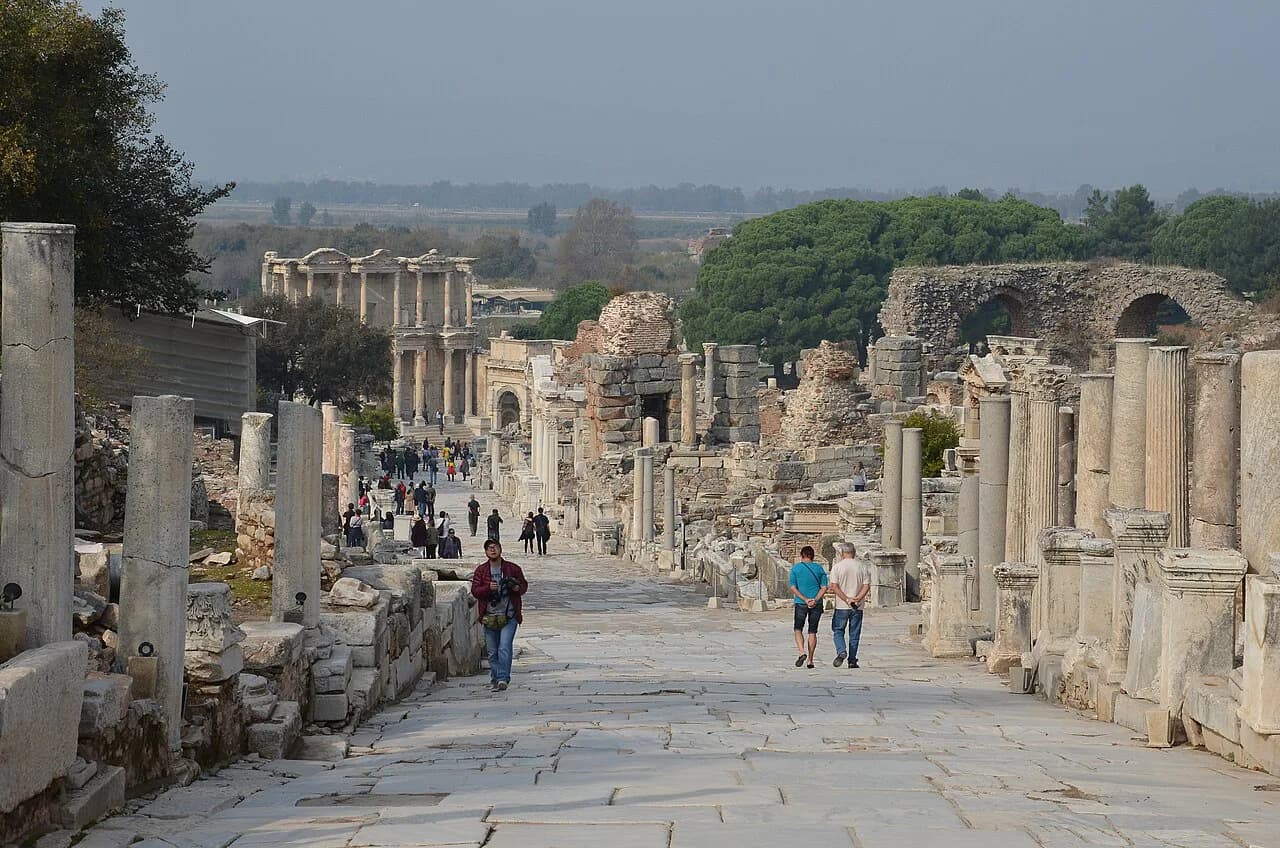
Sweet things are best bought by the piece from a shop rather than ordered blind at the end of a big meal, and baklava keeps well enough to carry home if you are careful with it. If you are heading on to ancient sites, plan the food stop around the day rather than after it, because the ruins come with long walks and little shade.
Explore more Turkey guides
- Künefe: The Turkish Cheese Pastry Dessert Explained
- Lahmacun
- Manti: What Turkish Dumplings Are and How They Are Served
- Menemen
- Pide: Turkey's Boat-Shaped Flatbread, Explained
- Rakı
- Simit: Turkey's Sesame Bread Ring, Explained
- Turkish Breakfast
- Turkish Coffee
- Turkish Delight
- Turkish Desserts
- Turkish Tea
Frequently Asked Questions
What is traditional Turkish food?
It means the everyday cooking rather than restaurant showpieces: bread such as simit and pide, meze including ezme and cacık, grilled köfte and şiş kebab, döner shaved from a spit, and pastry desserts such as baklava. It is eaten in courses, with bread and small plates first and the grilled dishes after.
What is Turkey's most popular food?
Döner is the dish most widely sold and most recognised abroad, and simit is the one you will see most often on the street. Pide and lahmacun are equally common at lunch, and no single dish is treated as a national one on menus.
Is there anything I should avoid ordering in Turkey?
Pork is not served in Turkish restaurants for religious reasons, so you will not find it on the menu. If you do not want a very sweet dessert, ask for sütlaç rather than baklava, and if you are unsure what a dish contains, ask before ordering.
Sources
Notes for your next Turkey trip
Optional updates when we add or correct a town guide.
You might also like
Continue reading
More guides you'll find useful