Ancient Sites in Turkey: Which Region to Visit and Why
Ancient sites in Turkey grouped by region, from Ephesus and Aspendos to Göbekli Tepe, with what each place is like and how long it needs.
On this page
Turkey's ancient sites are best planned by region rather than by a ranked list: the Aegean coast around Selçuk and İzmir, the Pamphylian plain behind Antalya, the Lycian coast, the Dardanelles, Cappadocia and the southeast around Şanlıurfa each hold a distinct set of ruins within a few hours of one another. This guide groups them that way, says what you actually see on the ground, and gives a realistic time budget so you can drop a stop instead of overpacking a day. It covers classical ruined cities, rock-cut settlements and the prehistoric complex at Göbekli Tepe, which need quite different kinds of visit.
What Turkey's ancient sites cover, and why region matters more than ranking
The span is enormous: Greek and Roman cities on the Aegean and Mediterranean, Lycian rock tombs, the multi-layered mound at Troy, Byzantine remains, and Neolithic monuments in the southeast that predate the classical world by millennia. Koç University's archaeology guide points to the TAY project, which documents Turkey's archaeological settlements from the Palaeolithic onwards, as the central inventory for this material, and it is useful for locating a site before you commit a day to it.
For practical trip-building, the useful split is between sites you can walk to from a resort town, sites that need a dolmuş, bus or car, and sites that only make sense as part of a longer inland loop. A map of archaeological sites in Turkey shows how tightly clustered the Aegean and Pamphylian sites are, and how far Göbekli Tepe sits from everything else.
The list of ancient settlements in Turkey is long and includes places that are now modern towns, so treat it as an index rather than an itinerary. Pick two or three sites per base and accept that a ruined city takes longer on the ground than it looks on paper, especially in summer heat.
Ephesus above Selçuk: the Library of Celsus, Curetes Street and the Great Theater
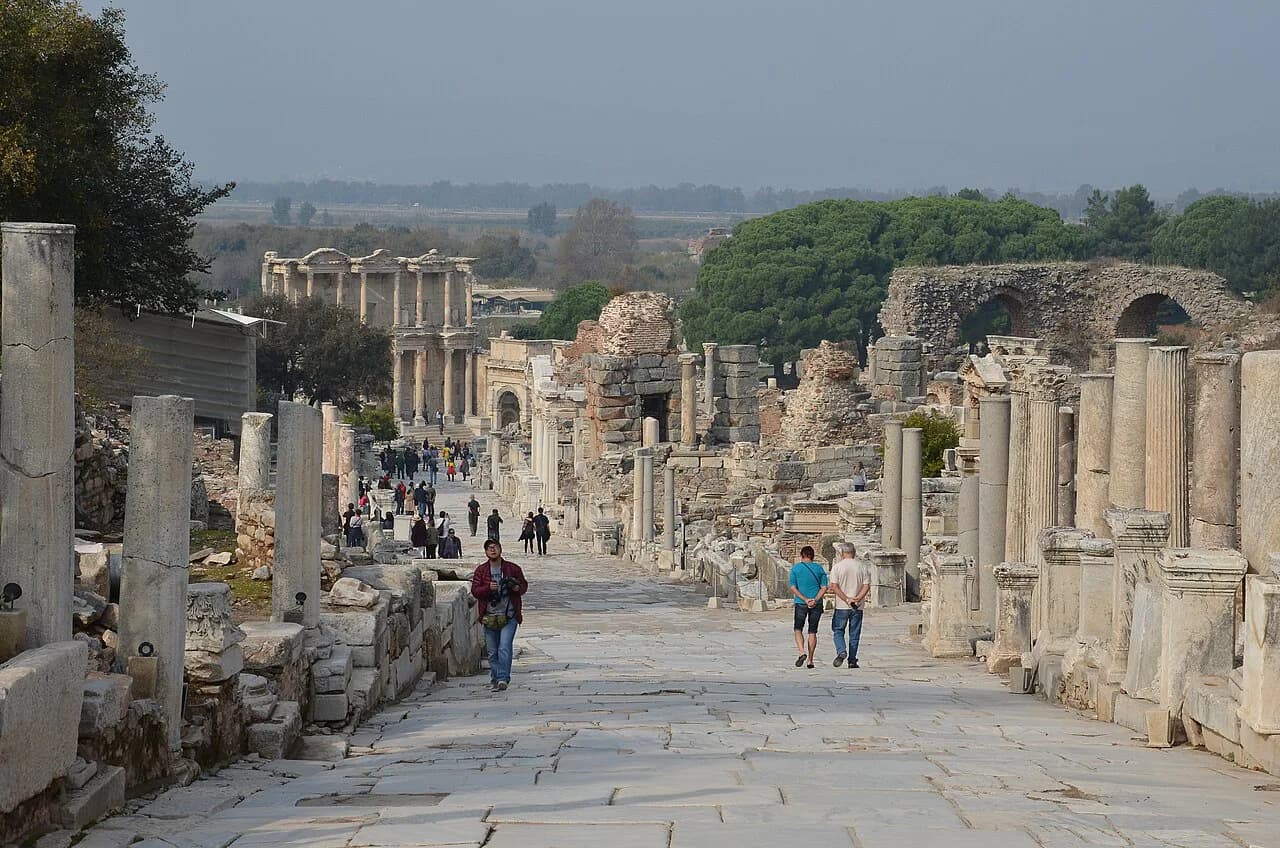
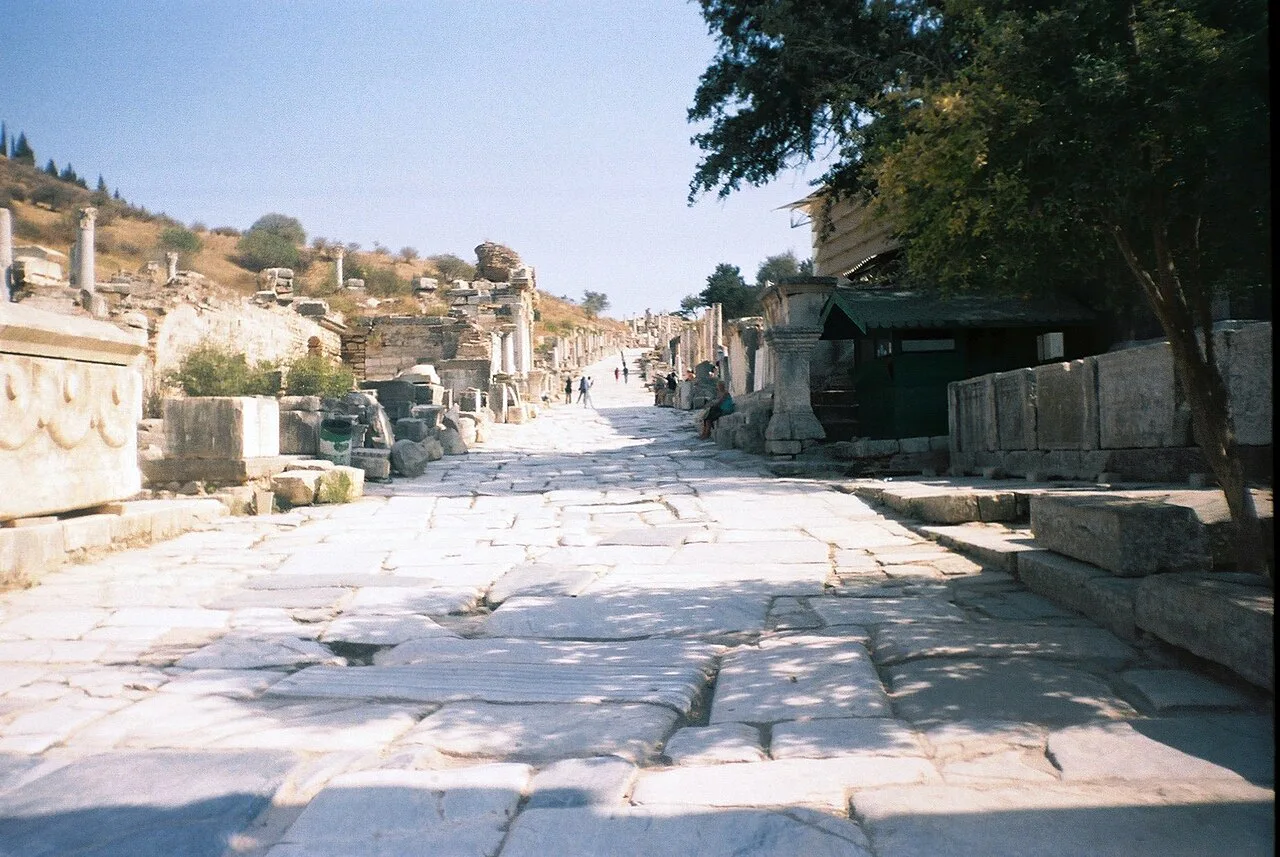
Ephesus sits about 80 kilometres south of İzmir, with the upper gate within walking distance of Selçuk town, which makes it the one major site on this list you can reach on foot from a town centre. You enter through the Magnesian Gate and descend the marble-paved Curetes Street, with the two-storey Library of Celsus facade ahead and the Temple of Hadrian's Corinthian capitals and Medusa-head keystone along the way. Allow around four hours for a full circuit through the site; if you want to plan the stop in detail, our Ephesus guide covers the site and what to see nearby.
What Greek cities are located in Turkey? Several of the sites in this guide began as Greek cities on the Anatolian coast. Koç University's archaeology guide lists Miletus, Klazomenai near Urla on the Gulf of İzmir, Ephesus, Pergamon and Aphrodisias, among others, site by site, which helps if you want to trace one city's development rather than visiting ruins generically.
Why is Göbekli Tepe controversial? Two claims attract dispute rather than the dating itself: calling it the world's first temple, and describing it as a 'zero point in time'. The deliberate-burial theory is also contested.
What were some of the major ancient cities in Anatolia? Ephesus served as provincial capital of Roman Asia, Pergamon was an Attalid acropolis with a major library, Aphrodisias was a marble-sculpting centre, and Perge was the Roman capital of Pamphylia. Troy is a different case, a mound with nine layers spanning 4,000 years.
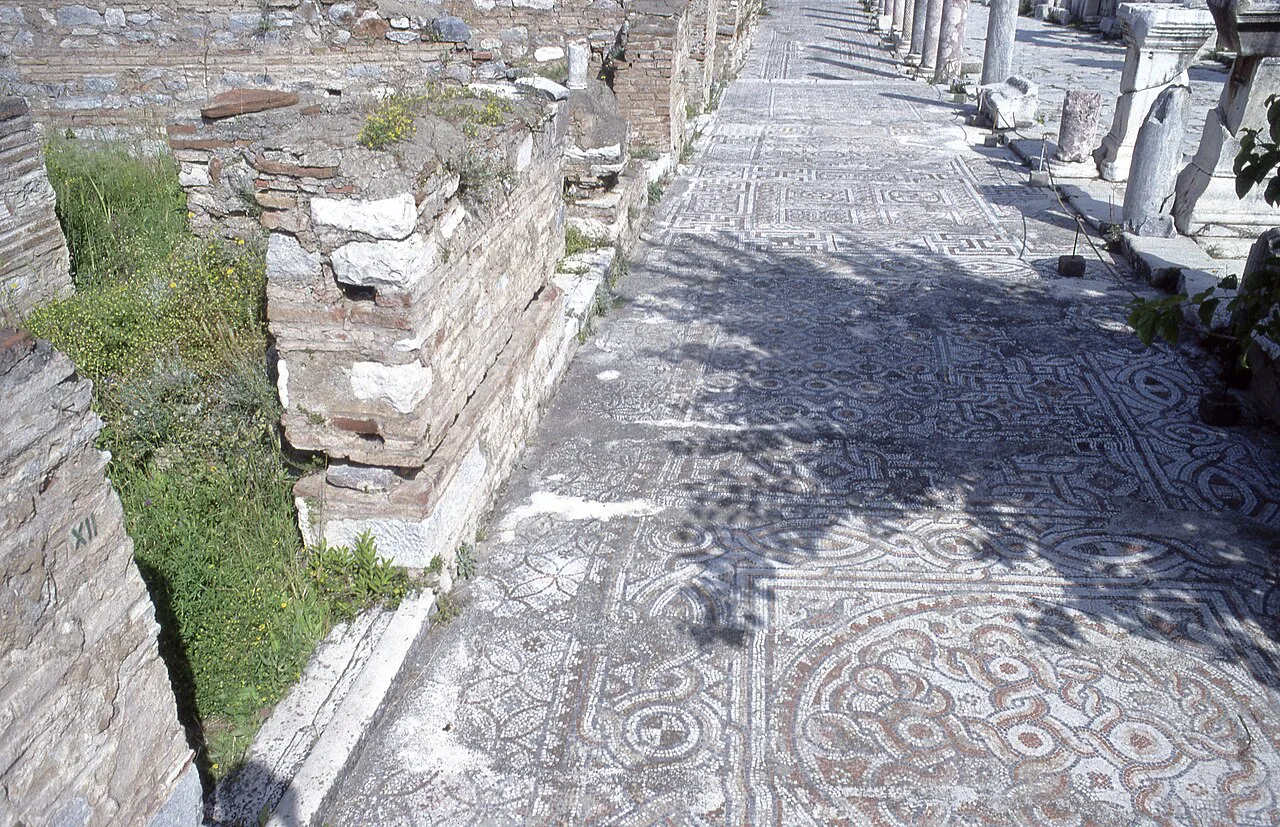
Two details change how you plan the morning: the Great Theater seats around 25,000 on tiers facing the former harbour, and the Terrace Houses preserve mosaic floors and frescoed walls from elite residences, which is where most of the extra time goes. Walking from the upper gate down towards the lower agora follows the natural slope, so you finish near the exit rather than climbing back.
Crowds build through the middle of the day at Ephesus, so the practical move is to be at the gate when it opens rather than arriving late morning with the coach groups. Uneven marble paving makes ankle-supporting shoes worthwhile, and the lower agora can be reached via the south entrance if steps are a problem.
Aegean inland: Pergamon and Aphrodisias
Pergamon rises about 335 metres above the Bakırçay plain north of İzmir, an Attalid acropolis with a library, theatres cut into the slope and Roman additions including the Red Basilica, later reused as a Byzantine church. The upper acropolis is reached by cable car and holds the steepest ancient theatre gradient and the Temple of Trajan's white marble columns; plan around three hours up top and add roughly 90 minutes for the lower city. Wind can close the upper site in winter, so keep the day flexible.
Aphrodisias lies inland in the Meander valley, a marble-sculpting city dedicated to Aphrodite with the best-preserved stadium in the ancient world, seating 30,000 across 22 tiers, plus the Tetrapylon gateway and the three-storey Sebasteion reliefs. Level ground and a museum with climate-controlled halls make it the easiest of the inland sites to navigate on a hot afternoon. Budget about four hours, and bring lunch, as there are no food services within the zone.
If your base is on the Aegean coast of Turkey, both fit as day trips, but not on the same day: Pergamon's cable car and hillside layout and Aphrodisias's flat, spread-out plan each deserve a full half-day.
Pamukkale and Hierapolis: terraces, theatre and necropolis in one UNESCO zone
Hierapolis crowns the Pamukkale travertine plateau, and the UNESCO zone protects the archaeology and the geology together, so one ticket-shaped day covers both. The theatre seats around 12,000, and the necropolis stretches roughly two kilometres with some 1,200 tombs, which is the part most visitors skip. Dedicate about five hours to combine the ruins with walking the terraces.
Barefoot walking on the travertines is mandatory, and paved paths connect the main monuments, but the necropolis needs proper footwear for uneven ground. The Antique Pool, where you can swim among submerged Roman columns, charges separate admission. A south-gate start at opening time catches the terraces in low light and ahead of the coach crowds.
Antalya and the Pamphylian plain: Perge and the theatre at Aspendos
Perge sits about 17 kilometres inland from Antalya, a Roman provincial capital of Pamphylia with a complete street grid, a 300-metre colonnaded street with water channels beneath, Hellenistic gate towers and a two-hectare baths complex with identifiable heating systems. Allow around three hours; the site offers minimal shade, so an early start matters in summer, and the finest Perge sculptures are displayed in the Antalya museum rather than on site.
Aspendos rises from the Köprüçay River valley, its theatre funded by river trade and dated to around 155 CE, with a stage building reaching 28 metres with two-storey columns. It survived intact because the Seljuk Turks converted it into a palace, which is the detail that explains why so much of the structure stands. Pairing Perge and Aspendos works well as one day out from Antalya or the Turkish Riviera resorts.
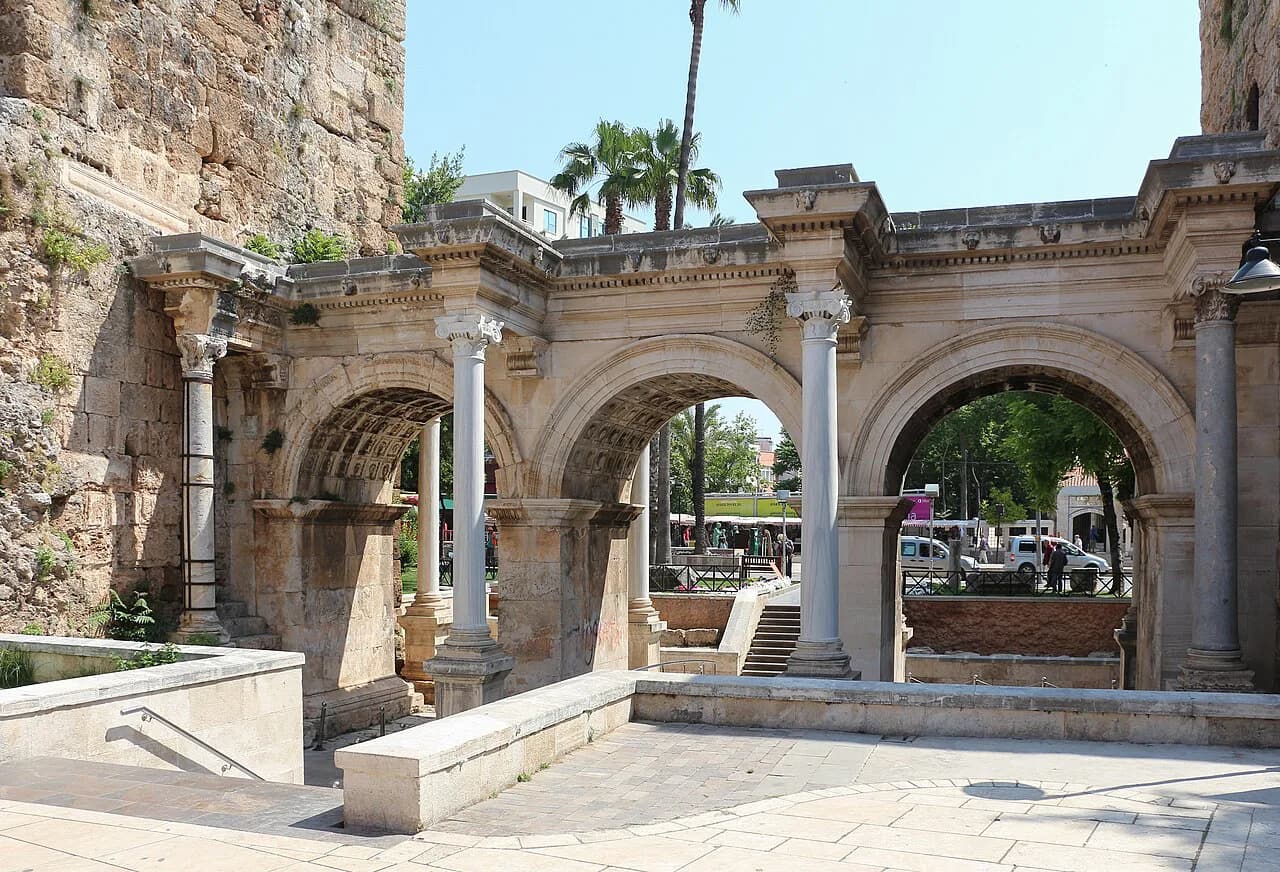
Antalya itself gives you Hadrian's Gate and the Kaleiçi old town as a free warm-up before the ruin days begin, and it is the natural base for both Perge and Aspendos.
Lycian coast: Myra and the rock-cut tombs within reach of Kaş and Demre
Myra, at Demre on the Lycian coast, is the rock-cut site to build a day around if you are staying between Kaş and Finike: the tombs are carved into the cliff face rather than built up from the ground, so the visit is short, vertical and very different from a classical city. It combines naturally with a boat day from the harbours around Kaş and Ölüdeniz, where seasonal services run in summer.
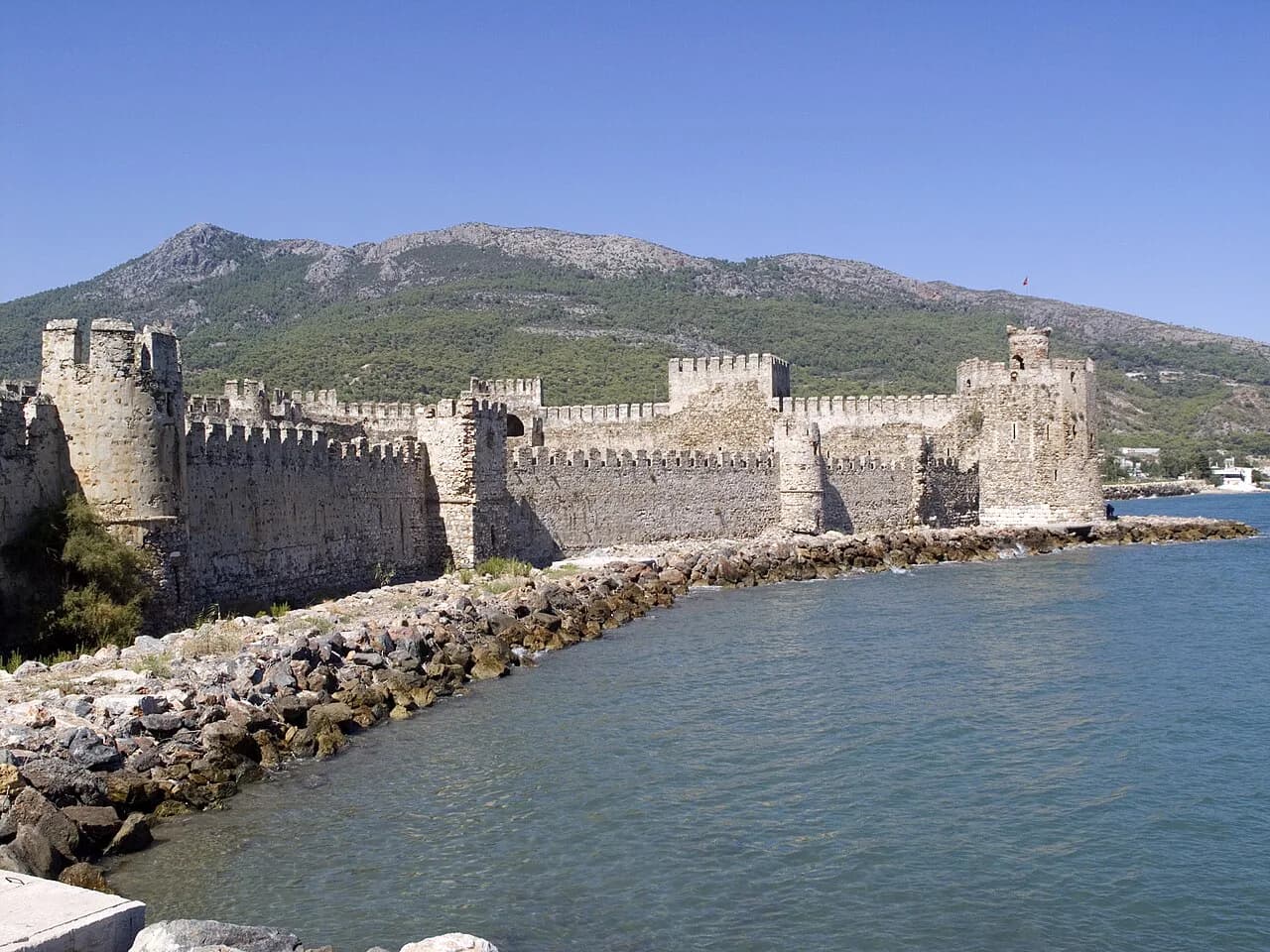
Further east, Anamur combines the Mamure Castle with the Anemurium ruins at Turkey's southern tip, useful if you are driving the coast rather than basing in one resort. Both are outdoor sites with little shade, so a morning stop beats an afternoon one.
Troy and the Dardanelles: the mound, the nine layers and the replica horse
Troy occupies a strategic mound controlling Dardanelles access, with nine archaeological layers spanning 4,000 years from Early Bronze Age citadels, and it entered the UNESCO listing in 1998. On the ground you see excavation trenches exposing Bronze Age defensive walls, a bouleuterion with council chamber seating, and a reconstructed Trojan Horse replica. Allow about two hours for the main circuit.
The exposed hilltop offers no shade and the gravel paths are awkward without assistance, so mid-morning after the first coach wave is a sensible slot. The museum building gives air-conditioned refuge, and Gallipoli combines naturally if you are crossing the peninsula anyway.
Cappadocia: Derinkuyu and the Göreme Open-Air Museum
Cappadocia's sights are rock-cut rather than classical, and they reward a different plan: Derinkuyu is an underground city you descend through, and the Göreme Open-Air Museum is a cluster of carved churches and dwellings best seen slowly on foot. Neither fits the classical-ruin template of a colonnaded street and theatre, so do not slot them into a day otherwise built around Ephesus-style sites.
Göreme and Uçhisar make the natural bases, and the valleys between them reward an early start before the heat and the tour buses arrive. Give the open-air museum a proper half-day rather than treating it as a photo stop on the way to a balloon flight.
Göbekli Tepe near Şanlıurfa: T-shaped pillars and what is excavated
Göbekli Tepe sits roughly 12 miles northeast of Şanlıurfa, a complex of monumental round-oval and rectangular megalithic structures erected by hunter-gatherers in the Pre-Pottery Neolithic, dated by its UNESCO listing to between 9,600 and 8,200 BCE. The T-shaped pillars carry reliefs of wild animals, and each major building has a dominant species: snakes in Building A, foxes in B, boar in C and birds in D. Around 5% of the site has been properly excavated.
A modern visitors' centre opened in 2018 alongside the UNESCO listing, and a protective roof and walkway now let you view the main excavation area from above. Treat the visit as a viewing rather than a wander: you are looking down into the trenches, not walking among the pillars.
Ignore two common framings: the site is not the world's first temple, and the 'zero point in time' label and the claim that the builders deliberately buried the complex are both disputed. The modern city of Şanlıurfa, itself more than 2,000 years old, is worth the extra night rather than treating the site as a flying visit.
How long each site needs, from two hours at Troy to five at Pamukkale
The time budgets are not close: Troy is a two-hour circuit, Perge around three, Pergamon about three plus 90 minutes for the lower city, Ephesus around four, Aphrodisias around four and Pamukkale with Hierapolis about five. Build the day around the longest site and let the others fill the edges rather than trying to equalise them.
Add the travel time honestly. A site that is 17 kilometres from town still costs you the better part of an hour each way once you have parked and walked in, and the Pamphylian sites are spread across a plain rather than clustered together.
Getting to the sites: walkable, dolmuş-served or car-dependent
Ephesus is the standout for access, with the upper gate within walking distance of Selçuk and the lower agora reachable via the south entrance. Pamukkale and Hierapolis are visited on foot once you are in the village, but reaching the village itself needs a bus or car from Denizli.
Pergamon's cable car does the climbing for you, while Aphrodisias, Perge, Aspendos, Myra and Troy all sit away from town centres and work best with your own vehicle or an organised transfer. Göbekli Tepe needs a car or taxi from Şanlıurfa.
Crowds, heat and shade: timing Ephesus, Pamukkale and Troy
Heat and shade decide the day more than distance does. Ephesus has marble paving that reflects the sun and no real cover along Curetes Street, Perge offers minimal shade, and Troy's exposed hilltop has none at all. Start early at all three and keep the indoor museum stops for midday.
Coach crowds follow a predictable arc: Ephesus gets busy through the middle of the day, Pamukkale's terraces are busiest once the morning groups arrive, and Troy fills mid-morning. Arriving at opening time is the single most effective adjustment, and it costs you nothing but an early alarm.
Tickets, opening times and what to check before you go
Opening times, ticket prices and Müzekart coverage are set by the Turkish authorities and change with the season, so check the official pages for the specific sites you plan to visit in the week before you travel rather than relying on a guide written months earlier. Where a site has separate admissions, such as the Antique Pool at Pamukkale, budget for the extra charge on top of the main entry.
At Troy the museum building is part of the visit and gives air-conditioned refuge, and at Aphrodisias the museum with climate-controlled halls is where the sculpture ends up, so both are worth building into the circuit rather than skipping.
Sites that pair well on one day, and which pairs are too much
Perge and Aspendos make the best single day: close together inland from Antalya, contrasting in shape, and together around seven hours including travel. Ephesus works well with Selçuk's own sights, and Pamukkale with Hierapolis is one visit rather than two.
Pergamon and Aphrodisias are the pair to resist: each needs half a day plus inland driving, and combining them turns a good day into a rushed one. Likewise, do not try to bolt Göbekli Tepe onto a Cappadocia itinerary; the distances across the southeast are much longer than the map suggests.
Which ancient site should anchor your Turkey trip?
Let your base decide. From Antalya, anchor on Perge and Aspendos; from Selçuk or İzmir, on Ephesus and Pergamon; from Pamukkale, on Hierapolis; from the Lycian coast, on Myra; and only build a trip around Göbekli Tepe if Şanlıurfa is already on your route. If Pamukkale is your base, our Hierapolis guide covers the ruins and the terraces together. Two well-chosen sites in a day beat four rushed ones.
If you are deciding between the coast and the interior, remember that the Aegean and Pamphylian sites are close together and easy to string into a week, while Cappadocia and the southeast each demand their own trip with their own transport.
Explore more Turkey guides
Frequently Asked Questions
What Greek cities are located in Turkey?
Several of the sites in this guide began as Greek cities on the Anatolian coast. Koç University's archaeology guide lists Miletus, Klazomenai near Urla on the Gulf of İzmir, Ephesus, Pergamon and Aphrodisias, among others, site by site, which helps if you want to trace one city's development rather than visiting ruins generically.
Why is Göbekli Tepe controversial?
Two claims attract dispute rather than the dating itself: calling it the world's first temple, and describing it as a 'zero point in time'. The deliberate-burial theory is also contested. What the UNESCO listing supports is a Pre-Pottery Neolithic complex of megalithic structures built by hunter-gatherers between 9,600 and 8,200 BCE, with T-shaped pillars carved with wild animals.
What were some of the major ancient cities in Anatolia?
Ephesus served as provincial capital of Roman Asia, Pergamon was an Attalid acropolis with a major library, Aphrodisias was a marble-sculpting centre, and Perge was the Roman capital of Pamphylia. Troy is a different case, a mound with nine layers spanning 4,000 years. The list of ancient settlements in Turkey is a useful index of the rest.
Sources
- Map of archaeological sites in Turkey | Turkish Archaeological News
- The massive Turkish ruin that’s 6,000 years older than Stonehenge - SA Expeditions
- Ultimate Guide to 14 Ancient Ruins Across Turkey
- Archaeological Sites in Turkey - Archaeology - LibGuides at Koç University
- List of ancient settlements in Turkey
Notes for your next Turkey trip
Optional updates when we add or correct a town guide.
You might also like
Continue reading
More guides you'll find useful