Turkish Carpets: What to Buy in Turkey, Materials & Prices
Turkish carpets explained: why knot counts and natural dyes matter, how wool, cotton and silk differ, and what to check on the underside before you pay.
On this page
Buying a Turkish carpet comes down to three checks: turn it over to see how it is knotted, establish what it is made of, and agree the size before you talk price. This guide walks through those checks in the order a buyer meets them in a shop, then explains the regional names dealers use and how stock listings price carpets by size and material.
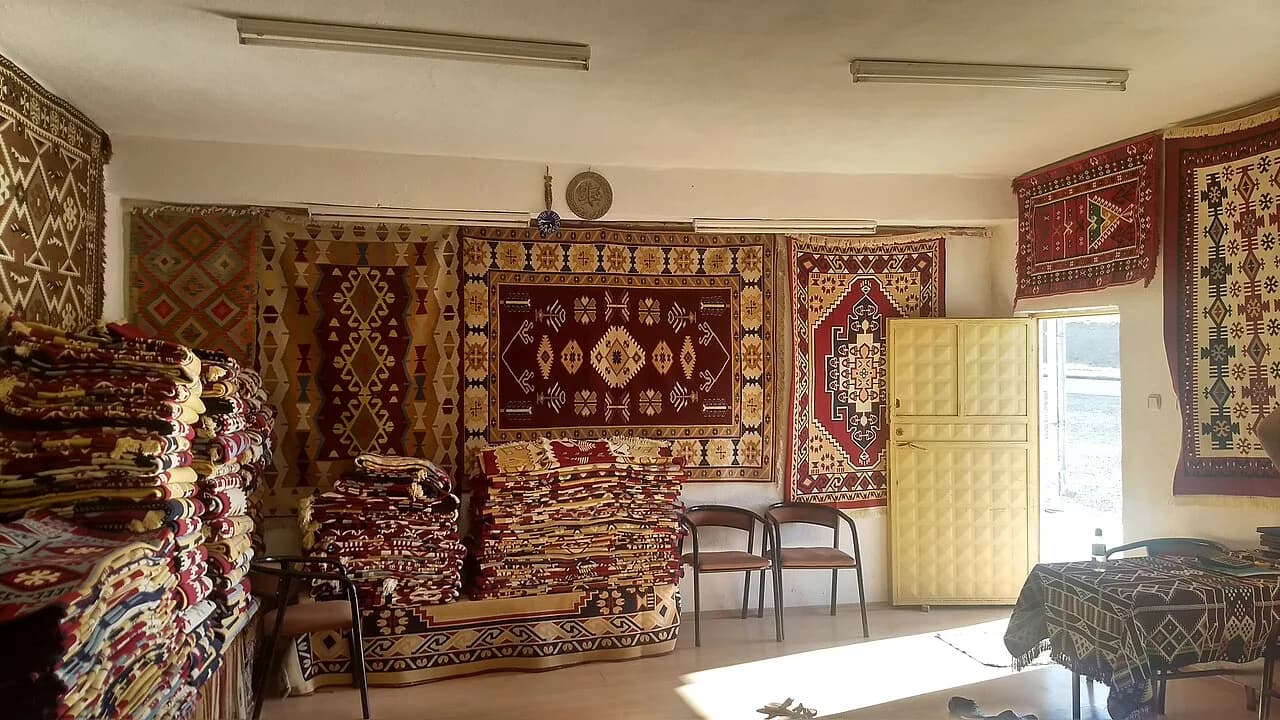
Turkish rugs are also called Anatolian rugs, and they are made in a range of styles that differ by material, weaving and construction method, motifs, geography, size and intended use. That breadth is the reason a single shop can show you pieces that look unrelated but are all Turkish.
What makes a Turkish carpet different from other rugs
Production of Turkish rugs began in the medieval Seljuk period, and the craft grew out of a mix of social, environmental, religious and cultural conditions. Early pieces were made for household use, but their reputation spread and weaving expanded for court and export demand.
Most weaving has long been done by women and girls, who make up a large majority of weavers, and village weavers work from their own inspiration rather than copying set patterns. That is why two carpets in the same size and colour family can differ in design.
The motifs carry meaning rather than decoration alone: Anatolian designs use symbolisation built into traditional weaving techniques, and the vocabulary of the patterns is readable to anyone who knows it. If a design appeals to you, ask what the motif is called, because the name usually tells you the region or tribal group behind it.
Hand-knotted or machine-made: how to tell by turning the carpet over
Rugs today are both machine made and hand woven, and the label is not the check. Turn the carpet over and look at the underside: the weaving pattern and knots are visible there, and they tell you whether it was hand-knotted.
What is special about Turkish carpets? They come from one of the oldest rug-making traditions, with production dating to the medieval Seljuk period, and they are woven across many regions of Anatolia under names such as Ushak, Kayseri, Hereke, Konya and Milas. Designs are symbolised rather than purely decorative, and village weavers work from their own inspiration, so pieces vary more than copying would allow.
Are Turkish carpets good quality? Quality depends on the individual piece rather than the country of origin. Look at whether it is hand-knotted by turning it over, how densely it is knotted, and what the pile, weft and warp are made of; wool pile on wool or on cotton is common, silk is used in large numbers of pieces and is priced steeply, and natural dyes are more valuable than synthetic ones.
How much should a Turkish carpet cost? There is no single figure: price tracks size, material and knot density. UK stock listings show a vintage handmade rug of roughly 232 by 133 centimetres at 795 pounds, a far smaller silk Hereke piece at 1,500 pounds, and an antique Ushak of 370 by 310 centimetres at 5,975 pounds, while machine-washable Turkish-style rugs sit in a much lower household range.
Hand-knotted Turkish rugs use symmetrical double loop knotting, with each knot bound on two warps, which holds the pile thread securely and allows more elaborate design work. On a woollen piece you may also be able to see the standard construction of wool pile on wool weft and warp.
You can ask the dealer outright, but the underside is the evidence. Compare two pieces side by side on the floor rather than in your hand, because knot density is easier to judge against a second carpet than from memory.
Why knot count per square metre drives design and price
Turkish carpets are known for complex knot counts per square metre, and more knots means finer design and weaving. The number of knots per square inch has a direct bearing on quality and value.
The practical consequence is that knot density is where design detail and money meet: a dense weave can hold a more intricate motif, and it costs more than a coarse one of the same size. Judge the pattern you actually want to live with, then use density to compare two pieces that both appeal.
Wool, silk, floss silk, cotton and goat hair: what each material means for durability and cost
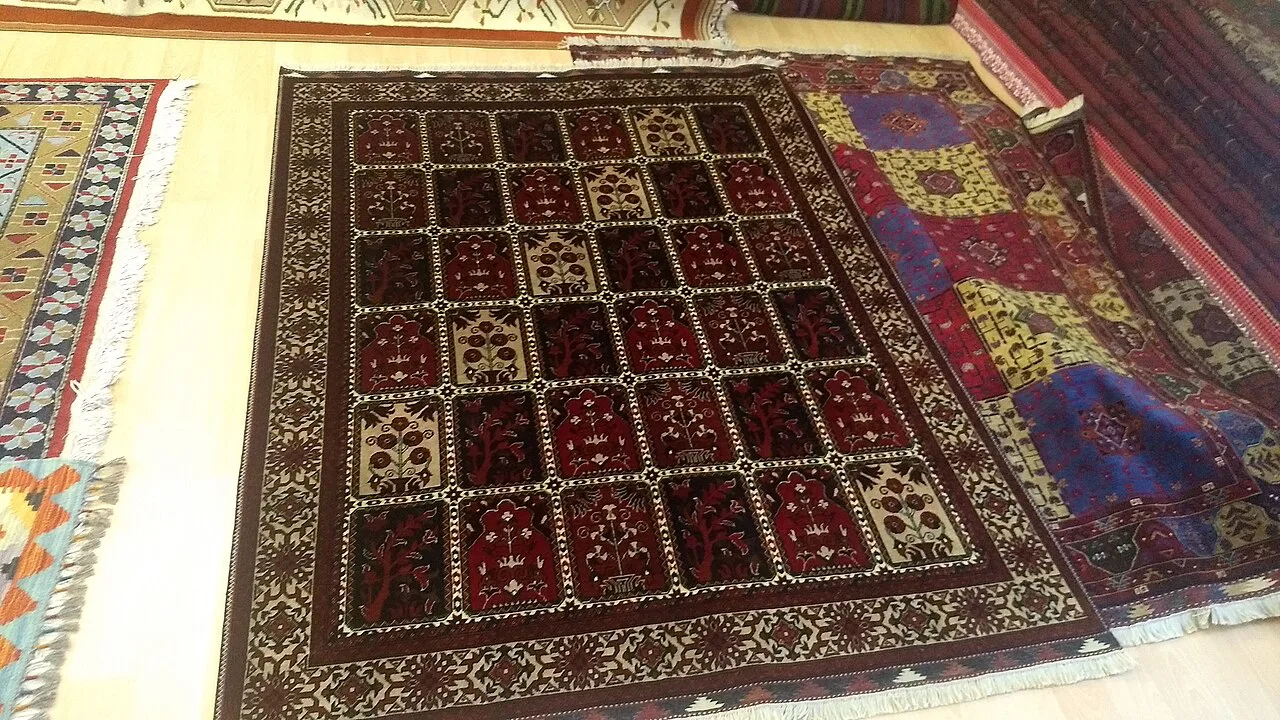
Turkish rugs and flat weaves are made from five main materials: sheep wool, goat hair, silk, floss silk and cotton. Wool is the material of choice for most rug making, while cotton and silk appear in large numbers of pieces too.
Construction varies with the material: wool pile on wool weft and warp is the most popular method, and wool pile on cotton warp and weft and silk pile on silk warp and weft are also made in large numbers. Ask which combination a piece uses, because it affects both how it wears and what it costs.
Silk is where price climbs sharply. Wool is the material of choice for most rug making, while cotton and silk are also used in large numbers of pieces, and silk pieces command steep prices. Rugs made from natural materials are more durable than synthetic ones, so it is worth confirming what you are being shown rather than judging by shine or sheen alone.
Silk also changes with age in a way wool does not, becoming shinier and brighter over the years, which is part of why silk pieces are treated as long-term purchases. If that trajectory matters to you, buy the piece whose colour and design you already like rather than one you expect to improve.
Natural dyes versus synthetic dyes, and why natural colours mellow
Authentic carpets use natural dyes extracted from vegetables, roots, flowers and even insects, and that raises a rug's value. Natural dyes also mellow over time, so an older piece may look softer in colour than a new one in the same design.
Mellowness is not a fault, but it does mean you should judge colour in daylight and expect change rather than a fixed finish. Ask directly whether the dyes are natural, and compare the colour against the pile depth, because a faded look on a cheap synthetic piece and a mellowed natural one are not the same thing.
Regional styles: Ushak, Kayseri, Hereke, Konya, Milas, Taspinar and Dösemealti
Carpets take their names from the localities where they are produced, the tribal groups associated with them, and their techniques, characteristic patterns, design layout and intended use. That is why a dealer's first useful question is not the colour but the origin name.
Names you will meet in Turkish collections include Hereke, Kayseri, Konya, Milas, Taspinar and Ushak, alongside terms such as Ghiordes and Mujur used for specific antique pieces. Each name narrows the field, so ask for the type rather than a general Turkish rug if you have seen a design you like.
Rugs from different regions of Anatolia carry different symbols, designs and patterns, so the name on the label should match the look of the piece in front of you. If a carpet is described only as Anatolian, ask which region and check whether the motif language fits what you have read about that area.
Where Turkish carpets are sold and named by origin
In the UK, specialist rug dealers sell Turkish carpets by origin name both online and in store, and stock listings use those names as the main filter. Browsing by origin before you travel, or before you buy at home, shows you what each type looks like at different sizes and price points.
One small practical tip for the rug-buying day in Turkey: wear or carry a tape measure, because listings quote exact dimensions and a carpet that reads as large in a shop can be small in a British sitting room. Record the length and width of the space you are furnishing before you go looking.
What a Turkish carpet costs: reading prices against size, material and knot count
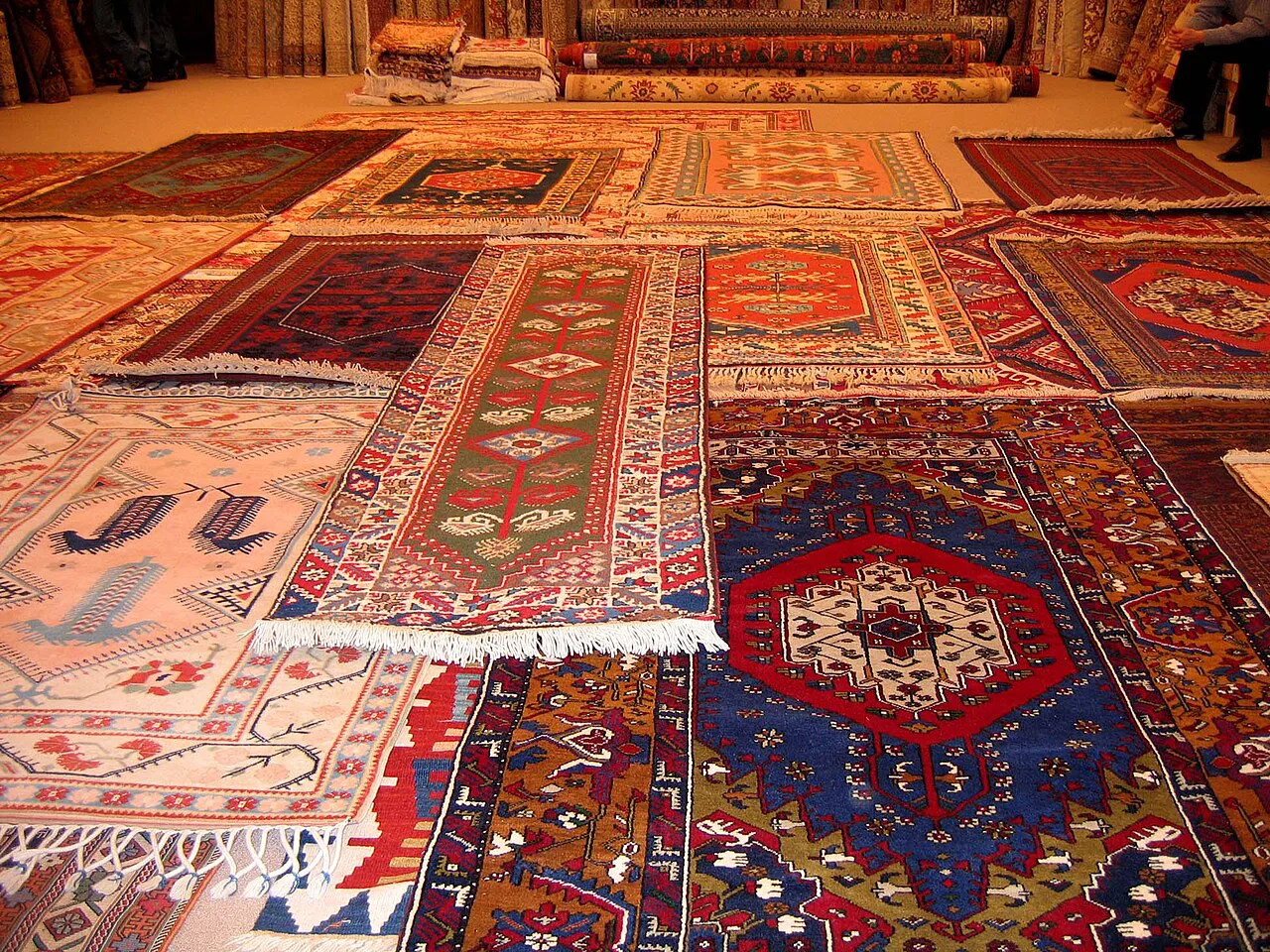
Retail prices vary enormously with size and material. In UK stock listings, a vintage handmade Turkish rug of about 232 by 133 centimetres was listed at 795 pounds, while a silk Hereke piece of 76 by 53 centimetres was listed at 1,500 pounds; the silk is far smaller for far more money.
Antique and semi-antique pieces sit at the top of the range, with an antique Turkish Ushak rug of 370 by 310 centimetres listed at 5,975 pounds. Read any figure as a seller's asking price for that specific piece, not as a market rate for the type.
A cheaper construction exists too: machine-washable Turkish-style rugs are sold in standard sizes at household prices, with one UK retailer showing a range from 92 pounds to 869 pounds across its Turkish rugs. If your priority is a family-friendly floor covering rather than a hand-knotted investment, that is a fair comparison to make.
Also budget for what happens after purchase. A handmade silk rug can be resold at a profit later, and antique oriental rugs are described as highly valuable, but those claims assume condition and provenance are sound, so keep any documentation the seller provides.
Buying a carpet from the UK: delivery, returns and what to confirm before paying
A UK specialist advertises free UK delivery and 28-day returns, which gives you a window to check a carpet against your room before committing. Confirm both terms in writing at the point of order, because they are the seller's policy rather than a rule covering every dealer.
Before paying, ask for the origin name, the exact dimensions, the knotting method, the materials of pile, weft and warp, and whether the dyes are natural. Those five answers let you compare one seller's offer with another's and with what you saw in Turkey, rather than relying on a single description.
Which carpet should you actually buy?
Choose by the room first: measure the space, then look only at pieces in that size. Within the size, pick the motif you want to live with, and use the underside and the knot density to decide between two carpets that both appeal.
Leave silk and antique pieces for when you have a specific reason to buy one, and treat machine-washable rugs as a separate purchase with different expectations. If you are still at the planning stage of a Turkey trip, the Turkish bath and Turkish ceramics guides cover the other craft traditions you will meet in the same towns.
Explore more Turkey guides
Frequently Asked Questions
What is special about Turkish carpets?
They come from one of the oldest rug-making traditions, with production dating to the medieval Seljuk period, and they are woven across many regions of Anatolia under names such as Ushak, Kayseri, Hereke, Konya and Milas. Designs are symbolised rather than purely decorative, and village weavers work from their own inspiration, so pieces vary more than copying would allow.
Are Turkish carpets good quality?
Quality depends on the individual piece rather than the country of origin. Look at whether it is hand-knotted by turning it over, how densely it is knotted, and what the pile, weft and warp are made of; wool pile on wool or on cotton is common, silk is used in large numbers of pieces and is priced steeply, and natural dyes are more valuable than synthetic ones.
How much should a Turkish carpet cost?
There is no single figure: price tracks size, material and knot density. UK stock listings show a vintage handmade rug of roughly 232 by 133 centimetres at 795 pounds, a far smaller silk Hereke piece at 1,500 pounds, and an antique Ushak of 370 by 310 centimetres at 5,975 pounds, while machine-washable Turkish-style rugs sit in a much lower household range.
Where can I buy Turkish carpets?
In the UK, specialist rug dealers sell Turkish carpets by origin name both online and in store, and some state free UK delivery and a 28-day return window; confirm those terms yourself before ordering. In Turkey, carpets are sold in the weaving towns and resort bazaars, so ask for the specific origin name rather than a general Turkish rug.
Sources
- Turkish Rugs | Turkish Carpets | Antique Turkish Rugs & Carpets London - Rug Store
- Turkish Rugs Handmade | Free UK Delivery – Little-Persia
- Turkish Rugs | Turkish Carpets | Antique Turkish Rugs London Turkish Rugs | Turkish Carpets | Antique Turkish Rugs London
- Turkish Washable Rugs | Durable & Elegant Designs – Rugette
Notes for your next Turkey trip
Optional updates when we add or correct a town guide.
You might also like
Continue reading
More guides you'll find useful