Turkish Breakfast: What Kahvaltı Is and How to Eat It
Turkish breakfast, or kahvaltı, is a shared spread of bread, cheese, olives, eggs and tea rather than one dish. Here is what arrives and how to order it.
On this page
Turkish breakfast, or kahvaltı, is a spread of small plates shared across the table rather than one plated dish, and that single fact explains most of what follows. You build each bite from bread, cheese, olives, sliced vegetables, jams and honey, usually with one hot egg dish and plenty of tea.
This guide covers what lands on the table, the egg dishes and pastries worth ordering, and how to decide between a full set spread and a short à la carte order. It also separates the sit-down weekend spread from the bakery breakfast of simit and tea that many people eat on ordinary mornings, so you can match the meal to your appetite and your day.
What Turkish breakfast is: a shared table of small plates
A Turkish breakfast is built on contrast rather than a single main course: salty cheese next to sweet jam, warm bread next to cool cucumber, rich kaymak next to sharp olives. Dishes arrive in the middle of the table and everyone picks from each one, so the meal works best with at least two or three people eating.
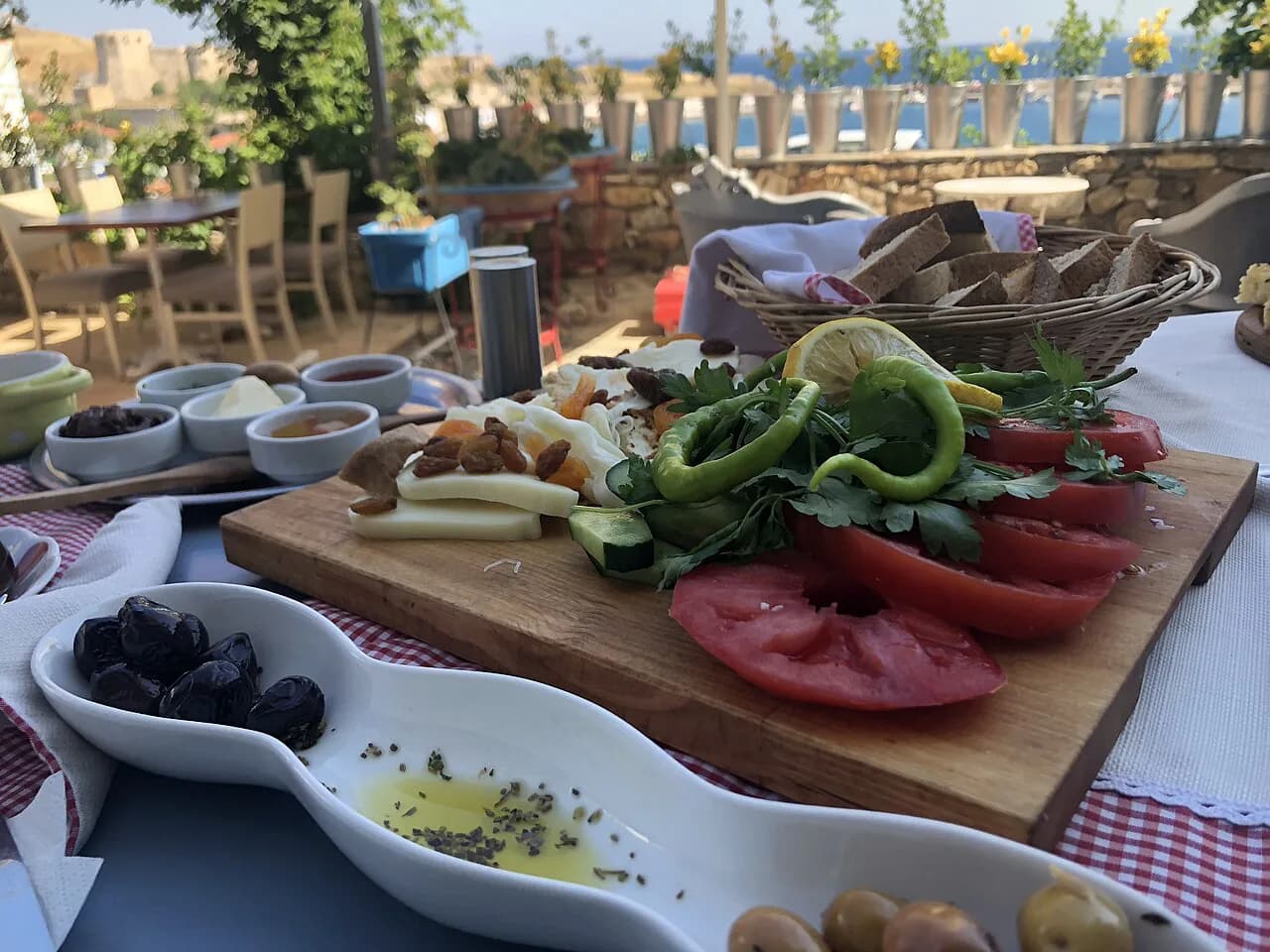
The building blocks are bread, white cheese, kaşar, olives, tomatoes, cucumbers, butter, jams and honey, and a table without an egg dish is unusual. If you only take one thing from this section, take the pace: this is a meal to sit over, not to finish in ten minutes before a museum slot.
For a wider view of how these plates fit into Turkish eating across the day, from meze to grilled dishes, our guide to Turkish food covers the main dishes you will meet on the same trip.
What kahvaltı means and why tea, not coffee, is the breakfast drink
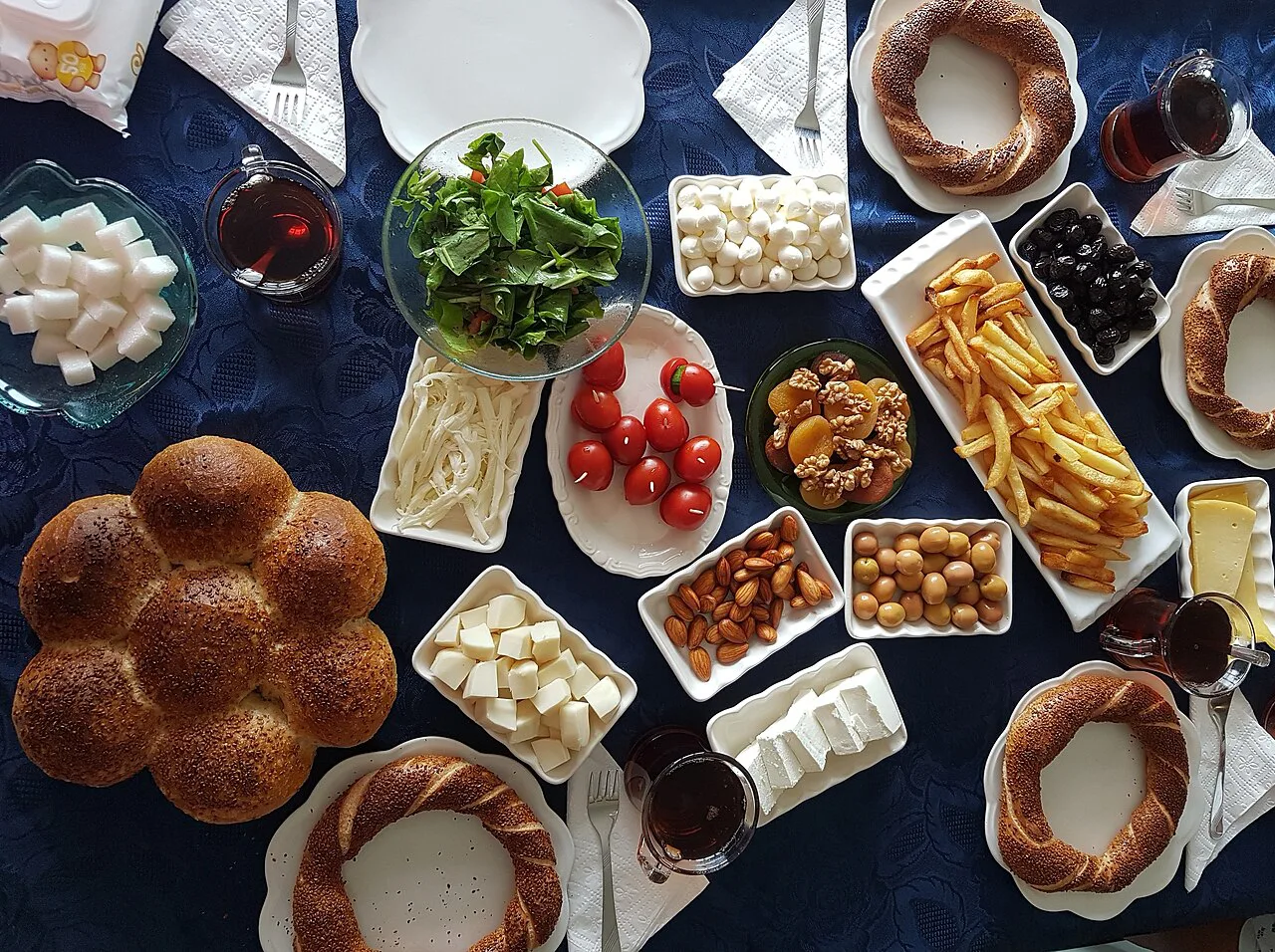
Kahvaltı is simply the Turkish word for breakfast, and it comes from kahve altı, meaning before coffee, because Turkish coffee is usually drunk after the meal rather than with it. Tea, or çay, is the breakfast drink, poured again and again while everyone stays at the table.
How do you eat Turkish eggs? Menemen, the usual hot dish, is soft eggs cooked with tomato and green pepper and served as part of the shared table, eaten with bread and the cheeses, olives and other plates alongside. Sucuklu eggs, eggs cooked with the beef sausage sucuk, are another hot option on fuller spreads, and both are mopped up with bread rather than eaten on their own.
What are some ideas for a Turkish brunch at home? Build the table from contrast rather than cooking one dish: bread, white cheese, kaşar, olives, sliced tomatoes and cucumber, a jam or two, honey with kaymak if you can find it, and one hot egg dish such as menemen. Add a savoury pastry like börek or a sesame ring if you want the fuller spread, and serve tea throughout rather than coffee.
If you want to understand the tea side of the table before you sit down, our guide to Turkish tea explains the tulip-shaped glass and the strength. It is worth knowing that a small glass is refilled without asking, so a slow breakfast can run to several glasses per person.
The core table: bread, white cheese, kaşar, olives, tomatoes, cucumbers, jam, honey and kaymak
Bread and tea start most tables, followed by white cheese, kaşar, olives, tomatoes, cucumbers, butter, jams, honey and kaymak, the clotted cream that turns honey into the best bite of the morning. Bread quality matters more than the size of the spread, so look at what is put down first.
Alongside the core plates you may see börek, pişi, gözleme, roasted peppers, tahini-molasses or a spicy spread such as acuka. None of these are compulsory, and a good table is about variety and sharing rather than covering every surface.
Egg dishes worth ordering, including menemen and sucuklu eggs
Menemen is soft eggs cooked with tomato and green pepper, and it is the standard hot dish on a Turkish breakfast table. The eggs are added unbeaten to the softened peppers and tomatoes, which gives a looser, spicier result than scrambled eggs, and sausage or cheese sometimes goes in as well.
Fuller tables may also include sucuklu eggs, eggs cooked with the garlicky beef sausage sucuk, alongside dishes such as börek and gözleme. If menemen is the one dish you want to understand properly, our guide to menemen walks through how it is made and how it is served.
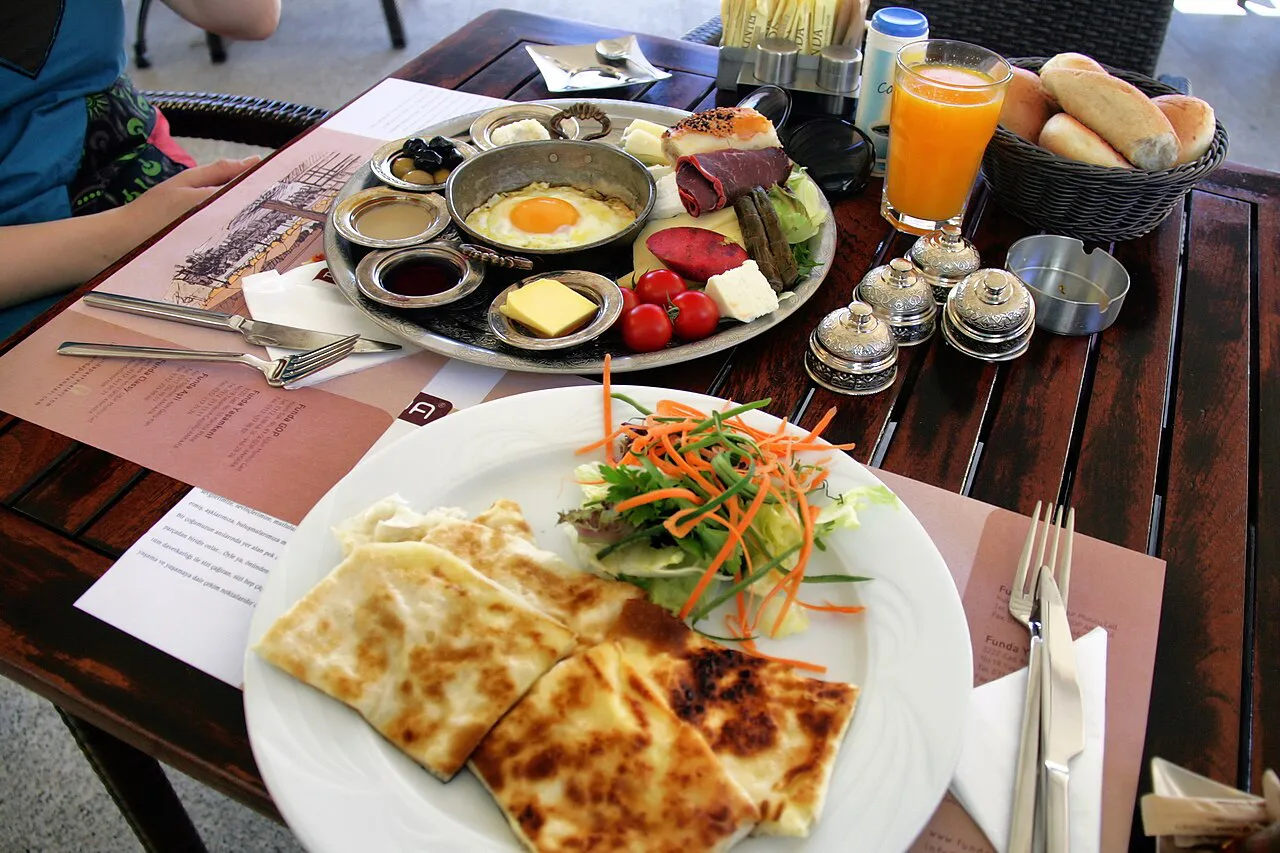
Pastries and breads: simit, poğaça, börek, gözleme, bazlama and pişi
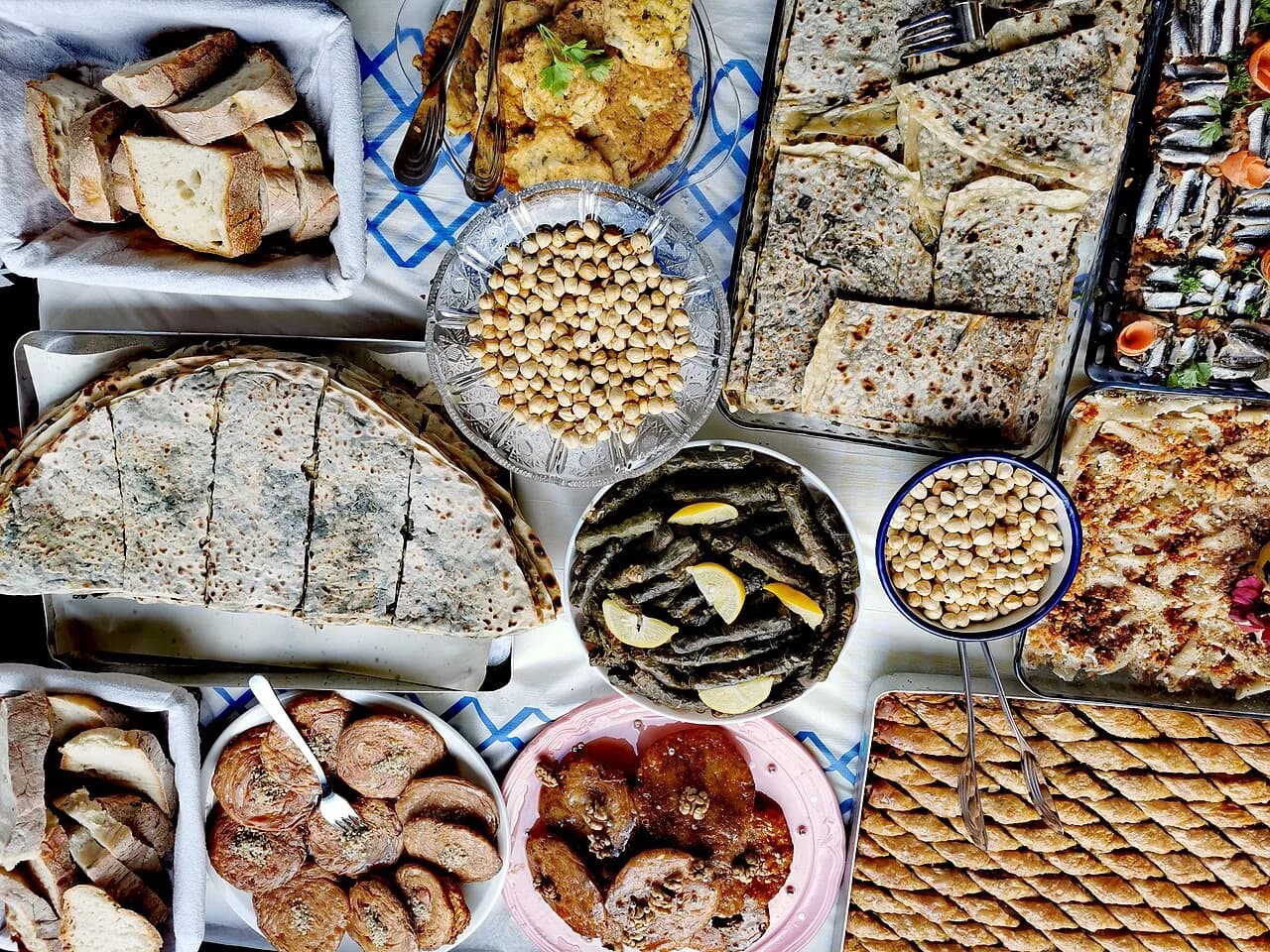
Bread and savoury pastries are a large part of the meal, served alongside cheese, olives, eggs and dips. Simit is the sesame-coated ring, poğaça a soft savoury bun often filled with cheese or potato, and börek thin flaky yufka pastry with fillings such as cheese, spinach, potato or meat.
Bazlama is a fluffy flatbread best eaten warm, gözleme is a filled flatbread, and pişi are small fried doughs that turn up on bigger spreads. Çiğ börek is a thin, deep-fried pastry with minced beef, onion and spice, brought to Eskişehir by Crimean Tatars who migrated there.
If you want the full story of the sesame ring, our guide to simit covers how it is made and eaten. For the wider pastry tradition, including the syrup-soaked sweets that come later in the day, see our Turkish desserts guide.
Serpme kahvaltı versus ordering à la carte
Serpme kahvaltı is the shared set spread, with many small dishes brought to the table at once. It suits groups, first-timers who want to see the full range, and mornings when you plan to sit for an hour or more, but it can produce waste if the kitchen relies on quantity over quality.
Ordering à la carte gives solo diners and couples with smaller appetites more control and less waste. A sensible short order is tea, mixed cheese, menemen, bread or simit and honey with kaymak, adding another hot dish only if you are still hungry; if a venue pushes only giant set menus, ask whether you can order individual dishes instead.
What a Van breakfast adds and when it is worth the extra time and appetite
Van kahvaltısı comes from eastern Turkey and is known for heavier dairy, more regional dishes and greater variety than a standard neighbourhood café breakfast. Look for herb cheeses, murtuğa, kavut, local butter and honey with kaymak, often served as a large shared table designed for groups.
Choose it when you are hungry, have time and can share, since the point is the breadth of the table rather than a quick bite. Solo travellers and light eaters usually do better with a bakery or an à la carte café order.
Breakfast on the go: what to buy from a bakery or street cart
Not every Turkish breakfast is a long table of small plates. On working mornings many people buy simit with cheese and tea from a bakery, street cart or small café, and poğaça, boyoz, açma, börek and pişi are also common quick choices.
These bakery breakfasts are easy to carry and filling, and they usually come with tea rather than coffee. If you are heading out early to a site or a boat, this is the practical option and it leaves your appetite free for a proper lunch.
How long a Turkish breakfast takes and why weekend mornings are busier
Weekday mornings are generally calmer and more practical, while weekend breakfast is slower, more social and much busier in popular neighbourhoods. If you want a quieter table, go early or pick a weekday, and allow longer if you are ordering the full spread.
A set spread is a sitting, not a stop: expect to be at the table for a good while once the plates start arriving. Build the meal into your day rather than squeezing it before a timed ticket, especially at weekends when service slows under the volume of tables.
What to check on the table: a freshness test for a set spread
Bread, tomatoes, tea and cheese tell you most of what you need to know. If the basics look tired, the rest of the breakfast usually will too, so check these four before committing to a large set menu.
Fresh bread and strong tea make a simple breakfast better than an oversized set menu with average ingredients. That is the trade-off worth holding on to when a venue offers a huge spread at a keen price: a shorter, fresher table usually eats better.
What to drink and what to order after the plates
Tea is the breakfast drink, and it is poured throughout the meal rather than served once. The tulip-shaped glass and the strength of the brew are worth knowing before you sit down at a long table.
Turkish coffee comes after breakfast, not during it, and it is usually enjoyed once the plates are cleared rather than with the meal. Our guide to Turkish coffee explains the serving, which is useful if you plan to linger at the table.
If the table finishes with something sweet, baklava, candied walnuts and oranges appear on richer spreads, and the dessert tradition runs well beyond breakfast. Our guide to Turkish desserts covers the syrup pastries and other sweets you will see in the same shops.
Set spread or bakery counter?
Choose the serpme spread when you have company, time and an appetite for the full range of plates, and choose the bakery counter when you want simit, börek and tea without the sitting. The freshness test is the same either way: look at the bread, tomatoes, tea and cheese before you decide how much to order.
Ask what the set price includes before you commit if you are ordering for a group, and check individual prices on the menu where they are listed, since Turkish lira prices move quickly. For the wider menu beyond breakfast, start with our guide to Turkish Food and work through the dishes you want to try on the same trip.
Explore more Turkey guides
Frequently Asked Questions
How do you eat Turkish eggs?
Menemen, the usual hot dish, is soft eggs cooked with tomato and green pepper and served as part of the shared table, eaten with bread and the cheeses, olives and other plates alongside. Sucuklu eggs, eggs cooked with the beef sausage sucuk, are another hot option on fuller spreads, and both are mopped up with bread rather than eaten on their own.
What are some ideas for a Turkish brunch at home?
Build the table from contrast rather than cooking one dish: bread, white cheese, kaşar, olives, sliced tomatoes and cucumber, a jam or two, honey with kaymak if you can find it, and one hot egg dish such as menemen. Add a savoury pastry like börek or a sesame ring if you want the fuller spread, and serve tea throughout rather than coffee.
Sources
Notes for your next Turkey trip
Optional updates when we add or correct a town guide.
You might also like
Continue reading
More guides you'll find useful