Turkish Coffee: What It Is and How to Drink It
Turkish coffee is finely ground coffee simmered unfiltered in a cezve and served in small cups, grounds and all. Here's how it's brewed and sweetened.
On this page
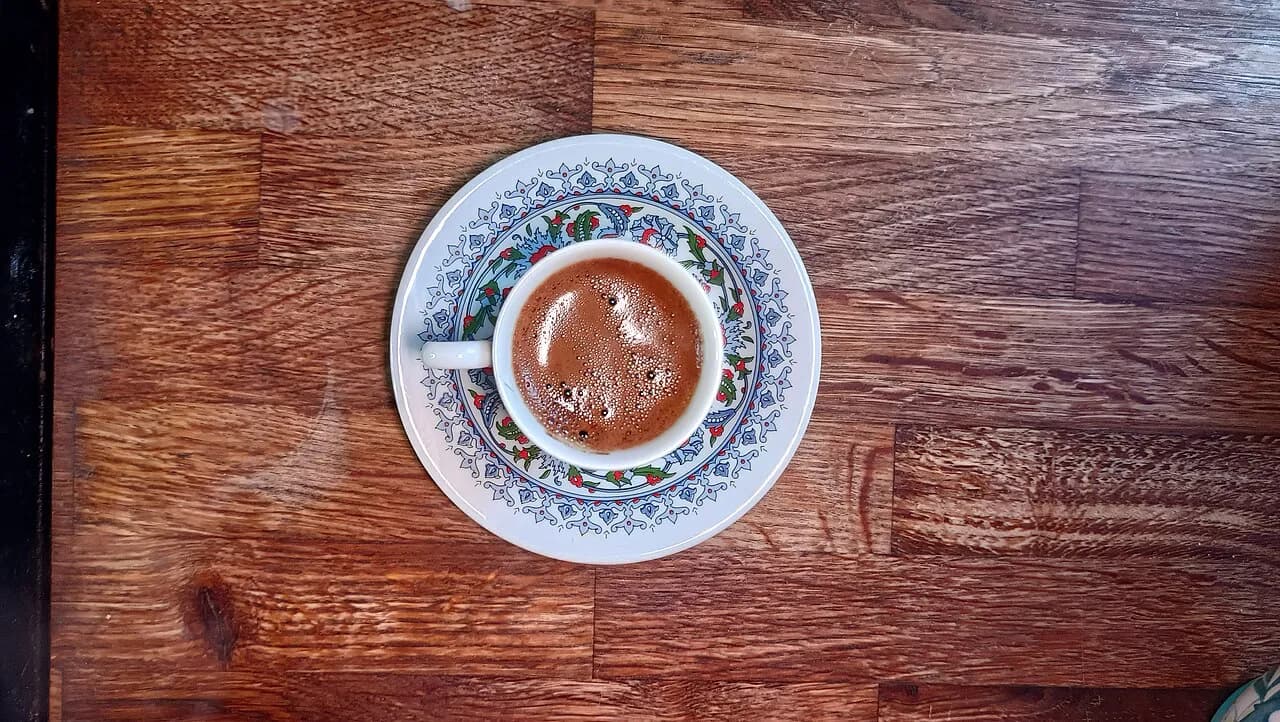
Turkish coffee is not a type of bean but a way of making coffee: beans ground to a flour-like powder, simmered with water and sugar in a small pot, and served unfiltered in a small cup. The grounds settle at the bottom rather than being strained out, which is why the drink tastes thicker and more intense than a filter or cafetière cup. This guide covers the pot and grind you need, the Turkish sugar levels to order, how the brew actually works, and how to drink it in a café in Turkey without breaking the etiquette.
What Turkish coffee is, and what it is not
The drink describes the preparation, not the origin of the bean. Coffee goes into a long-handled pot with water and sugar, is heated until it foams, and is poured straight into small cups with the sediment left in. Any reasonable coffee can be used as long as it is ground fine enough and brewed this way, so there is no special Turkish roast to hunt down.
Coffee arrived in the Ottoman Empire in the fifteenth century and became embedded in daily life: the Turkish word for breakfast, kahvaltı, literally means before coffee, and kahverengi, the word for brown, means the colour of coffee. Treat those as evidence of how central the drink is rather than as a history lesson. What matters at the table is that the cup is small, strong and served with water.
The kit: cezve, grind and cups
The pot is called a cezve, sometimes an ibrik, and is traditionally made of copper or brass. Its narrow neck makes the coffee foam quickly over the heat, which is exactly the effect you want. A small, narrow saucepan works if you have no cezve, but a wide pan makes the foam harder to control.
What is the pot used to make Turkish coffee called? It is a cezve, also known as an ibrik, traditionally made of copper or brass. Its narrow neck encourages the coffee to foam quickly, which is why a small narrow saucepan is the closest substitute.
Is Turkish coffee served with milk? No. It is brewed with water and served black in a small cup, with sugar added during brewing and a glass of water on the side.
How much coffee should I use per cup at home? Around one rounded tablespoon of finely ground coffee per 4 fluid ounces of water, or a ratio of one part coffee to twelve parts water. Weighing the coffee gives a more consistent result than measuring by spoon.
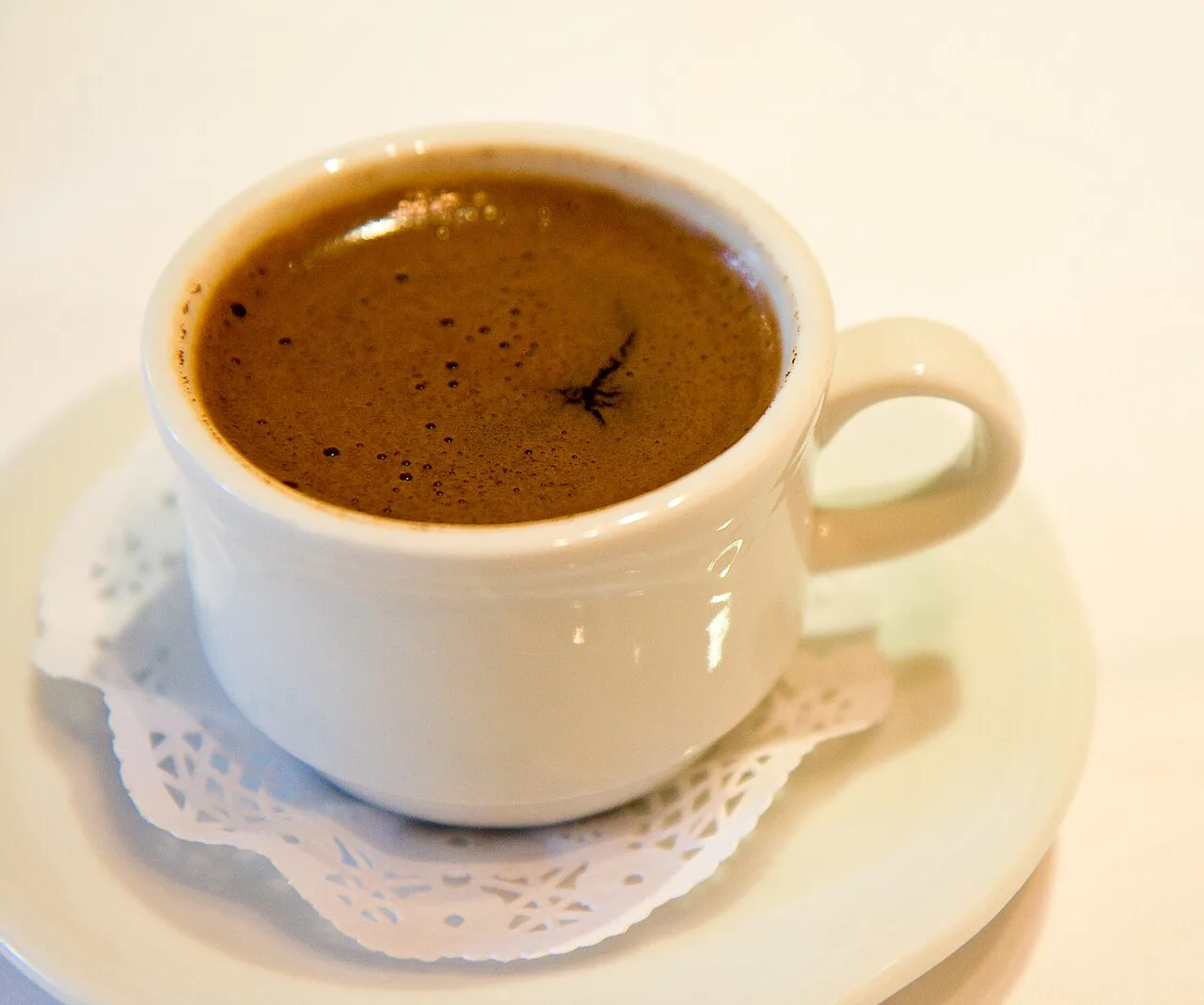
The grind is the other non-negotiable. Beans are ground to a consistency like powdered sugar or fine flour, which is much finer than espresso. Buy them pre-ground for Turkish coffee or ask a roaster to grind them that way, since a domestic grinder often cannot get fine enough. The coffee is served in small demitasse cups, much like espresso.

Sugar levels: how to order your cup
Sugar goes into the cezve before brewing, not into the cup afterwards, because stirring a poured cup would disturb the grounds at the bottom. That is why the sweetness has to be chosen in advance, and why the four Turkish orders are worth learning before you sit down. Sade means no sugar at all, az şekerli is a half teaspoon, orta şekerli is a teaspoon and çok şekerli is one to two teaspoons.
If you are unsure, orta şekerli is the middle setting and the safest first try. Sade drinkers get a cup that is genuinely bitter and thick, closer to a strong espresso than a milky coffee. In a café, saying the word on its own is usually enough, but pointing at the menu works too.
How the brew works: simmer, foam, rest, pour
Water and coffee go into the cezve over a medium heat until the liquid begins to simmer and foam. The pot comes off the heat briefly, the surface is stirred, and the cycle repeats several times until the coffee thickens to an almost syrupy texture. Then the pot rests for a few minutes so the grounds settle at the bottom.
The pour is slow and careful, with the cezve held at an angle, leaving as much sediment in the pot as possible. The two common failures at home are boiling over, which makes a mess on the hob, and pouring too fast, which puts grit into the cup. Watch the pot constantly, and never walk away from it.
Why you do not stir it once it is poured
The thick layer of grounds at the bottom of the cup is a feature, not a fault. Stirring the cup lifts that sediment into the liquid, so you end up chewing the drink rather than sipping it. Leave the last mouthful or so in the cup and you avoid the sludge entirely.
The behaviour of the grounds is also why the sugar must be decided beforehand. Nobody adds a spoonful to a poured cup without stirring, and stirring spoils the texture. If you want it sweeter than you ordered, ask for a fresh cup rather than rescuing the old one.
How to drink it: sips, water and something sweet
Drink Turkish coffee in small sips, with a glass of water alongside as a palate cleanser between mouthfuls. It is usually served with extra sweetener on the side, and in many Middle Eastern countries it is a symbol of hospitality. The cup is small because the coffee is so intense, so treat it as a pause rather than a long drink.
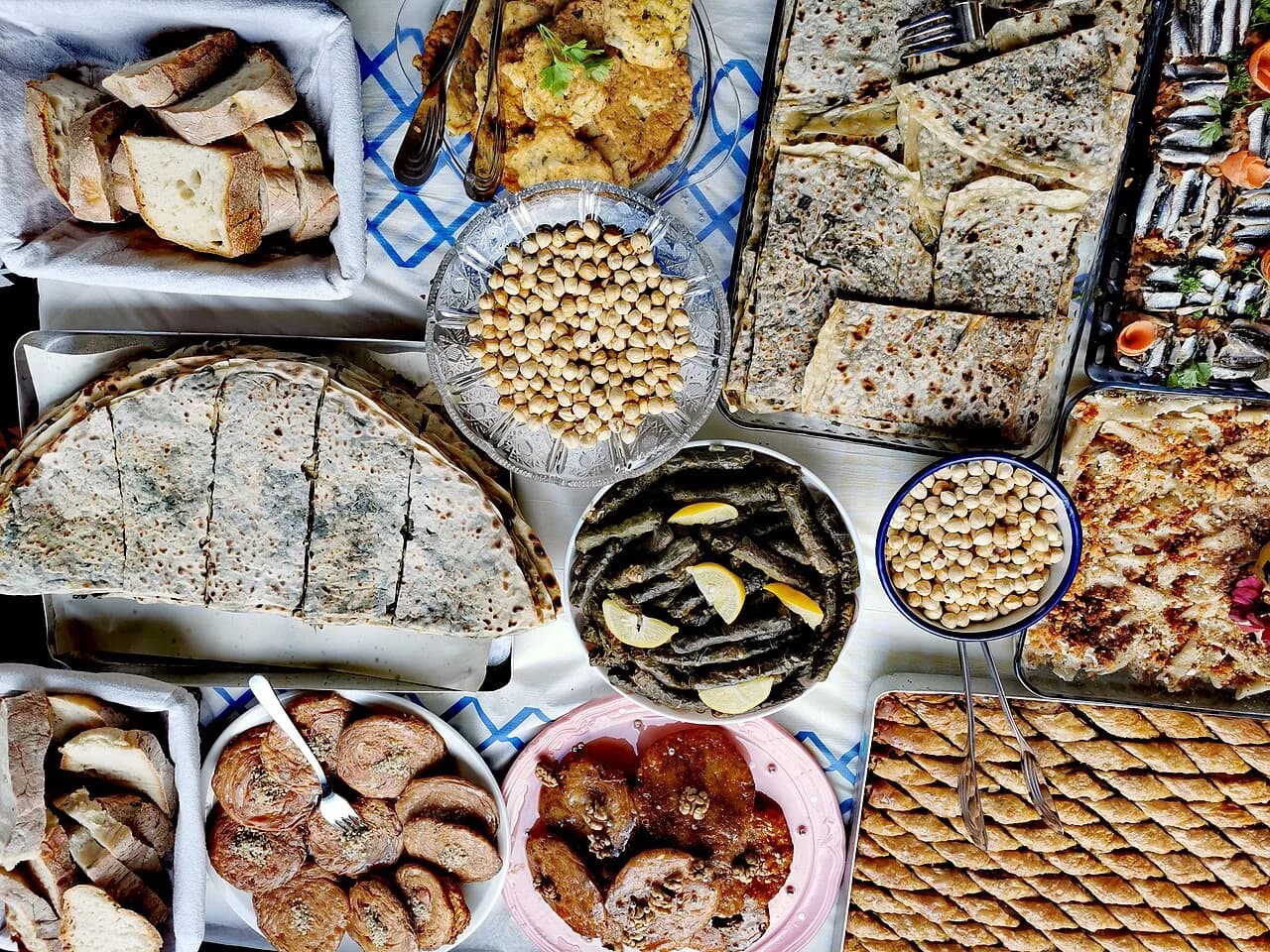
At breakfast it can follow the spread of a full Turkish breakfast, cheeses, olives, eggs and bread, and it makes a sensible finish to a meal built around Turkish food such as Sigara böreği or İmam bayıldı. In the evening it is often the final course after dinner. Because it is so strong, a small cup after a heavy meal is usually plenty.
Milk and caffeine, answered plainly
Turkish coffee is made with water, not milk, and is not a milk drink in the way a latte or flat white is. Milk-based coffees, or a cup of Turkish tea, are the usual alternative if you do not want the black, intense version. Adding cold milk to a poured cup also cools it fast and muddies the texture, so it is not a normal order.
Expect a strong caffeine hit for the volume, since the coffee is brewed very concentrated and served in a tiny cup. Anyone watching their intake should treat one small cup as a substantial dose rather than a light pick-me-up. It is not a drink to order three of in an afternoon.
Making it at home: ratios and the usual mistakes
A workable starting ratio is one part coffee to twelve parts water, or about one rounded tablespoon of ground coffee per 4 fluid ounces of water. Weigh it if you have scales, since volume measures vary with how finely the coffee is ground. For a 350 ml pot that comes to roughly 30 g of coffee.
For sweetness, about a teaspoon of unrefined cane sugar per serving is a reasonable starting point, adjusted to the sugar levels above. Spices such as cardamom or cinnamon are optional; a small pinch per serving is the usual approach. A cezve with a narrow neck, a fine grind and constant attention to the heat will prevent most failures.
Where it fits in a Turkish day
Coffee is woven into the rhythm of the day, from breakfast onwards and again after dinner. Practically, that means you will find it offered at almost every hour in cafés, restaurants and homes, so it is easy to try without planning. Pair it with a sweet pastry or a piece of Turkish delight at the end of a meal, or with something from a tray of Turkish desserts.
If you are ordering a second round for a table, keep the sugar orders straight: sade for one person and çok şekerli for another are very different cups. It is normal to ask for a glass of water with each round.
What to order in a café in Turkey
Ask for Turkish coffee and give the sugar word: sade, az şekerli, orta şekerli or çok şekerli. That single word covers the whole order, and the cup arrives with water and often extra sweetener on the side. If you want it plainer still, ask for it without spice, which is the default anyway.
If coffee is not what you want, a glass of Turkish tea is the other staple order; milk-based coffees are the usual alternative for those who prefer a milky drink. A cup of Turkish tea after a meal follows the same social pattern as coffee but with far less caffeine. Whichever you choose, the ritual of sitting for a small cup is the point.
Choose your sugar word before you sit down
The one thing to fix before you order is the sugar: sade, az şekerli, orta şekerli or çok şekerli, decided in advance because it goes into the pot. Everything else follows: a small cup, a glass of water, no stirring and a slow pour that leaves the grounds behind. Order the middle setting first and adjust next time, and treat coffee as the short, strong pause that ends a Turkish meal.
Explore more Turkey guides
Frequently Asked Questions
What is the pot used to make Turkish coffee called?
It is a cezve, also known as an ibrik, traditionally made of copper or brass. Its narrow neck encourages the coffee to foam quickly, which is why a small narrow saucepan is the closest substitute.
Is Turkish coffee served with milk?
No. It is brewed with water and served black in a small cup, with sugar added during brewing and a glass of water on the side. If you want a milk drink, order a different coffee.
How much coffee should I use per cup at home?
Around one rounded tablespoon of finely ground coffee per 4 fluid ounces of water, or a ratio of one part coffee to twelve parts water. Weighing the coffee gives a more consistent result than measuring by spoon.
Why are there grounds at the bottom of the cup?
Turkish coffee is poured unfiltered, so the fine sediment settles at the bottom of the cup during the rest before pouring. Leave the last sip and you avoid the grit.
Sources
Notes for your next Turkey trip
Optional updates when we add or correct a town guide.
You might also like

Continue reading
More guides you'll find useful