Manti: What Turkish Dumplings Are and How They're Served
Manti are small Turkish dumplings filled with minced meat and onion, served with garlic yoghurt and a red pepper butter sauce. Here is what to expect on your plate.
On this page
Manti are small Turkish dumplings made from a stiff egg-and-flour dough wrapped around a minced meat and onion filling. The dumplings themselves are mild; the plate is defined by the cold garlic yoghurt, the melted butter and the red pepper sauce spooned over them. This guide covers what arrives at the table, how the parcels are made and cooked, the quicker yalancı mantı alternative, and how the dish fits into a Turkish meal alongside meze and grilled dishes.
What manti are
Think of manti as the Turkish branch of a dumpling family that stretches across Central Asia. The parcels are typically much smaller than Italian ravioli or tortellini, and that size is the point: each spoonful should carry several dumplings along with sauce. The name itself has Turkic roots, and the dish appears in various forms from Turkey through Uzbekistan, Azerbaijan and Armenia.
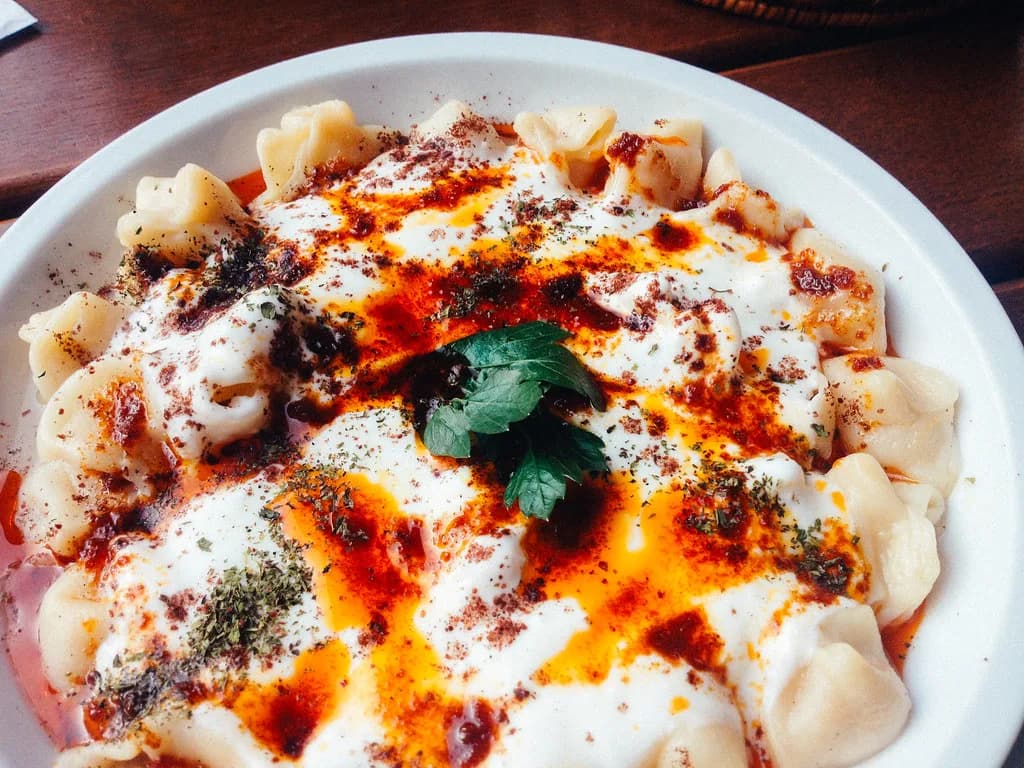
If you order manti in a restaurant, expect a shallow bowl rather than a flat plate. The dumplings sit in a pool of garlicky yoghurt, with a butter and red pepper sauce drizzled over the top. Sumac, dried mint or chopped parsley usually finish the dish. A spoon works better than a fork for catching the sauce.
What is on the plate
The sauces are not garnishes but the identity of the dish. A generous spoonful of yoghurt sharpened with garlic goes on first, then a melted butter or olive oil sauce, often with red pepper paste stirred in until it darkens, and finally a dusting of sumac, dried mint or parsley. Some versions use a walnut sauce instead of yoghurt, particularly in homes where the cook wants a richer, nuttier finish.
What is manti food? Manti are small Turkish dumplings made from a stiff egg-and-flour dough filled with minced meat and onion. They are boiled or steamed and served with garlic yoghurt, melted butter and a red pepper sauce, often finished with sumac, dried mint or parsley.
What is the meaning of manti? The word has Turkic roots, linked to manta or mantu in various Turkic languages, and refers to the filled dumpling itself. The dish appears across Central Asia and the Caucasus as well as in Turkey, with each region giving it its own size and sauce.
Are manti the same as other dumplings? Manti share the filled-dough idea with other dumplings, but the Turkish version is much smaller than Italian ravioli or tortellini and is defined by its cold garlic yoghurt and red pepper butter sauce.
The red pepper sauce is where the heat lives. Aleppo chilli flakes or a red bell pepper paste are stirred into hot oil until they take on colour, which gives the plate its deep orange hue and a mild, fruity warmth rather than a sharp burn. If you are sensitive to chilli, ask for the sauce on the side; the dumplings and yoghurt are mild on their own.
Beef or lamb: what goes into the filling
Most recipes call for minced beef, lamb or a mixture of the two, bound with grated onion, salt and pepper. Some cooks add parsley, paprika, sumac or Aleppo chilli powder to the meat, but many leave the filling plain because the sauces carry the flavour. Vegetarian versions exist, though they are less common on restaurant menus than the meat version.
The dough is closer to pasta than to bread: plain flour, a little salt, eggs and just enough water to bring it together into a soft but slightly stiff ball. Resting the dough for about half an hour makes it easier to roll thin without tearing. That stiffness matters because the parcels need to hold their shape through boiling or steaming without opening at the seams.
How manti are made
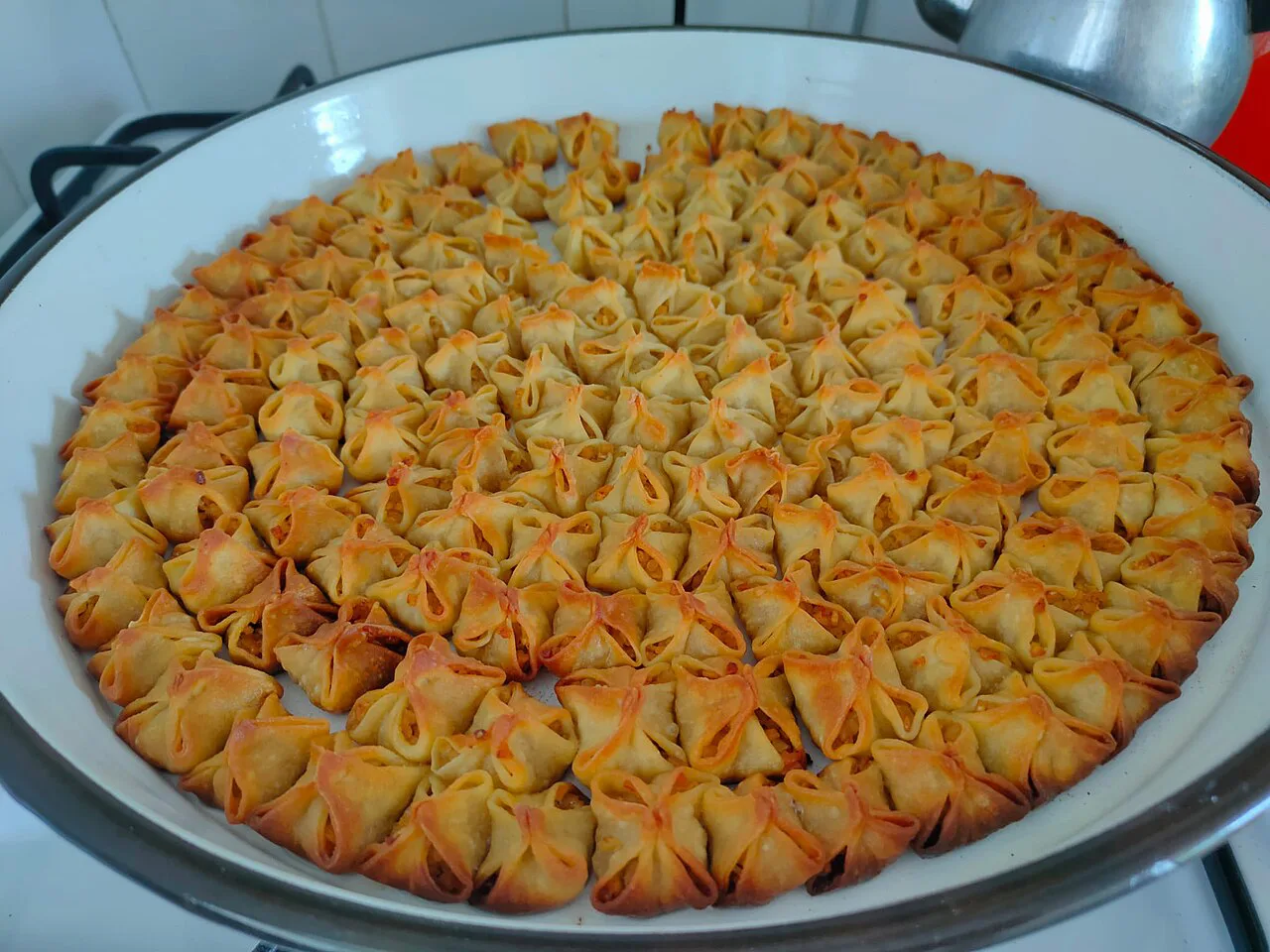
Making manti is a group job in most Turkish homes. The dough is rolled out in batches and cut into small squares, each one topped with a chickpea-sized piece of filling, then pinched closed at the corners. The folding takes time, and recipes often suggest gathering family or friends around the table to speed it up. A tray of a few dozen parcels can take an hour or more to shape by hand.
For a machine-assisted version, the dough is kneaded for five minutes in a mixer, rested for thirty minutes under a damp cloth, then rolled through a pasta attachment down to a thin setting before being cut into rounds. That yields a more uniform parcel, but the filling and folding are still done by hand. The resting step is not optional: skip it and the dough springs back as you roll.
How they are cooked
Boiling is the most common method in home kitchens. The parcels go into a large pot of lightly salted water in batches, and they are ready when they float to the surface. Steaming is the other route: a multi-tiered metal steamer called a mantovarka is traditional, and the dumplings cook for around forty to forty-five minutes until piping hot inside. Either way, drain them well before saucing, or the yoghurt will slide off.
Yalancı mantı, or 'fake manti'
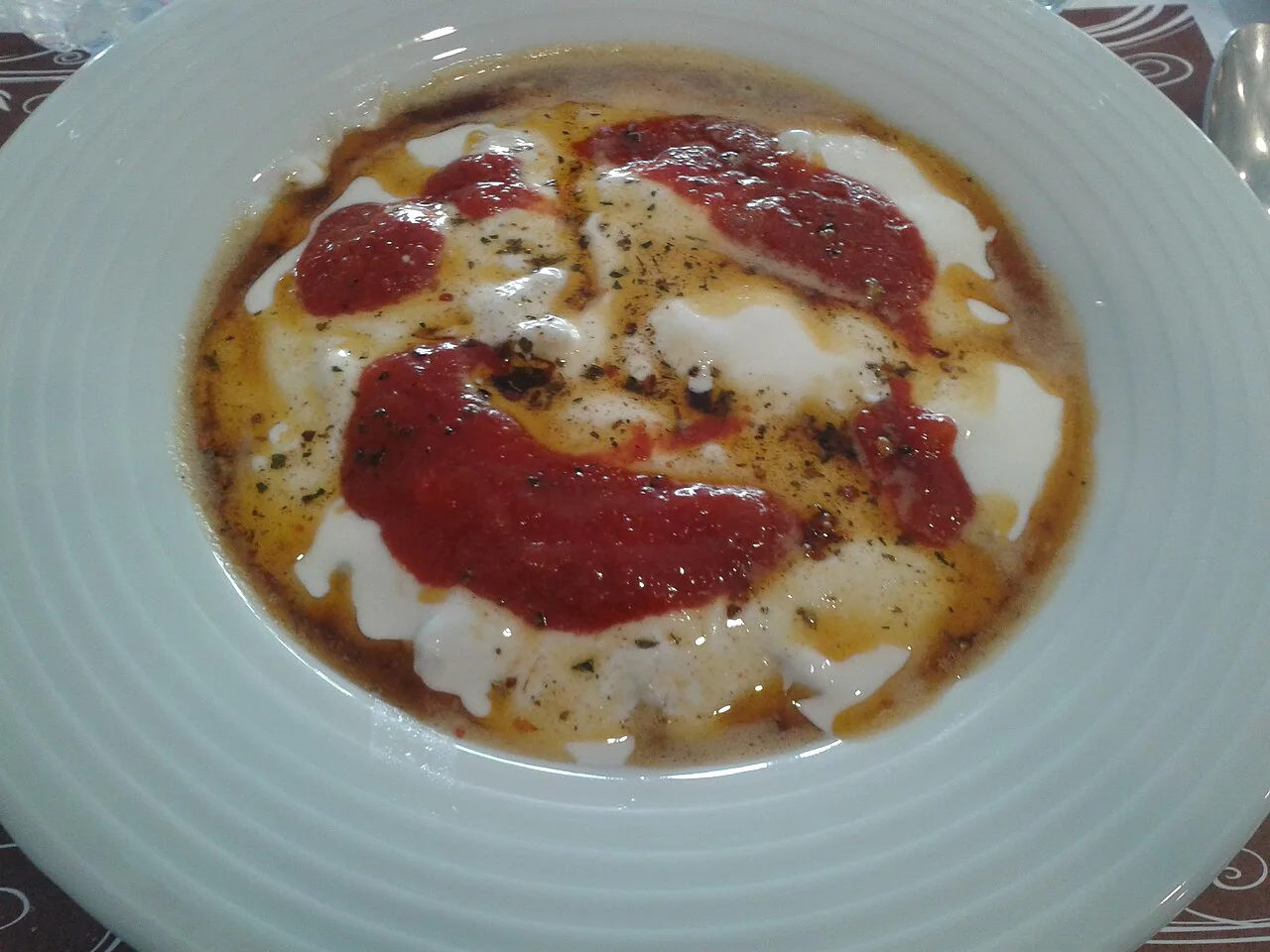
Yalancı mantı translates as fake manti, and it is the answer for anyone who wants the flavours without the folding. Instead of handmade parcels, the dish uses pasta shapes, often small tortellini or a similar filled pasta, cooked and then dressed with the same garlic yoghurt and red pepper butter sauce. It is faster, needs less counter space, and still delivers the sauce that makes manti recognisable. If you are cooking at home and short on time, this is the version to attempt first.
Leftovers
Cooked manti keeps in the fridge for two to four days if stored in a tightly covered bowl, according to one recipe source. Reheat gently in a pan or microwave and mix the sauce through before serving. Freezing is possible but not recommended: the yoghurt does not freeze well and the texture of the dumplings changes.
How manti fit into a Turkish meal out
Manti usually appear on a menu as a hot starter or a light main, alongside the cold meze and grilled meats that make up most of a Turkish meal. They are filling, so a single order between two people works well before a main course of grilled fish or kebab. On a menu that includes lahmacun and pide, manti sit in the same home-cooking register: inexpensive, comforting and meant to be shared.
If you are building a meal around Turkish food, manti work as an early-order dish because the sauces set the tone for what follows. They pair naturally with a simple green salad or a plate of sigara böreği, and they leave room for dessert later. Lunch is also a sensible slot for them: a plate of manti alongside the spreads of a serpme kahvaltı feels heavy, so keep the dumplings for a later sitting and start the day with the breakfast spread instead.
What manti are not
Manti share the basic idea of a filled dough parcel with other dumplings, but the Turkish version is distinguished by its sauce: cold garlic yoghurt and a red pepper butter finish. The parcels are also much smaller than Italian ravioli or tortellini, and that size is deliberate, so each spoonful carries several dumplings along with the sauce.
Ordering manti on your next trip
When you see manti on a menu in Turkey, expect a bowl of small dumplings under a blanket of garlic yoghurt and red pepper butter, not a plate of plain pasta. If you are cooking at home, start with the yalancı mantı shortcut using ready-made tortellini, and try the full handmade version with a group once you have the folding technique. Menus in Turkey change their lira prices often, so ask what the bowl costs before you order rather than relying on an old figure.
Explore more Turkey guides
Frequently Asked Questions
What is manti food?
Manti are small Turkish dumplings made from a stiff egg-and-flour dough filled with minced meat and onion. They are boiled or steamed and served with garlic yoghurt, melted butter and a red pepper sauce, often finished with sumac, dried mint or parsley.
What is the meaning of manti?
The word has Turkic roots, linked to manta or mantu in various Turkic languages, and refers to the filled dumpling itself. The dish appears across Central Asia and the Caucasus as well as in Turkey, with each region giving it its own size and sauce.
Are manti the same as other dumplings?
Manti share the filled-dough idea with other dumplings, but the Turkish version is much smaller than Italian ravioli or tortellini and is defined by its cold garlic yoghurt and red pepper butter sauce.
Sources
Notes for your next Turkey trip
Optional updates when we add or correct a town guide.
You might also like



Continue reading
More guides you'll find useful