Künefe: What It Is, How It's Made and What It Tastes Like
Künefe is shredded kadayıf pastry layered with stretchy cheese and soaked in cool lemon syrup. Here is how it is made, served and eaten across Turkey.
On this page
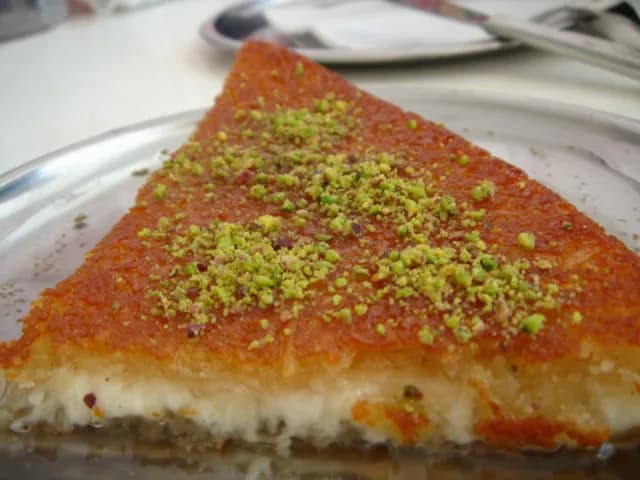
Künefe is a hot dessert of fine shredded pastry strands, called kadayıf, wrapped around unsalted cheese that melts and stretches, then soaked in a cooled sugar syrup sharpened with lemon. It is served straight from the pan in portions, crisp and buttery on the outside, gooey in the middle, and it belongs to the wider family of cheese pastries eaten across the eastern Mediterranean. This guide covers what künefe is made of, the cheeses worth asking for, the two ways it is cooked and what to expect on the plate, and it sits within our wider guide to Turkish food.
What künefe is: kadayıf strands, melted cheese and sugar syrup
Künefe is built from three things: a pastry of hair-fine strands, a layer of melting cheese and a syrup poured over at the end. The strands are pressed into a pan, the cheese goes in the middle, and more strands go on top and are pressed down firmly so the filling is enclosed before cooking.
It is a dessert for a table rather than a single bite, which is why it turns up at celebrations and family gatherings. A home version serves six and takes about twenty minutes to prepare and a further 45 to 50 minutes in the oven, though the eating takes far less time than that.
What künefe is made of: tel kadayıf, cheese, butter, syrup and pistachio
The pastry is tel kadayıf, a dough pushed through a sieve into thin strands that look like vermicelli and turn golden and shredded-wheat-like once soaked in butter and cooked. It is sold ready-made, fresh or frozen, in shops stocking Turkish and Middle Eastern ingredients, and frozen packs need thawing in the fridge the night before.
Is künefe eaten hot or cold? Hot. The pastry comes off the heat and takes cooled syrup immediately, then goes to the table while the cheese is still melted.
Can I make künefe without künefelik peynir? Yes. Use an unsalted cheese that melts and stretches, with fresh mozzarella as the common substitute outside Turkey.
Is künefe the same as baklava? No. Baklava is layers of thin pastry with nuts and syrup, while künefe is shredded kadayıf strands around a cheese filling.
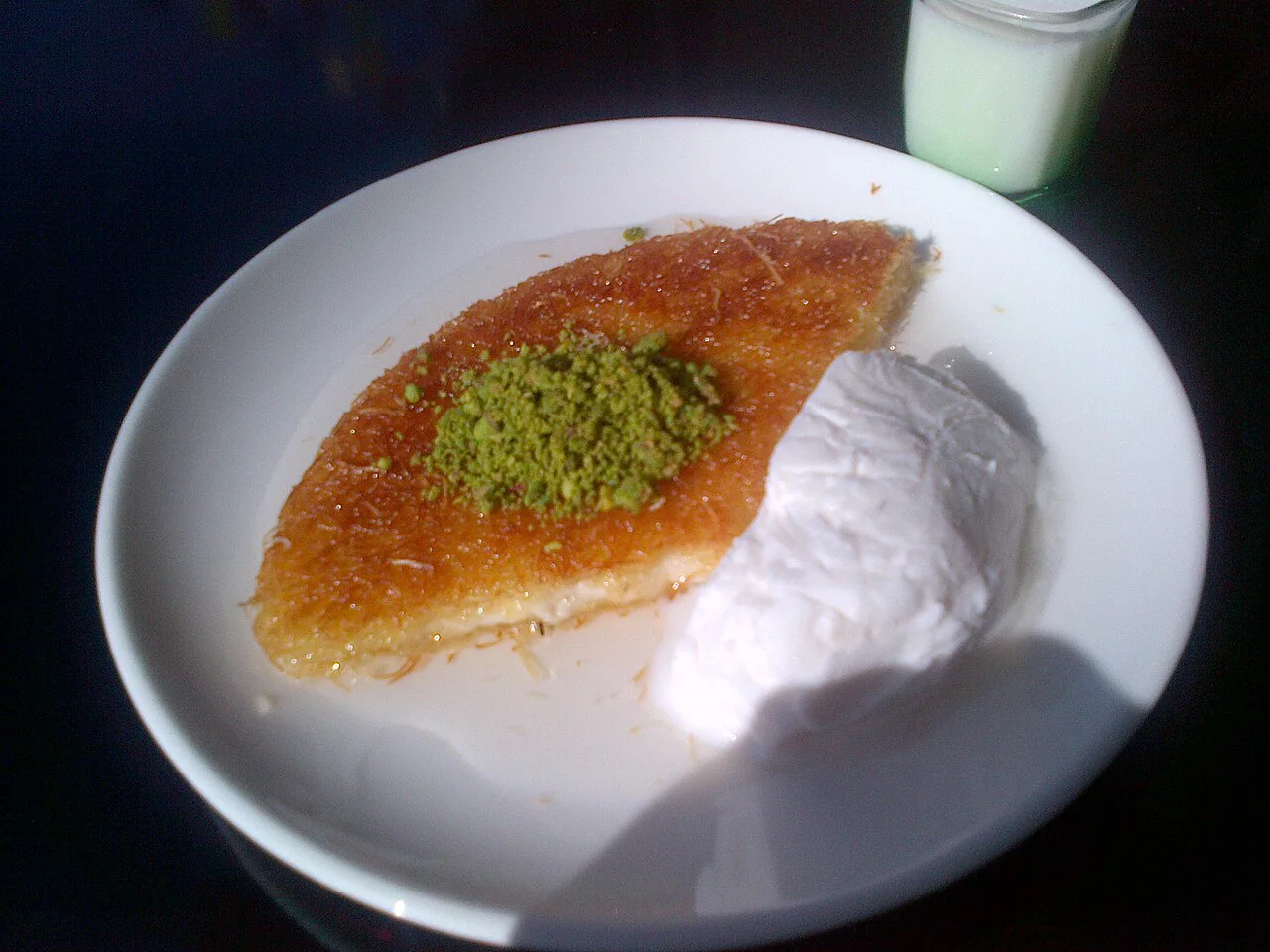
Butter does more than flavour here: the strands must be thoroughly coated so they do not burn during cooking. The syrup is sugar and water simmered until it thickens slightly, finished with lemon juice, and the classic garnish is a scatter of finely ground pistachio.
Where to buy kadayıf and how the strands are made
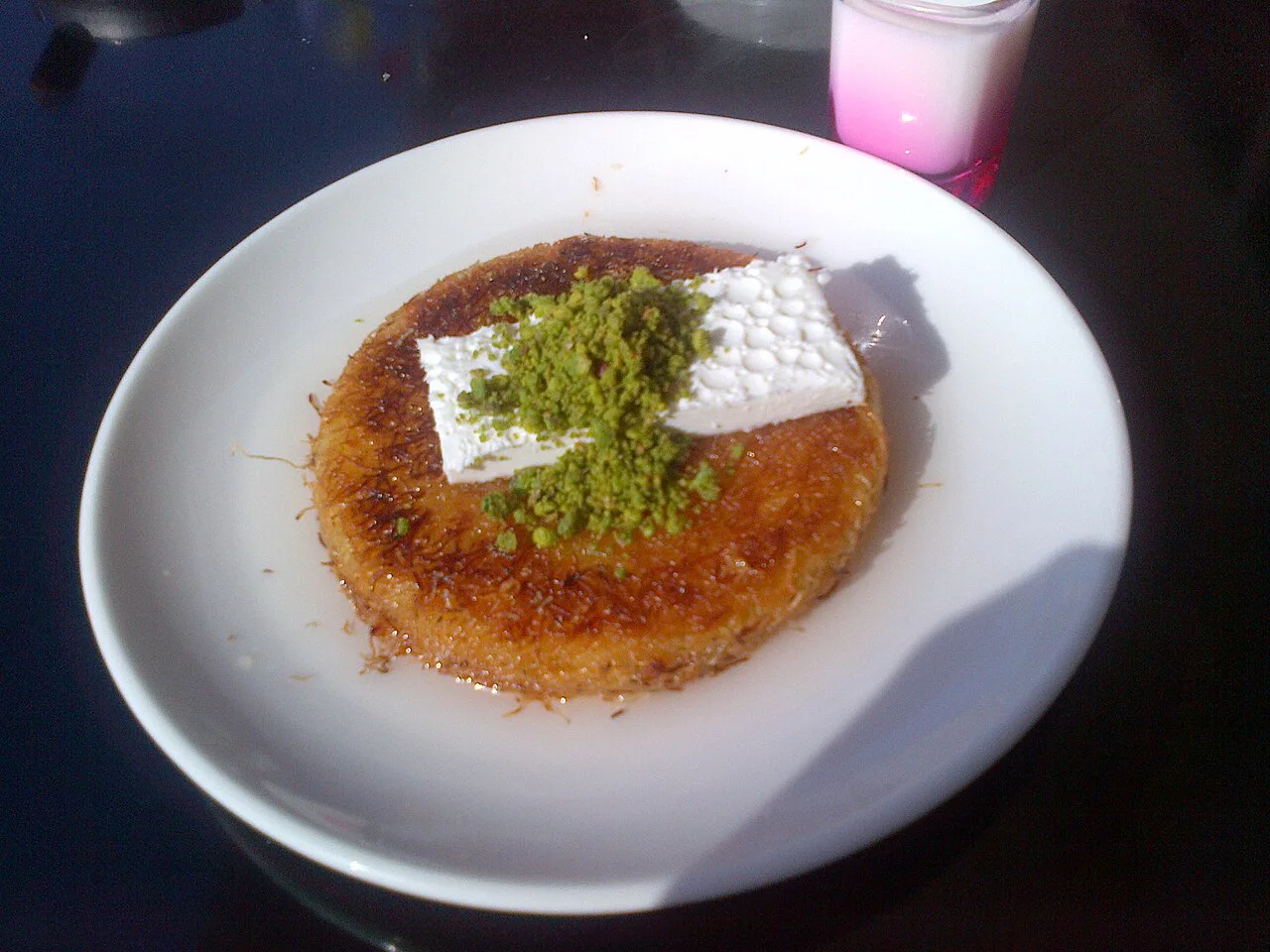
Watching the strands form is part of the tradition: the dough is pushed through a large sieve, and in Antakya that is done in the long market, Uzun Çarşı. Outside Turkey, look for packs of pale kadayıf in Turkish and Middle Eastern groceries or order them from online Turkish supermarkets, and check the packet for whether it is fresh or frozen.
The cheese: künefelik peynir, Hatay cheese and dil peyniri
The cheese needs to be unsalted and to stretch when it melts. In Turkey, ask for künefelik peynir, the cheese sold specifically for the job, or Hatay cheese; dil peyniri is another stringy option used for the dessert.
Fresh mozzarella is the practical fallback outside Turkey, and any unsalted cheese that melts easily will do the work. Some cooks also add a little kaymak or clotted cream for richness, which deepens the dairy flavour rather than changing the structure.
How künefe is cooked: one big tray or individual pans
There are two routes. The oven method layers buttered kadayıf and sliced cheese in one large baking tray and bakes it until the top is deep golden, then cuts it into portions and pours on cooled syrup. The other method presses the pastry into small individual metal pans and cooks them on the stove, flipping the pastry to brown both faces, which gives a crisper edge and a faster service.
Small pans made for the purpose are sold in shops with Turkish kitchen equipment, and individual portions like these are what the Antakya restaurant Sultan Sofrasi serves.
Why the syrup is cooled before it meets the hot pastry
The syrup is made first and left to come down to room temperature, because the pastry must be hot when the cool syrup goes on. That contrast is what keeps the outside crunchy while the syrup soaks in, instead of leaving the whole thing soft and heavy. Pour it over the hot pastry the moment it comes off the heat and serve immediately, while the cheese still runs.
What künefe tastes like
The first bite is crisp, buttery and faintly sweet from the syrup; the next is the cheese, warm and stretchy as it pulls away from the fork. The syrup brings lemon-sharp sweetness at the edge, and the pistachio on top adds a nutty finish that cuts through the dairy. Eat it hot, because the texture that makes künefe worth ordering disappears as it cools.
How it is served
Künefe arrives cut into portions straight from the pan it cooked in, with syrup already poured and pistachio scattered over the top. Order it to share after a savoury course, or as the whole point of a mid-afternoon stop with tea. Kaymak or ice cream alongside is a common extra that makes it richer still.
Künefe, knafeh and kunafa: same idea, different names
Versions of this dessert run across the Middle East under names such as knafeh and kunafa, with regional differences in the pastry, the cheese and the cooking method. The Turkish künefe is the version built on kadayıf strands, an oozy unsalted cheese and a lemon-scented syrup, and that is the one to look for on menus in Turkey.
Where künefe comes from in Turkey: Antakya and Hatay
Antakya, in Hatay province in southern Turkey, is the place most associated with künefe in Turkish cooking, and the city's Uzun Çarşı is where the kadayıf strands are traditionally made. The dessert is a fixture of the region's festive table, and the cheese sold for it in southern Turkey — künefelik peynir — is part of what makes the local version distinctive.
How to order künefe without a dud plate
Order it where it is cooked to order, ask whether it comes in one tray or individual pans, and eat it as soon as it lands. If you are making it at home, buy fresh or properly thawed kadayıf, choose an unsalted cheese that stretches, and cool the syrup before you pour it.
The same logic applies to the rest of a Turkish menu: know what the dish should be before you order it. A long morning spread of serpme kahvaltı is the natural counterpart to a sweet afternoon, and the components overlap more than most visitors expect.
Explore more Turkey guides
Frequently Asked Questions
Is künefe eaten hot or cold?
Hot. The pastry comes off the heat and takes cooled syrup immediately, then goes to the table while the cheese is still melted. Left to sit, the strands lose their crunch and the dessert turns heavy.
Can I make künefe without künefelik peynir?
Yes. Use an unsalted cheese that melts and stretches, with fresh mozzarella as the common substitute outside Turkey. Avoid salted cheeses, because the syrup already brings the sweetness.
Is künefe the same as baklava?
No. Baklava is layers of thin pastry with nuts and syrup, while künefe is shredded kadayıf strands around a cheese filling. Both are syrup-soaked pastries, but the texture and filling are quite different.
Sources
Notes for your next Turkey trip
Optional updates when we add or correct a town guide.
You might also like

Continue reading
More guides you'll find useful